 comparison
Is Vacation Home Security Worth the Cost? A 2026 Guide
Table of Contents
- The Real Math: What Vacation Home Security Costs vs. What a Break-In Costs
- DIY vs Professional Home Security: Which Actually Fits a Vacant Property?
- Is Professional Alarm Monitoring Worth It for a Home You Rarely Visit?
- Home Security Without Monthly Fees: One-Time Upgrades That Stay Active
- Vacation Home vs Primary Residence: Why the Same System Won't Do
- Insurance, Reliability, and the Gaps Competitors Don't Mention
- Conclusion: How to Decide If Vacation Home Security Is Worth the Cost
- Frequently Asked Questions
Last Updated: October 6, 2026
The Real Math: What Vacation Home Security Costs vs. What a Break-In Costs
Is vacation home security worth the cost? At Door Armor, we have watched this calculation play out for 20+ years, and the owners who come out ahead are not the ones with the biggest monthly bill.
Here is the uncomfortable part. Motion lights and cameras tell you something happened. They rarely stop it. A door that gives way in one kick ends the argument before your phone ever buzzes.
So the real math is not "system cost versus nothing." It is the cost of hardening your entry points versus the cost of a break-in at a house nobody is watching.
FBI uniform crime reporting data on burglary has long shown that a large share of residential break-ins happen through a door, which is exactly why we start there.
| Approach | Upfront Cost | Recurring Cost | Stops Forced Entry? |
|---|---|---|---|
| Door reinforcement only | One-time, $39.99-$149 | None | Yes, at the door |
| DIY cameras and sensors | One-time, varies | None | No, alerts only |
| Self-monitored alarm | Low hardware cost | App-tier fees | No, alerts only |
| Professional monitoring | Higher upfront | Monthly fee | No, alerts only |
DIY vs Professional Home Security: Which Actually Fits a Vacant Property?
Most guides frame this as a two-way fight: install it yourself or pay a pro. For a property that sits empty for weeks, that framing is wrong. There are three real options, and they differ less on hardware than on who is responsible for responding when something happens.
- DIY, self-monitored: you buy the sensors and cameras, you install them, and alerts go to your phone. You are the monitoring center.
- DIY hardware with professional monitoring: you install the devices, but a monitoring center watches the signals and calls for dispatch.
- Professionally installed and monitored: a dealer owns the panel, the wiring, the app, and the monitoring relationship under a contract.
The distinction that matters for a vacant property is response responsibility. A self-monitored system sends you a push notification. If you are 400 miles away, that notification is information, not intervention.
Use trip length and distance as the deciding variables:
| Situation | Best fit | Why |
|---|---|---|
| Weekend cabin, 2-hour drive, visited monthly | Self-monitored DIY plus door reinforcement | You can respond yourself within a reasonable window |
| Seasonal home, 6+ hour drive, vacant 4-8 weeks | DIY hardware plus professional monitoring, plus reinforcement | You need someone local to act on a signal |
| Rental with frequent turnover | Professionally installed and monitored | Guests, cleaners, and turnover make DIY management impractical |
| Property with no reliable local contact | Physical reinforcement first | No monitoring chain works without someone to respond |
A few practical points most comparison articles skip:
- Connectivity is the weak link in any monitored setup. A panel that relies only on broadband goes dark when the internet does. Cellular backup radios exist for exactly this reason, and they are usually an add-on, not a default. Ask before you sign.
- Power outages reset the clock on battery life. Most panels carry a backup battery measured in hours, not days. A week-long outage at a vacant home can outlast it.
- False alarms have a cost. Many jurisdictions fine properties for repeated false dispatches, and a vacant home with a sensitive motion sensor and no one to check it is a common source. Pet immunity, sensor placement, and entry-delay settings matter more when no one is home to disarm the panel.
- Contracts outlive ownership. Monitoring agreements commonly run 12 to 36 months with early-termination fees, and selling the property mid-term often means paying out the balance.
The honest conclusion is that these options are not competitors. A monitored alarm and a reinforced door solve different problems. One calls for help. The other buys the time until help matters.
Is Professional Alarm Monitoring Worth It for a Home You Rarely Visit?
Professional alarm monitoring is worth it when your main worry is fire, gas, or a medical event at a property someone visits regularly. It is a weaker buy when your only worry is a break-in at a house that sits dark for six weeks.
Here is the logic. A monitored system's value is its response: someone sees the signal and acts. At a vacant property, that response is often a call to a keyholder who is hundreds of miles away, followed by a dispatch to an address that looks empty anyway.
That does not make monitoring useless. It makes it a second layer, not the first.
Home Security Without Monthly Fees: One-Time Upgrades That Stay Active
Home security without a monthly fee comes down to physical hardware: locks, strike plates, hinge-side reinforcement, and jamb protection. These are passive. They do not need a subscription, a battery, or a signal.
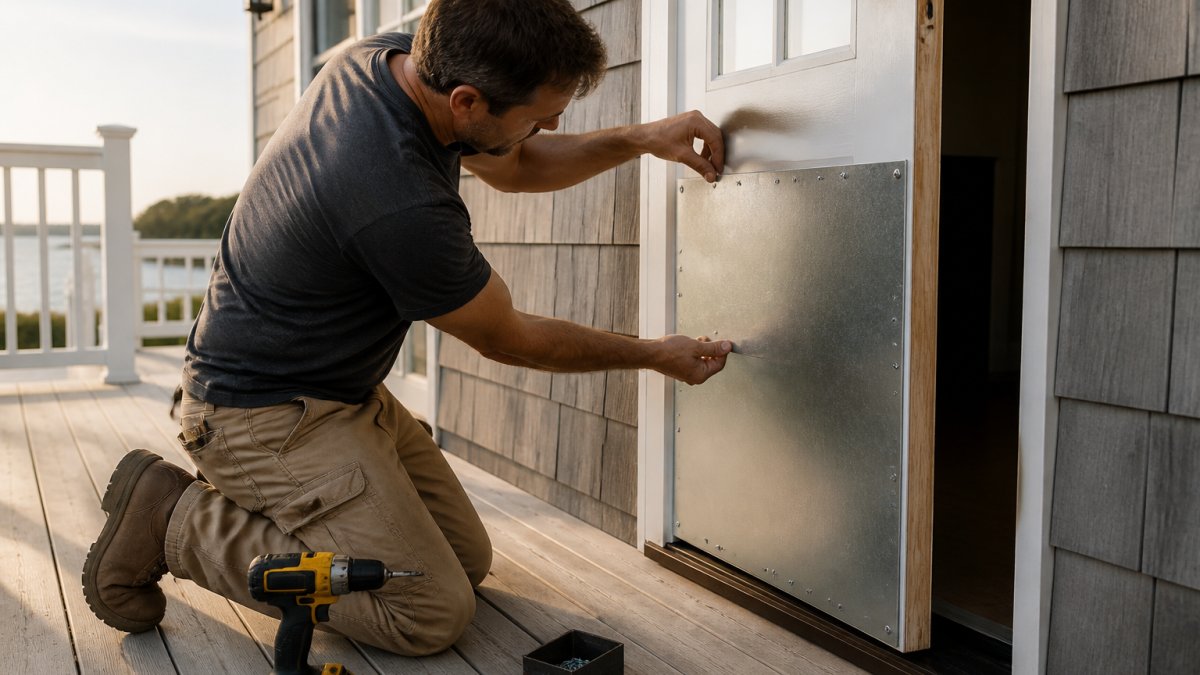
This is where Door Armor fits. Our patented galvanized steel system reinforces the weak points of an existing door, the lock area, the hinge side, and the frame, so a kick-in meets steel instead of a soft pine jamb. Installation takes under 30 minutes with basic tools, and it stays active 24/7 with no power requirement.
The line that matters for a vacation property: the protection does not depend on you being there, on the internet being up, or on a monitoring center staying staffed.
- Door Armor Single Door Security Set ($79.00) reinforces one exterior door up to 1-3/4" thick and carries a $500 Lifetime Guarantee against kick-ins.
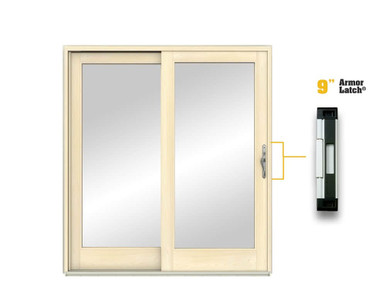
- Armor Latch Sliding Door Deadbolt ($39.99) stops the classic sliding-door attack: lifting the panel off its track.
- Door Armor Side Light Door Security Kit ($129.00) handles the hardest door to protect, the one with sidelights and no real jamb.
- Door Armor Double Door Security Kit ($149.00) covers double doors and includes a Night Lock barricade.
Vacation Home vs Primary Residence: Why the Same System Won't Do
A vacation home faces a different threat profile than the house you sleep in, and the difference is occupancy. Your primary residence has noise, lights, cars, and a routine. A vacant property has none of that, and intruders read the difference within a day or two.
That changes the priorities. At your primary home, cameras and a monitored alarm make sense because someone is usually there to respond.
Door Armor Single Door Security Set →
The other difference is what you can control remotely. At home, you can walk the perimeter. At a vacation property, you are managing by phone: a neighbor's text, a camera clip, a delivery notification. Physical reinforcement is the one layer that does not need your attention to work.
Insurance, Reliability, and the Gaps Competitors Don't Mention
Two things decide whether a security dollar actually pays off at a vacant property, and most articles skip both: what your policy does when the home sits empty, and what happens to your system when the power and internet go down for a week.
Insurance: verify, don't assume
A common claim in security marketing is that a monitored system lowers your premium. The reality is more conditional. Discounts vary by carrier, by state, and by whether the system meets specific criteria such as central-station monitoring, certain sensor types, or professional installation.
More important than the discount is the vacancy clause. Many homeowners policies limit or exclude coverage when a dwelling is unoccupied beyond a defined period, often stated in days.
A security system does not replace insurance. It changes the odds of filing a claim. That is the whole value proposition, and it is worth stating plainly.
Insurance Information Institute guidance on homeowners policies explains how vacancy and occupancy affect coverage, and it is worth reading before you assume a system protects you on paper.
Reliability: what fails, and when
Anything with a battery, a hub, or a broadband connection has a failure mode. For a property you see four times a year, those failure modes matter more than the features list.
- Broadband-only panels go offline when the internet does. Cellular backup is the fix, and it is usually a paid add-on.
- Backup batteries typically last hours, not days. A multi-day outage at a vacant home can outlast the panel.
- Cameras depend on Wi-Fi, power, and cloud storage. A power cut takes the camera and the recording with it.
- Sensors have their own battery lives, often measured in one to three years, and a dead sensor is a silent gap.
- False alarms accumulate. Repeated dispatches can trigger local fines, and a vacant home with no one to check is a common source.
A practical maintenance cadence for a property you rarely visit: test every sensor and the panel's backup battery at each visit, replace sensor batteries on the manufacturer's schedule rather than waiting for a low-battery alert, confirm the cellular backup is active, and verify that your call list and local keyholder contacts are current.
Physical reinforcement has a different reliability profile. It has no battery, no firmware, no subscription, and no signal to lose. That does not make it a replacement for monitoring. It makes it the layer that keeps working when everything else is offline.
Conclusion: How to Decide If Vacation Home Security Is Worth the Cost
The decision comes down to one question: what is the cheapest layer that still works when you are not there? For most vacation property owners, that is physical reinforcement of every exterior door, starting with the one an intruder would try first.
Door Armor exists for exactly this problem. Our patented galvanized steel kits are police tested and recommended, install in under 30 minutes with basic tools, and stay discreetly matched to your existing hardware. The $500 Lifetime Guarantee against kick-ins backs the claim, and 500,000+ doors secured is the track record behind it.
Get started with Door Armor and give your vacant property the one protection that never needs a signal, a subscription, or a reminder.
Frequently Asked Questions
What security system do burglars hate?
Burglars avoid homes that look occupied and take too long to enter. Visible deterrents like lighting timers, a trusted neighbor checking in, and reinforced door hardware all raise the time and risk required to break in. A reinforced door frame with steel plates, such as the Door Armor Single Door Security Set, stops kick-ins that would otherwise take seconds. Most intruders abandon a target when entry takes more than a minute or two.
What is the best security system without a monthly fee?
One-time physical upgrades give you home security without monthly fee commitments. Door Armor's galvanized steel kits range from $39.99 for the Armor Latch Sliding Door Deadbolt to $149.00 for the Double Door Security Kit. These products work without power, Wi-Fi, or a contract. Pair them with lighting timers and a trusted neighbor to cover the occupancy signals that cameras alone cannot provide.
Is professional alarm monitoring worth the monthly cost for a vacation home?
Professional alarm monitoring makes sense if your vacation home sits in a high-crime area or you cannot rely on neighbors to respond. Monitoring typically runs $20 to $60 per month with a contract term, adding up to $240 to $720 per year. For a property you visit a few weeks per year, that cost may exceed the risk. Compare it against one-time physical reinforcements that stay active without fees.
How much does it cost to secure a vacation home?
A basic vacation home security system cost depends on how much you automate. Physical door reinforcement starts at $39.99 for a sliding door deadbolt and $79.00 for a single door kit. You can add lighting timers, window locks, and a mail hold for under $100 total. Professional monitoring adds $240 to $720 annually. A layered approach with one-time hardware and low-cost occupancy tricks covers most vacant-home risks.