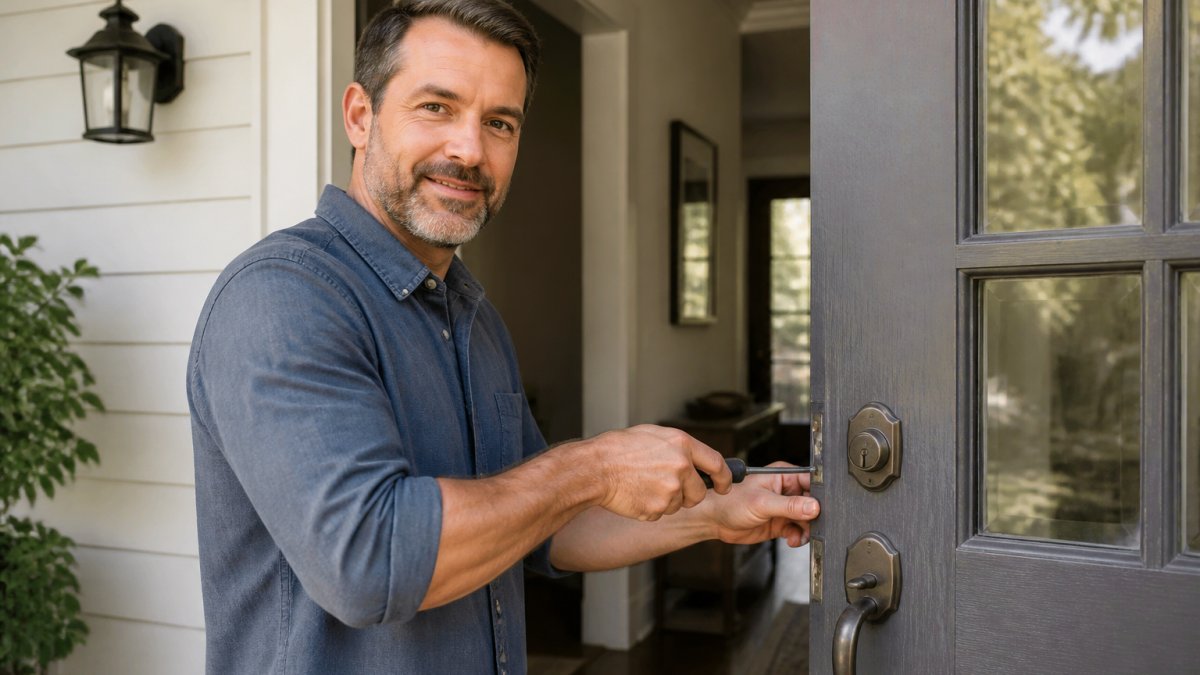
 comparison
Is a Deadbolt Enough for Front Door Security?
Table of Contents
- Is a Deadbolt Enough for Front Door Security? The Honest Answer
- What a Deadbolt Actually Protects
- Where a Deadbolt Stops Working
- Deadbolt vs. Spring Latch: Why the Lock Isn't the Weak Point
- How to Prevent Door Kick-Ins Before They Start
- Door Jamb Reinforcement: The Missing Half of Your Lock
- What a Door Reinforcement Kit Actually Does
- Double-Cylinder vs. Single-Cylinder Deadbolts: Which Is Safer?
- Smart Locks, Glass Sidelites, and Other Gaps a Deadbolt Can't Close
- Frequently Asked Questions
Last Updated: October 3, 2026
Is a Deadbolt Enough for Front Door Security? The Honest Answer
No, a deadbolt alone is not deadbolt enough for front door security. A quality deadbolt is essential, but it only protects one point of the door. The frame, strike plate, hinges, and door material all fail before a good lock does.
Here's the uncomfortable truth most security advice skips: a deadbolt is only as strong as the wood it's screwed into. Below, we'll show which weak points attackers target, how to prevent door kick-ins, and where a door reinforcement kit fits into a complete home safety plan.
What a Deadbolt Actually Protects
A deadbolt protects the lock side of your door by throwing a solid metal bolt into the door frame. One point of contact, one job.
A deadbolt is a locking mechanism with a solid, non-spring-loaded bolt that extends into the door frame and cannot be pushed back with a credit card or shim.
- It resists credit-card and shim attacks that defeat spring latches
- It adds a visible layer of deterrence at the most common entry point
- It buys time against lock picking and bumping when paired with a quality cylinder
What it does not do is reinforce the door jamb, the hinges, or the door itself, and those are where most forced entries actually succeed.
Where a Deadbolt Stops Working
A deadbolt stops working the moment force moves off the lock and onto the frame. Kicking, prying, and jamb splitting all bypass the bolt entirely.
The lock can be top-tier and the door can still open in one kick. The bolt holds. The wood around it doesn't.
Three failure points sit outside the deadbolt's reach:
- The strike plate: often held by two short screws that pull straight out of the frame
- The door jamb: soft wood that cracks under a boot
- The hinges: exposed pins on outswing doors can be popped
Fix the lock and you've secured maybe a third of the door.
Deadbolt vs. Spring Latch: Why the Lock Isn't the Weak Point
A deadbolt beats a spring latch on paper, but the real weakness is the frame both sit in. Upgrading from a spring latch to a deadbolt is worth doing, it just isn't the finish line.
A spring latch is the angled, spring-loaded latch that retracts when you turn the knob, easy to slip past with a shim.
| Feature | Spring Latch | Deadbolt | What Actually Matters |
|---|---|---|---|
| Bolt type | Spring-loaded, retracts | Solid, extends into frame | Deadbolt wins |
| Shimming resistance | Weak | Strong | Deadbolt wins |
| Kick-in resistance | Low | Low without frame reinforcement | Frame reinforcement wins |
| Pick/bump resistance | Low | Varies by cylinder | Cylinder quality matters |
| Real weak point | Strike plate and jamb | Strike plate and jamb | The frame, every time |
The takeaway: lock type matters, but the frame decides whether either lock survives a forced entry.
How to Prevent Door Kick-Ins Before They Start
Preventing door kick-ins means reinforcing the three points a kick actually loads: the lock area, the hinges, and the frame around them. A deadbolt covers one. You need all three.
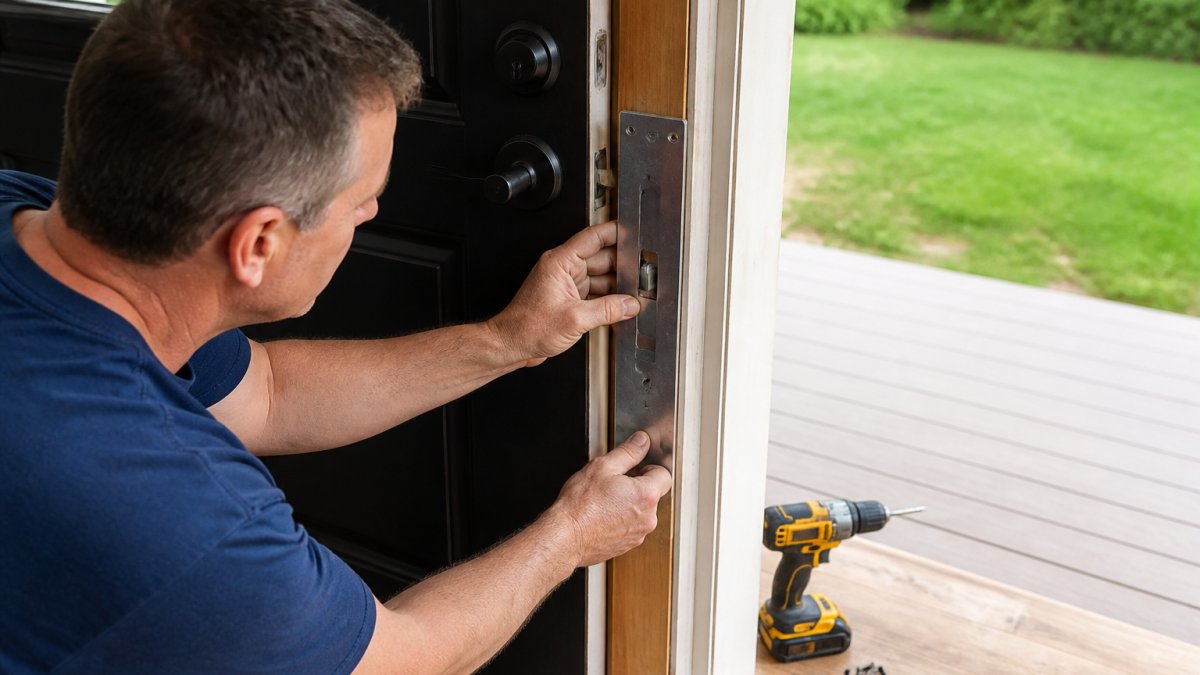
Kicking is the most common forced-entry method because it's fast and quiet relative to prying, and attackers aim for the point of least resistance, almost always the jamb, not the lock.
The Three Points Every Kick-In Targets
- The lock and strike plate: the bolt and the plate it lands in
- The hinges: the top and bottom corners of the door
- The jamb: the wood between the lock and the hinges
A deadbolt protects point one. Points two and three are where a door reinforcement kit earns its place: steel plates and shields that spread the force of a kick across the whole frame instead of one weak spot.
What Actually Changes When You Reinforce the Frame
Reinforcement works on a simple principle: increase the surface area and depth of anchoring so no single screw or inch of wood absorbs the full load.
- Longer screws into the framing stud. Standard strike-plate screws are about 3/4 inch and bite only into the jamb. Reinforcement screws run 3 inches or more to reach the structural stud behind the jamb, the part that does not split.
- A steel plate that spans the jamb. Instead of two screw holes, a reinforced strike plate distributes force across several inches of frame and often wraps the corner where the jamb meets the wall.
- Hinge-side coverage. On an inswing door, the risk is hinge screws pulling out of the jamb. On an outswing door, exposed pins can be popped, which is why hinge shields or security hinges matter there specifically.
Inswing vs. Outswing: The Detail Most Guides Skip
The reinforcement you need depends on which way the door swings, and most general security advice ignores the difference.
- Inswing doors (most front doors) fail on the lock and hinge sides under kick force. The fix: a reinforced strike plate plus hinge-side screws long enough to reach the stud.
- Outswing doors fail differently, the exposed hinge pins can be removed from outside. The fix is non-removable pins, security hinges, or a hinge shield, plus lock-side reinforcement.
If your door is outswing, confirm the kit addresses the hinge side, not just the strike plate.
A quick field test: open the door and look at the strike plate. If you can see only two short screws holding it, that plate is the weakest link on the entire door, regardless of how much you paid for the deadbolt.
Door Jamb Reinforcement: The Missing Half of Your Lock
Door jamb reinforcement is the missing half of front door security: the steel that turns a soft wood frame into a structure that resists force.
Door jamb reinforcement means adding metal plates, shields, and strike-plate reinforcements so the lock and hinges have something solid to hold onto. It's the highest-impact upgrade most homes are missing.
This is where a door reinforcement kit changes the math: instead of two short screws holding a strike plate, a steel plate anchored deep into the framing; instead of an exposed hinge, a shield covering it.
Door Armor Single Door Security Set →
What a Door Reinforcement Kit Actually Does
A door reinforcement kit adds steel at the lock, hinges, and jamb so the door resists kick-ins and prying as a single unit, converting the weakest parts of the frame into load-bearing steel. Kits spread force across more material so no single screw or inch of wood takes the full hit; the difference between them comes down to coverage and door type.
Comparing Door Armor Kits by Door Type
| Kit | Price | Best For | Key Feature |
|---|---|---|---|
| Single Door Security Set | $79.00 | Standard single exterior doors | 30-minute DIY install, $500 Lifetime Guarantee |
| Side Light Door Security Kit | $129.00 | Doors with glass sidelites | Sidelight jamb shield for frames without a real jamb |
| Double Door Security Kit | $149.00 | Double doors | Includes Night Lock door barricade |
Each kit targets a different door configuration, and that matters. A door with a sidelite has no real jamb to reinforce, so it needs a different approach than a standard single door. The Door Armor product line is built around that reality, which is why the sidelight kit exists at all.
Double-Cylinder vs. Single-Cylinder Deadbolts: Which Is Safer?
A single-cylinder deadbolt is safer for most homes because it allows fast exit in an emergency.
A single-cylinder deadbolt has a key outside and a thumb turn inside; a double-cylinder deadbolt needs a key on both sides.
The trade-off is serious: in a fire, a double-cylinder lock can trap you inside if you can't find the key fast, and many fire codes and safety experts discourage them on primary exits.
Smart Locks, Glass Sidelites, and Other Gaps a Deadbolt Can't Close
Smart locks and glass sidelites expose gaps a deadbolt can't close, no matter how good the lock is. A smart lock still mounts to the same soft frame. A sidelite is a full-height glass panel next to the door, and glass breaks long before steel does.
Smart Deadbolts: Same Physical Security, New Failure Modes
Smart lock integration is worth considering for convenience, keyless entry, and activity logs, but it doesn't reinforce anything, it swaps the cylinder for electronics on top of the same weak frame. If the frame splits, the smart lock comes with it.
What most smart-lock marketing doesn't say: the physical security of a smart deadbolt is essentially the same as a mechanical one of comparable build.
- Battery and connectivity are new failure points. A dead battery or dropped connection can lock you out or leave a lock in an unexpected state, mechanical deadbolts have no equivalent failure mode.
- Motorized bolts can be slower to throw. Some smart deadbolts extend the bolt on a motor, and bolt throw and housing quality still determine physical resistance, check the spec, not the feature list.
- Grade still matters. Look for an ANSI/BHMA Grade 1 or Grade 2 rating on the lock itself. Grade 1 is the highest residential/commercial durability rating, reflecting tested resistance to force and cycles. A smart lock without a stated grade is a question mark.
Glass Sidelites: The Blind Spot a Deadbolt Can't Reach
Glass sidelites are the bigger blind spot. A deadbolt does nothing for a pane of glass an arm can reach through, which is why a sidelight-specific reinforcement kit exists: it secures the frame around the glass so the door assembly holds together.
A sidelite is a narrow, full-height glass panel framed into the same opening as the door. If someone breaks the glass, they can reach the interior thumb turn and unlock the door, the classic argument for double-cylinder locks, with the fire-safety trade-off covered above.
The Insurance and Grade Angle Nobody Mentions
Here's a gap most security articles skip: your home insurance policy may care about your lock's rating. Many insurers offer premium discounts for deadbolts meeting a recognized standard, and some policies specify a minimum grade or deadbolt type as a condition of coverage for theft or forced-entry claims. Requirements vary, so check your declarations page or call your agent and ask two questions:
- Does the policy require a deadbolt, and if so, at what grade?
- Is there a discount for ANSI/BHMA Grade 1 or Grade 2 hardware?
A homeowner can spend hundreds on a premium lock and still fail an insurer's requirement if it isn't rated to the grade the policy names. Grade and documentation, not price, are what an adjuster looks at.
Do Visible Deadbolts Actually Deter Burglars?
The psychological layer is real and under-discussed.
That said, deterrence is not resistance. A visible deadbolt in a soft frame deters the lazy intruder and does nothing against a determined one.
Consumer guidance on home security and forced entry is clear that layered protection beats any single device. A deadbolt is one layer. The frame, the glass, and the hinges are the others.
Frequently Asked Questions
What is the most secure type of deadbolt for a front door?
Look for a deadbolt rated ANSI Grade 1, which is tested to withstand the highest level of physical attack. A single-cylinder deadbolt with a one-inch throw and a reinforced strike plate offers strong pick and bump resistance for most homes. The lock grade matters, but so does what surrounds it: a Grade 1 deadbolt mounted in a soft wood frame can still fail during a kick-in if the jamb and strike plate aren't reinforced.
Are single-cylinder or double-cylinder deadbolts safer?
Double-cylinder deadbolts require a key on both sides, so a burglar can't simply break nearby glass and turn the thumb latch from inside. That extra step comes with a real trade-off: in a fire, everyone inside needs a key to get out. Many households choose single-cylinder deadbolts for everyday safety and add door jamb reinforcement and a strike plate upgrade to close the forced-entry gap instead.
How can I reinforce my front door against kick-ins?
Kick-ins almost always break the frame, not the lock. A door reinforcement kit like the Door Armor Single Door Security Set ($79.00) adds galvanized steel plates at the lock area, strike plate, and hinges, so the force spreads across the whole frame instead of splintering the jamb. Installation takes about 30 minutes with basic tools, and the kit is backed by a $500 lifetime guarantee against kick-ins.
Do door jambs need reinforcement for maximum security?
Yes. A standard wood door jamb is typically only three-quarters of an inch thick and splits easily under a hard kick. Door jamb reinforcement spreads the impact across a wider steel surface and anchors deeper into the framing studs. Without it, even a high-grade deadbolt can be defeated because the bolt simply tears through the wood holding it in place.
Is a deadbolt enough to stop a forced entry?
A deadbolt stops lock picking and credit-card loiding, but it does not stop a determined kick-in on its own. Most forced entries happen at the frame, not the cylinder. A deadbolt paired with door jamb reinforcement, a reinforced strike plate, and hinge shields gives you the layered protection that actually holds up. Doors with sidelites or glass panels need a sidelight-specific kit because they lack a traditional jamb.
Your front door has a lock problem and a frame problem, and only one of them is solved by a deadbolt. Door Armor builds patented galvanized steel reinforcement systems that secure the lock, hinge, and jamb points a deadbolt leaves exposed. Our kits install in about 30 minutes, come with a $500 Lifetime Guarantee against kick-ins, and stay discreetly matched to your existing hardware. Get started with Door Armor and close the gaps your deadbolt can't.