 how-to
Why Reinforce Door Jambs for Home Safety
Table of Contents
- Why Door Jambs Are Your Home's Weakest Entry Point
- How Standard Door Frames Fail Against Forced Entry
- How to Reinforce a Front Door Frame: The Complete Process
- Door Kick-In Protection: What Actually Stops Break-Ins
- How to Install Door Armor in Under 30 Minutes
- DIY Installation vs Professional Help: What You Need to Know
- Beyond the Jamb: Other Critical Door Security Upgrades
- Frequently Asked Questions
Last Updated: October 1, 2026
Why Door Jambs Are Your Home's Weakest Entry Point
Your front door looks solid, but the door frame itself is the real vulnerability. The jamb, the vertical piece of wood holding your door in place, can splinter under force in seconds. A determined intruder can kick through a standard frame in one or two attempts.
This is where you need to reinforce door jambs for critical home safety. The jamb is where your lock connects to the structure. If the wood splits or the frame pulls away, the lock becomes useless, no matter how good your deadbolt is.
The good news: to reinforce door jambs doesn't require replacing your door or hiring professionals. It's about adding steel reinforcement where the lock does its work. This creates the structural strength a standard wooden frame simply cannot provide.
How Standard Door Frames Fail Against Forced Entry
A typical door frame consists of wood jambs and trim. When someone kicks a door, force concentrates on a small area around the lock, and standard wood splits easily under this stress.
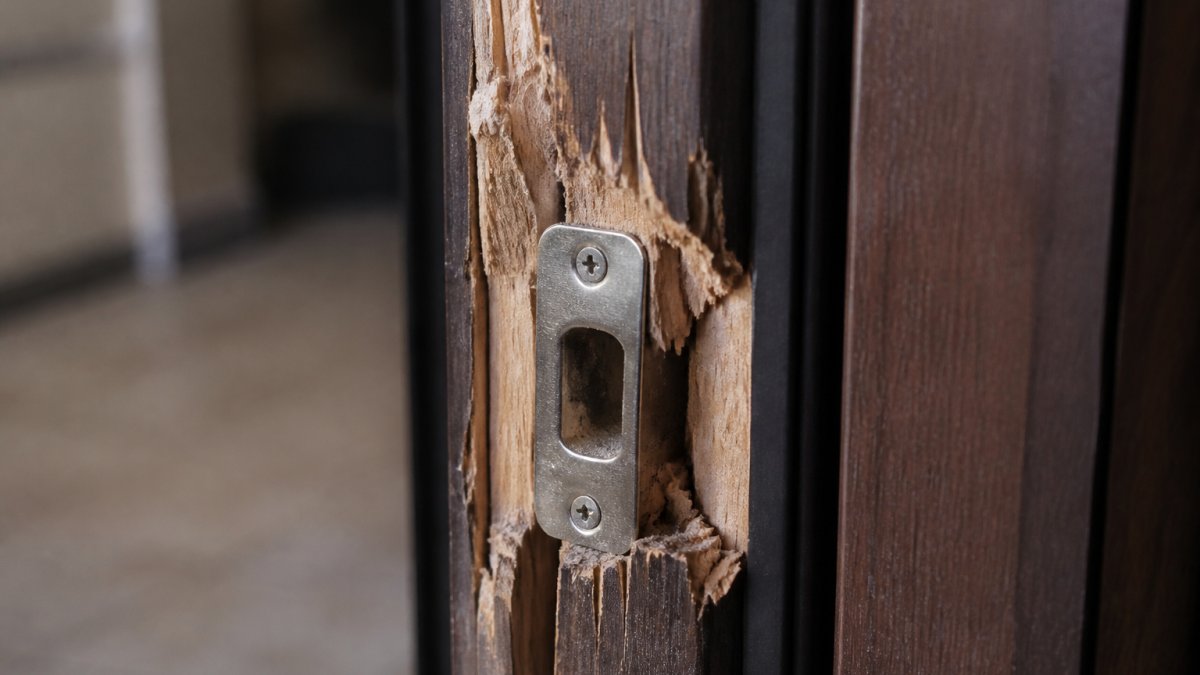
When kicked, a standard strike plate (which uses 1-inch screws) fails because the short screws don't anchor deep enough into the jamb. The wood around them simply gives way, allowing the frame to pull away and the door to open.
The hinge side is equally vulnerable. Standard hinges rely on the door frame's wood for support and can bend or break under a determined kick, causing the door to sag or separate.
How to Reinforce a Front Door Frame: The Complete Process
Reinforcing your door jamb means adding steel reinforcement at critical failure points: the strike plate area, hinge side, and top/bottom of the frame. Steel plates distribute force across several inches instead of concentrating it on an inch of wood. Long screws (3+ inches) anchor into studs rather than just the jamb surface. Hinge shields distribute force across a wider area, preventing jamb splitting at the hinge line.
The Door Armor Single Door Security Set includes a heavy-duty strike plate, hinge shields, and long anchor screws. Installation takes about 30 minutes with basic tools.
Door Kick-In Protection: What Actually Stops Break-Ins
Real door kick-in protection distributes force across a larger surface (steel plates cover 2-3 times the area of standard hardware), anchors deep into studs so the entire wall resists force, and eliminates weak points where wood meets hardware by bridging gaps with continuous steel.
A properly reinforced door resists repeated kicks, which matters because break-ins are often opportunistic, intruders move to easier targets if the door holds.
How to Install Door Armor in Under 30 Minutes
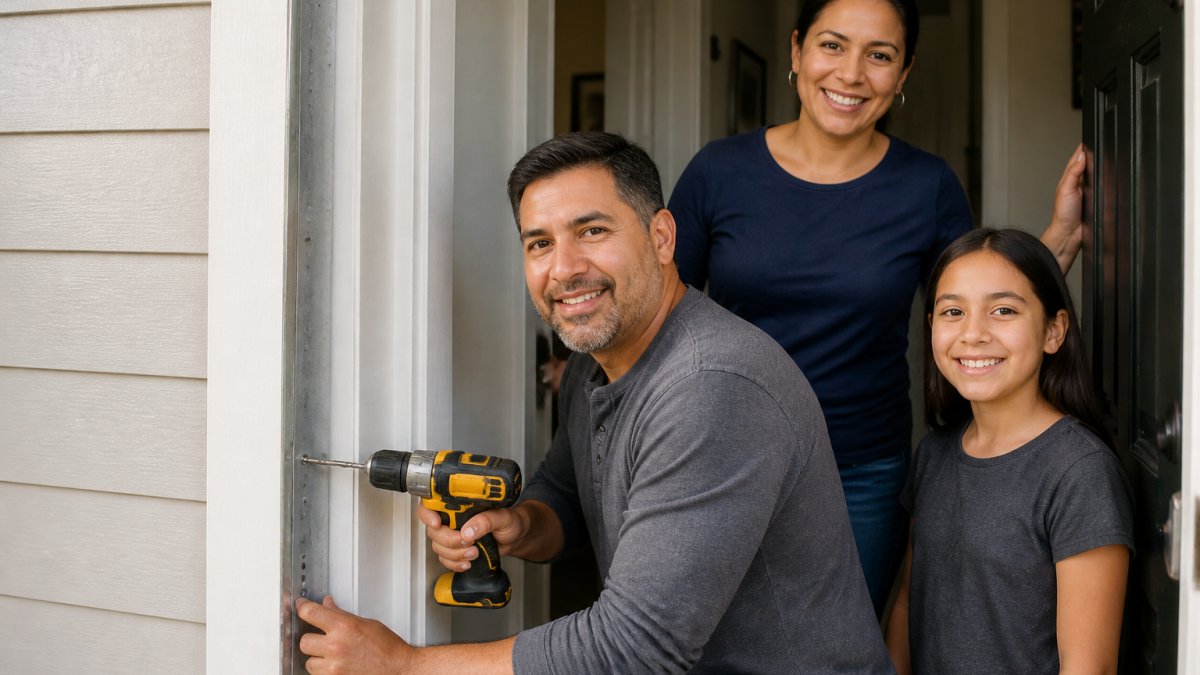
Door Armor systems are designed for DIY installation. You'll need a drill, screwdriver, tape measure, and the Door Armor kit (which includes all hardware and screws).
Remove the old strike plate and unscrew it. Position the new strike plate from your kit, mark holes using the included template, drill pilot holes, and insert the long anchor screws into the frame and studs. Install hinge shields by positioning them to align with existing hinges, marking holes, and securing with provided hardware (repeat for each hinge). Close the door to verify smooth closure and full lock engagement, then test for frame movement.
DIY Installation vs Professional Help: What You Need to Know
DIY installation is realistic for most homeowners, but the decision involves financial trade-offs including tool costs, time value, and potential insurance benefits.
The DIY Path: True Costs and Savings
A door jamb reinforcement kit costs $60-$150 and takes 30-45 minutes per door, saving $150-$300 in professional labor. Hidden costs include tool investment ($50-$100 for a drill if you don't own one), potential mistakes (misaligned plates or shallow holes), time value, and no labor warranty.
When Professional Installation Makes Financial Sense
Professional installers bring speed and accountability:
Door Armor Single Door Security Set →
- Multiple doors: If you're reinforcing 3 or more doors, professional labor ($450-$900 total) may be worth it for consistency and speed.
- Damaged frames: If your jamb is rotted, warped, or non-standard, a professional can assess whether reinforcement alone will work or if frame repair is needed first. This diagnostic value often justifies the cost.
- Insurance coordination: Some homeowners insurance providers offer discounts (typically 5-15%) for verified security upgrades. A professional installer can provide documentation (photos, signed work orders) that insurers require. This discount often pays for installation within 2-3 years.
- Rental properties: If you're a landlord reinforcing multiple units, professional installation ensures consistency and creates a paper trail for insurance and liability purposes.
The Insurance Angle: A Hidden Financial Incentive
Many homeowners overlook this: reinforcing door jambs can lower your homeowners insurance premium.
- Contact your insurance agent before installation and ask which upgrades qualify.
- Keep receipts and photos of the completed work.
- Request a policy review after installation; some insurers require a formal inspection.
- Document the work with before-and-after photos and the product name/model.
Hybrid Approach: DIY Front Door, Professional Back Doors
Decision Framework
- Go DIY if: Your frame is in good condition, you own a drill, you're reinforcing only your front door, and you're comfortable with basic measurements and drilling.
- Hire a professional if: You're reinforcing 3+ doors, your frame shows damage, you want to claim an insurance discount (and need documentation), or you value your time at more than $150-$300 per door.
- Hybrid approach if: You want to save money on your primary entry but ensure secondary doors are done correctly and documented for insurance purposes.
Beyond the Jamb: Other Critical Door Security Upgrades
Jamb reinforcement is foundational, but it's not the only vulnerability worth addressing. The right combination of upgrades depends on your situation, especially whether you own or rent, and whether you use modern smart locks.
Deadbolts: Grade Matters More Than You Think
Smart Locks and Door Reinforcement: Compatibility and Reality
Here's what matters:
- Smart locks still rely on the jamb: The lock bolt still enters the jamb. If the jamb is weak, a smart lock fails just as easily as a traditional deadbolt. Reinforce the jamb first; the smart lock type is secondary.
- Compatibility with reinforcement kits: Most smart locks are compatible with standard jamb reinforcement. The strike plate opening is standardized (1⅜ inches wide for most residential locks). However, some oversized or specialty smart locks have different strike plate dimensions. Before buying a smart lock, verify its strike plate width matches your reinforcement kit's opening.
- Battery and connectivity: Smart locks require batteries or hardwired power. A dead battery or lost WiFi connection doesn't affect physical security, the door still locks mechanically. But it can lock you out. Ensure your smart lock has a physical backup key or keypad.
- Aesthetics: Smart locks tend to look modern and sleek, which can complement a reinforced door without the "fortress" appearance that concerns some homeowners.
Rental-Friendly Door Security: Non-Permanent Solutions
- Portable door jammers and wedges: Devices like the Addalock or similar wedge-style jammers slide under the door and prevent it from opening, even if the lock fails. Cost: $15-$40. No installation required. Effective for renters and temporary situations. Limitation: They only work on doors that open inward and swing freely.
- Removable strike plate reinforcement: Some manufacturers offer strike plate kits with adhesive backing instead of screws. These are less effective than screwed-in reinforcement (adhesive can fail over time) but are non-permanent. Cost: $30-$60. Effectiveness is moderate; they work best on doors already in good condition.
- Door security bars: Portable bars that wedge between the door frame and the door (similar to a brace) prevent the door from opening. Cost: $20-$50. No installation. Effective but visible and can be cumbersome to use daily.
- Temporary frame reinforcement: Adhesive-backed steel plates that cover the strike area without drilling. These are a compromise, better than nothing, but not as effective as permanent reinforcement. Cost: $40-$80.
- Portable door locks: Battery-powered locks that attach magnetically to the door and frame. Cost: $50-$150. Reversible and effective, though they add another device to manage.
Hinges: Visible vs Hidden and the Security Trade-Off
Door Thickness and Material: The Foundation
Sliding Glass Doors: A Separate Problem
Layering Security: The Multiplier Effect
Frequently Asked Questions
How long does it take to install a door reinforcement kit?
Most door reinforcement kits, including Door Armor solutions, install in under 30 minutes using basic tools. The process involves drilling pilot holes, inserting long screws through reinforcement plates into the door frame studs, and securing hinge shields. No special skills required, homeowners with minimal DIY experience can complete the job. Installation time depends on your comfort level and whether you're reinforcing one door or multiple entry points.
Does a deadbolt provide enough security without a reinforced door jamb?
A deadbolt alone is not enough. Deadbolts only protect the lock area, but forced entry typically happens through the jamb itself when someone kicks or pries the door. The jamb, the vertical frame piece, splits under pressure, allowing the door to swing open regardless of lock quality. Reinforcing the jamb with strike plate reinforcement and hinge shields distributes force across the entire frame, making kick-in protection effective. A deadbolt plus jamb reinforcement creates layered security.
Are door jamb reinforcement plates effective against real break-in attempts?
Yes. Door jamb reinforcement plates work by anchoring the frame to the structural studs behind it using long screws, creating frame integrity that resists the force of a kick or pry attempt. Police-tested systems like Door Armor have prevented documented break-ins and are trusted by law enforcement. The plates distribute impact force across a larger area, preventing wood splitting and frame failure. Effectiveness depends on proper installation, screws must reach the studs, not just the frame.
Can I install door jamb reinforcement if I'm renting, and will it damage the door?
Standard door jamb reinforcement requires drilling into the frame and door, making it permanent. However, rental-friendly alternatives exist, such as door jammers and security bars that don't require installation. If you want to reinforce a rental property you own, check your lease, many landlords allow security upgrades. Reinforcement doesn't damage the door itself; it strengthens the frame. When you move, you can remove plates and fill small screw holes with wood filler.
Door Armor's reinforcement systems address the structural weaknesses that standard doors cannot overcome. With a galvanized steel design that installs in 30 minutes, you get the protection that matters, stopping forced entry before it starts. The $500 Lifetime Guarantee backs up what we know: proper jamb reinforcement works. Secure your home today with Door Armor and get the peace of mind that comes from knowing your doors can actually resist a real threat.