 how-to
How to Reinforce Your Front Door Against Forced Entry
Table of Contents
- Why Your Front Door Is a Target for Forced Entry
- How to Prevent Door Kick-Ins: The Weak Points Thieves Exploit
- Reinforcing Door Strike Plates and Hinges with Long Screws
- Door Security Reinforcement Kit Options: What to Look For
- Smart Lock Integration and Other Modern Security Upgrades
- Visual Inspection Checklist: Is Your Door Frame Strong Enough?
- Conclusion
- Frequently Asked Questions
Last Updated: September 23, 2026
Why Your Front Door Is a Target for Forced Entry
Your front door is the number one target for forced entry because it is the fastest way into a home. A burglar does not want to climb through a window or pick a lock. They want to kick the door open in three seconds and walk in.
At Door Armor, we have spent over 20 years studying how break-ins actually happen. The pattern is always the same: the lock holds, but the door frame fails. That is why learning how to reinforce front door against forced entry starts with understanding the frame, not the lock.
Most doors look solid. They are not. The wood around the lock and hinges is often soft, thin, and held together by short screws that pull out under pressure.
How to Prevent Door Kick-Ins: The Weak Points Thieves Exploit
To prevent door kick-ins, you have to think like the person kicking. They aim for the point where your door meets the frame, near the lock. That is where the wood is thinnest and the hardware is weakest.
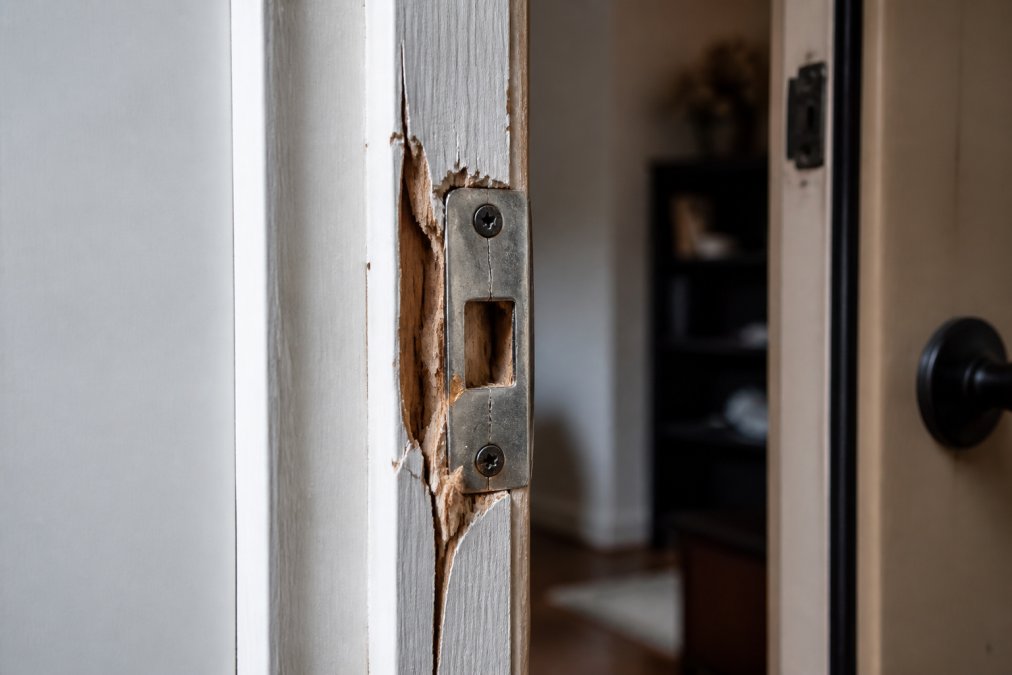
Three spots fail first:
- The strike plate. This small metal piece catches the deadbolt. It is usually held in by two short screws.
- The door jamb. The vertical frame around the door. It is often soft pine or hollow.
- The hinges. Standard hinge screws are short and strip out easily.
The Strike Plate: Your Door's Weakest Link
The strike plate is the single weakest link on most front doors. It is a thin piece of metal, often under 2 millimeters thick, screwed into soft wood.
Door Frame and Jamb Vulnerabilities
The door jamb is the vertical frame the door closes against. Builders often use thin, soft wood here because it is cheap and easy to install.
Reinforcing Door Strike Plates and Hinges with Long Screws
The fastest upgrade you can make is swapping short screws for long ones. Standard screws run about 3/4 of an inch. They barely reach past the trim.
A few tips from years of installs:
- Pre-drill pilot holes so you do not split the wood.
- Use screws rated for shear strength, not drywall screws.
- Hit the stud, not empty space. If the screw spins freely, move over half an inch.
- Check door alignment after. Long screws can shift the frame slightly.
Door Security Reinforcement Kit Options: What to Look For
A door security reinforcement kit bundles the hardware that fixes the weak points at once. Instead of buying screws, plates, and shields separately, you get a matched set. But the kit that works on one door can be the wrong kit for another, because the material of your door and frame dictates what will actually hold under a kick.
Match the Kit to Your Door Material
Most guides hand you a single recommendation and move on. That is a mistake. The three common exterior door materials fail differently, and the reinforcement has to account for that.
What Belongs in a Kit
Look for these parts, and check that each one is compatible with your material:
Door Armor Single Door Security Set →
- A heavy strike plate that wraps around the frame, not a flat plate that only covers the mortise.
- Hinge shields that cover the hinge pins so they cannot be popped.
- A jamb shield that runs the full height of the lock area.
- Galvanized steel construction, not thin stamped metal.
- Screws long enough to reach the stud, three inches or more for wood frames.
DIY vs. Professional Installation
Most reinforcement kits are built for DIY installation. A full set typically takes about 30 minutes with a drill and a screwdriver.
Professional installation makes sense if:
- Your door frame is already damaged or split.
- You have a custom, oversized, or steel door that resists mortising.
- You are not comfortable drilling into the frame or slab.
Rental-Friendly Security Solutions
Renters face a real problem. You cannot tear out the door frame, but you still want protection.
Smart Lock Integration and Other Modern Security Upgrades
Smart locks add convenience, but they do not add strength. A smart deadbolt still sits in the same weak strike plate. If the frame fails, the smart lock goes with it. That is the part most smart lock marketing skips, and it is the part that matters when someone kicks your door.
How Smart Locks Change the Reinforcement Equation
A smart deadbolt is still a deadbolt. The bolt extends into the same strike plate, and the plate is still held by the same short screws into the same soft jamb. The electronics change how you unlock the door, not how the door resists force.
- Bolt throw and alignment. Smart locks depend on the bolt seating fully in the strike. If reinforcement shifts the frame even slightly, the bolt may not extend all the way, and the lock will report a jam or fail to arm. After installing reinforcement, cycle the lock several times and confirm the bolt seats without resistance.
- Motor torque vs. frame friction. A smart lock motor pushes the bolt with less force than your hand on a thumb turn. A misaligned strike that a manual deadbolt would muscle through can stall a motorized bolt. That is a functional problem, not a security one, but it is the most common complaint after reinforcement installs.
- Battery and fail state. Most smart deadbolts fail in the locked or unlocked state depending on model. Know which yours does before you rely on it as your only lock.
- Through-door wiring. Some smart locks run wires through the door for a keypad or camera. Those penetrations are small, but they are still holes in the slab. Keep them away from the lock edge where the bolt and strike do their work.
Other Upgrades Worth Considering
- Security film on glass inserts and sidelights. It holds shattered glass together and slows entry. Look for film rated for forced-entry delay, not just shatter resistance.
- Multipoint locks that engage the door at several points along the frame. These spread force across the jamb instead of concentrating it at one strike.
- Solid-core doors that remove the hollow feel a burglar looks for. A hollow-core door offers almost no resistance to a kick regardless of the hardware on it.
- Door sweeps and gap fillers that close the space a tool could slip into.
This is where a lot of modern guides get it wrong. They sell the smart lock as the answer. The answer is the frame. A smart lock on a weak frame is a convenient way to watch your door get kicked in.
Visual Inspection Checklist: Is Your Door Frame Strong Enough?
You can check your own door in about five minutes. Run through this list and note anything that fails.
- Tap the jamb near the lock. Hollow sound means soft or thin wood.
- Look at the strike plate screws. Under one inch long? Replace them.
- Check for cracks or splintering around the strike plate and hinges.
- Open the door and look at the hinge screws. Are they stripped or loose?
- Test the door for play. Push it gently; if the frame flexes, it is weak.
- Look for gaps between the door and frame that a tool could slip into.
- Check the door material. Hollow-core doors offer almost no resistance.
Conclusion
Every day you wait, your front door stays the easiest way into your home. A determined intruder only needs one weak spot, and most doors have three.
Frequently Asked Questions
What is the best way to reinforce a front door?
The most effective method is a layered approach: replace short hinge and strike plate screws with 3-inch screws that reach the stud, install a heavy-duty strike plate or door security reinforcement kit, and add a door jamb reinforcement plate. For double doors or sidelights, use specialized kits. Door Armor's system provides a police-tested solution that addresses all weak points in about 30 minutes.
Are door security plates effective against forced entry?
Yes. Security plates, also called strike plates or jamb shields, are highly effective because they distribute the force of a kick across a larger area. Standard strike plates often fail because they are secured with short screws that pull out easily. A reinforced plate with 3-inch screws can withstand repeated kicks. Look for plates made of galvanized steel, like those in Door Armor kits, for maximum durability.
Can I reinforce my front door without replacing the entire unit?
Absolutely. Most door reinforcement can be done without replacing the door or frame. You can install longer screws, add a strike plate, use a door security bar, or install a full reinforcement kit. These upgrades are cost-effective and can be completed by a DIYer in under an hour. For renters, removable options like door jammers or security bars are available.
How do I know if my door frame is strong enough to resist a break-in?
Perform a visual inspection: check for cracks around the strike plate, test screws to see if they are short, and look for gaps between the door and frame. A weak frame will flex when pushed. If the frame is soft or damaged, reinforcement is critical. Installing a jamb shield or long screws can strengthen even older frames.