 blog
blog
Security Strike Plate vs Standard Strike Plate (2026)
Table of Contents
- What a Strike Plate Actually Does
- Security Strike Plate vs Standard Strike Plate: Side-by-Side
- How to Reinforce a Front Door Frame in Four Steps
- The Long Screw Strike Plate Upgrade Explained
- Choosing a Door Jamb Reinforcement Kit
- DIY or Hire a Pro? Installation Realities
- Frequently Asked Questions
Last Updated: September 20, 2026
What a Strike Plate Actually Does
A strike plate is the metal plate attached to your door frame that receives the latch bolt and deadbolt when the door closes. It's the anchor point that holds your door shut, and it's also the weakest link in most residential door setups.
Here's the uncomfortable truth: the plate that came with your door is probably held in by screws so short they barely reach past the softwood trim. That's why a single solid kick can split the frame and pop the door open in seconds. At Door Armor, we've spent over 20 years studying how doors fail during break-ins, and the strike plate is almost always where it starts.
The U.S. Department of Justice on home burglary has long identified forced entry through doors as one of the most common methods burglars use. The fix isn't complicated, but it does require understanding what separates a security strike plate from the thin metal piece already on your frame.
Security Strike Plate vs Standard Strike Plate: Side-by-Side
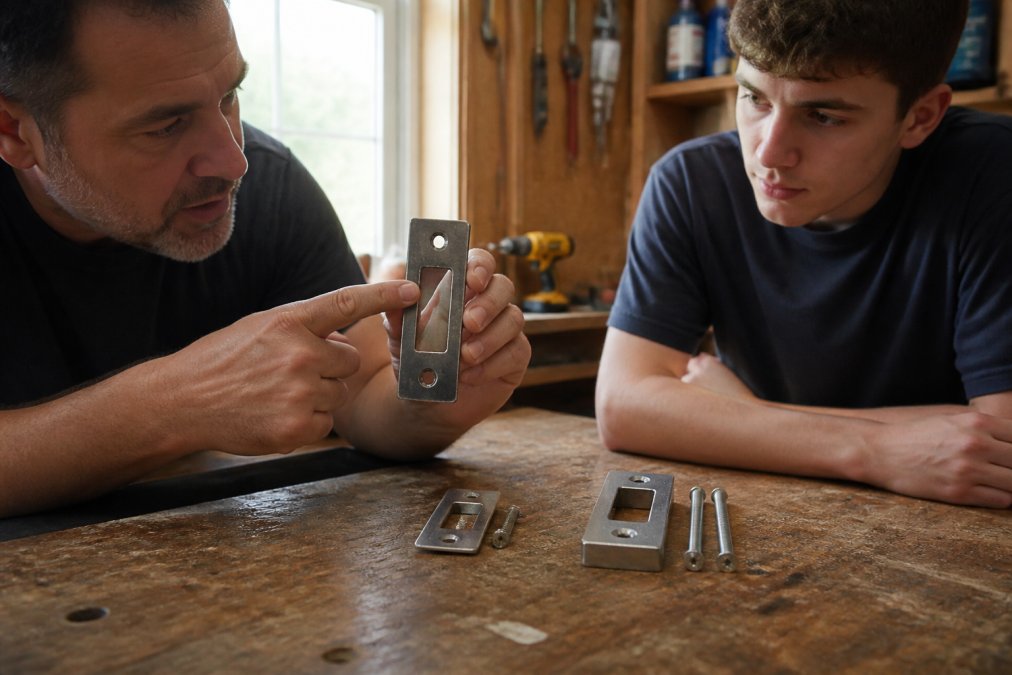
The difference comes down to three things: metal thickness, screw length, and how the plate spreads force across the frame. A security strike plate is a reinforced metal plate, typically made of heavy-duty steel, designed to resist kick-ins and prying by anchoring deep into the wall stud. A standard strike plate is a thin piece of metal that sits mostly on the surface.
Standard Strike Plates: Thin Metal, Short Screws
Most builder-grade strike plates are stamped from thin metal and secured with screws under an inch long. Those screws only bite into the door jamb, not the structural framing behind it. Under a hard kick, the wood around the screws splinters and the plate tears free.
The result? Your deadbolt might hold, but the frame gives way. That's the part most homeowners never see coming.
Security Strike Plates: Heavy-Duty Steel and Long Fasteners
A proper security strike plate uses thicker metal gauge and extended screws that reach through the jamb into the wood stud behind it. Some designs, like a box strike, also wrap around the frame to spread impact across a wider area. This is where forced entry resistance actually comes from.
| Feature | Standard Strike Plate | Security Strike Plate |
|---|---|---|
| Metal thickness | Thin stamped metal | Heavy-duty steel |
| Screw length | Under 1 inch | 3 inches or longer |
| Anchors into | Door jamb only | Wood stud behind jamb |
| Kick-in resistance | Low | High |
| Typical use | Builder-grade doors | Reinforced entry points |
How to Reinforce a Front Door Frame in Four Steps
Reinforcing a front door frame is a straightforward job that most homeowners can finish in under an hour with basic tools. The goal is simple: make the frame strong enough that a kick transfers force into the wall instead of splitting the wood.
- Remove the existing strike plate. Back out the short screws and set the plate aside. You'll likely see minimal wood damage, which is normal.
- Check your door thickness and lock type. Strike plates are sized for standard doors, and deadbolt alignment matters. Measure before you buy anything.
- Install the reinforcement plate. Line up the new security strike plate with the deadbolt and latch bolt openings. Drive the extended screws through the jamb and into the stud.
- Test the latch alignment. Close the door and confirm the deadbolt seats fully. If it drags, adjust the plate position slightly before tightening everything down.
If you want a single kit that covers the strike plate, hinges, and frame in one install, Door Armor's Single Door Security Set handles the whole job in about 30 minutes.

The Long Screw Strike Plate Upgrade Explained
The long screw strike plate upgrade is the single highest-value change you can make to an exterior door. It's also the cheapest. Swapping short jamb screws for 3-inch fasteners that reach the wall stud turns a softwood anchor into a structural one.
Why does this matter so much?
Door Armor Single Door Security Set →
Choosing a Door Jamb Reinforcement Kit
A door jamb reinforcement kit should cover three failure points: the strike plate, the hinges, and the frame itself. Kits that only address the strike plate leave the hinge side vulnerable, and that's a common mistake.
When you're comparing options, look for:
- Metal gauge and material. Heavy-duty steel or galvanized steel holds up better than thin stamped plates.
- Fastener length. Extended screws that reach the stud are non-negotiable.
- Coverage. Strike side, hinge side, and frame protection together.
- Finish options. A kit that matches your existing door hardware stays discreet.
Compatibility With Smart Locks
Here's where most guides go quiet. Smart locks depend on precise deadbolt alignment, and a poorly fitted reinforcement plate can throw that off. Before you install, confirm the plate's deadbolt opening lines up with your lock's throw. Most quality kits, including ours, are designed to work with standard deadbolt dimensions, so a smart lock retrofit usually goes smoothly.
DIY or Hire a Pro? Installation Realities
Most homeowners can install a strike plate reinforcement themselves. The job needs a drill, a screwdriver, and about 30 minutes. You don't need to remove the door or cut into the frame.
Difficulty Rating and Tools Required
On a scale of 1 to 5, where 1 is swapping a light bulb and 5 is framing a wall, a strike plate reinforcement sits at about a 2. It's a screwdriver-and-drill job. Here's the full tool list:
- Cordless drill with a driver bit that matches your screw heads (usually a #2 or #3 Phillips, sometimes a star bit on newer hardware)
- Tape measure for confirming backset and bolt throw
- Pencil for marking alignment before you drill
- Wood filler or a wooden golf tee if you need to plug old screw holes that have stripped out
- A file or rotary tool in case the bolt opening needs a small amount of enlargement
- Safety glasses, you're drilling into a jamb at eye level, and splinters happen
Time and Cost Expectations
A single-door reinforcement install typically runs 20 to 45 minutes for a first-timer and closer to 15 minutes once you've done one. The variables that stretch the time are stripped screw holes, a jamb that's been painted over multiple times, and deadbolt alignment that needs fine-tuning.
When DIY Goes Wrong
A few situations genuinely call for a pro:
- The jamb is split or the stud is rotted. Long screws won't hold in soft, decayed wood. You need the damaged section replaced before any plate will do its job.
- The door is out of square. If the deadbolt already needs a shove to seat, a rigid plate will make it worse. A pro can adjust the hinge side or plane the door to restore alignment.
- The frame is steel or aluminum. Metal frames need different fasteners and sometimes a different plate entirely. Drilling into a steel frame without the right bits and anchors is a good way to ruin the frame.
- You're in a rental and can't modify the frame. A bolt-on plate that uses existing screw holes is reversible; anything requiring new holes is not.
A Quick Self-Test Before You Start
Open the door and look at the strike plate screws. If they're under an inch long and the plate is thin stamped metal, you have a standard setup and a straightforward upgrade. If the screws are already long and the plate is thick, someone has been here before, check whether the plate is anchored into the stud or just into the jamb, because a heavy plate on short screws is a common half-measure.
Frequently Asked Questions
Do security strike plates actually prevent forced entry?
A security strike plate raises the force needed to kick a door in, which buys time during a break-in attempt. The plate itself is only part of the system. The screws matter just as much: short screws pull out of soft door jamb wood, while long screws reach the structural wood stud behind the frame. Pairing a heavy-duty security strike plate with a reinforced jamb and long fasteners gives the strongest resistance to kick-ins.
Are all strike plates the same size and shape?
No. Strike plates vary in corner style (rounded or square), plate height and width, screw hole spacing, and latch bolt opening. Before buying a replacement, measure your existing plate and note the corner shape. A plate with the wrong corner style will not sit flush, and mismatched screw holes mean you cannot reuse the existing mortise. Bring the old plate to the store or match its dimensions exactly.
Can I install a security strike plate myself?
Yes. Most strike plate swaps need only a screwdriver and a chisel if you must enlarge the mortise. Expect 20 to 30 minutes for a single door. The main risk is stripping the screw holes in old jamb wood, which you can fix by filling the holes with wood glue and a golf tee or dowel before driving new screws. A full door jamb reinforcement kit takes longer but still fits a DIY skill level.
Will a security strike plate work with my smart lock?
In most cases, yes. Smart locks control the deadbolt and latch, while the strike plate is separate hardware mounted on the jamb. The plate must align with the latch bolt and deadbolt throw, so check that the bolt extends fully into the new plate's opening. If the deadbolt does not seat, adjust the plate position or deepen the mortise. Test the lock three or four times after installation to confirm smooth operation.