 ultimate-guide
Is Door Reinforcement Worth It? A Complete 2026 Guide
Table of Contents
- Why Door Reinforcement Matters: The Reality of Residential Break-Ins
- Weak Points of Residential Doors and Entry Points
- How to Reinforce Front Door Frame: Methods That Stop Forced Entry
- Best Door Reinforcement Kits: Comparing Your Options
- Door Kick-In Protection: What Actually Works Against Forced Entry
- Cost vs. Benefit: Is the Investment Worth Your Peace of Mind
- Special Considerations: Rentals, Aesthetics, and Fire Safety
- Conclusion: Making Your Decision
Last Updated: August 29, 2026
Why Door Reinforcement Matters: The Reality of Residential Break-Ins
Forced entry through doors remains the most common way burglars access homes. Your front door is often the weakest link in your home's security perimeter. Most residential doors fail within seconds under direct force because the frame, strike plate, and hinges weren't engineered to resist a determined attack.
At Door Armor, we've spent over 20 years analyzing how break-ins happen and what actually prevents them. We've worked with law enforcement, tested our solutions against real-world attack scenarios, and helped secure over 500,000 doors. This guide reflects practical insights into what works and what doesn't.
Weak Points of Residential Doors and Entry Points
Standard residential doors have three critical vulnerabilities that make them targets for forced entry.
The strike plate is where most doors fail first. A typical strike plate is held by short screws that penetrate only about an inch into the door frame. When someone kicks the door, the force concentrates on this small area. The screws pull free from the soft wood, the frame splinters, and the door swings open in seconds.
The door jamb, the vertical frame piece that receives the strike plate, splits easily under impact. Residential jambs are typically made from 1-inch pine or similar soft wood. Once the jamb cracks, the entire entry point's structural integrity is compromised.
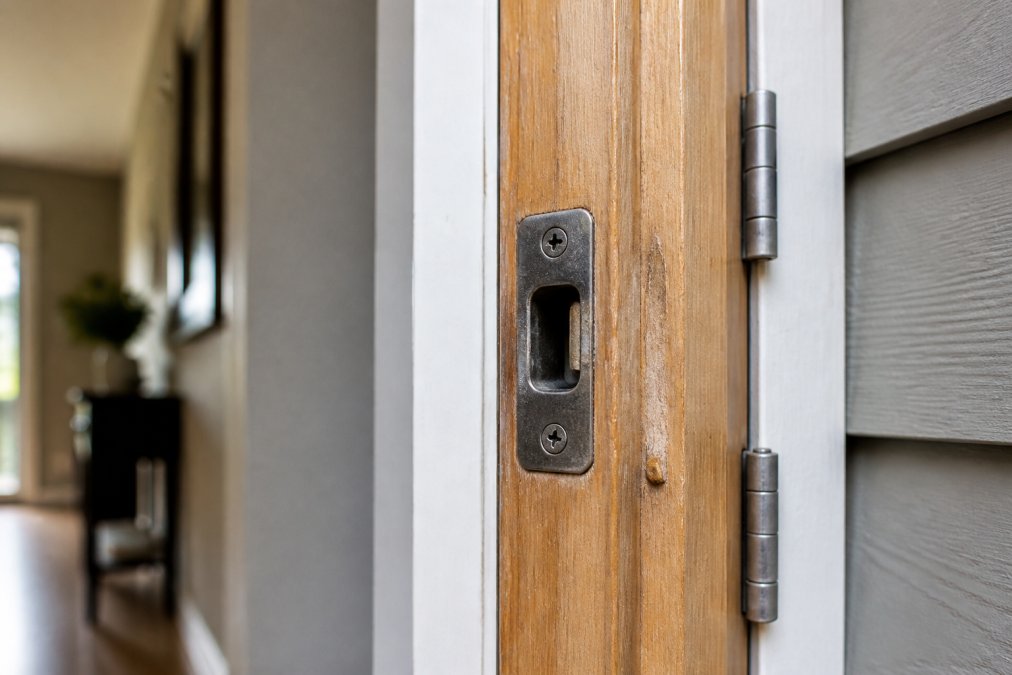
Hinges present another vulnerability. If hinges are installed on the outside of the door, an intruder can remove the hinge pins and lift the door off its frame entirely. Even interior hinges can be exploited if the hinge screws are short or the frame wood is weak.
The door itself matters less than people think. A solid-core or steel door is harder to kick through than a hollow-core door, but it's not the primary failure point. Most break-ins succeed because the frame fails, not the door material. Upgrading to a heavy-duty door without reinforcing the frame leaves your home vulnerable.
Side lights and glass panels create additional entry points. Doors with side lights lack a true jamb to reinforce, making them significantly harder to protect than solid doors.
How to Reinforce Front Door Frame: Methods That Stop Forced Entry
Effective door reinforcement addresses weak points systematically by distributing force across a larger area and anchoring the door frame to your home's structural framing.
Strike Plate and Jamb Reinforcement
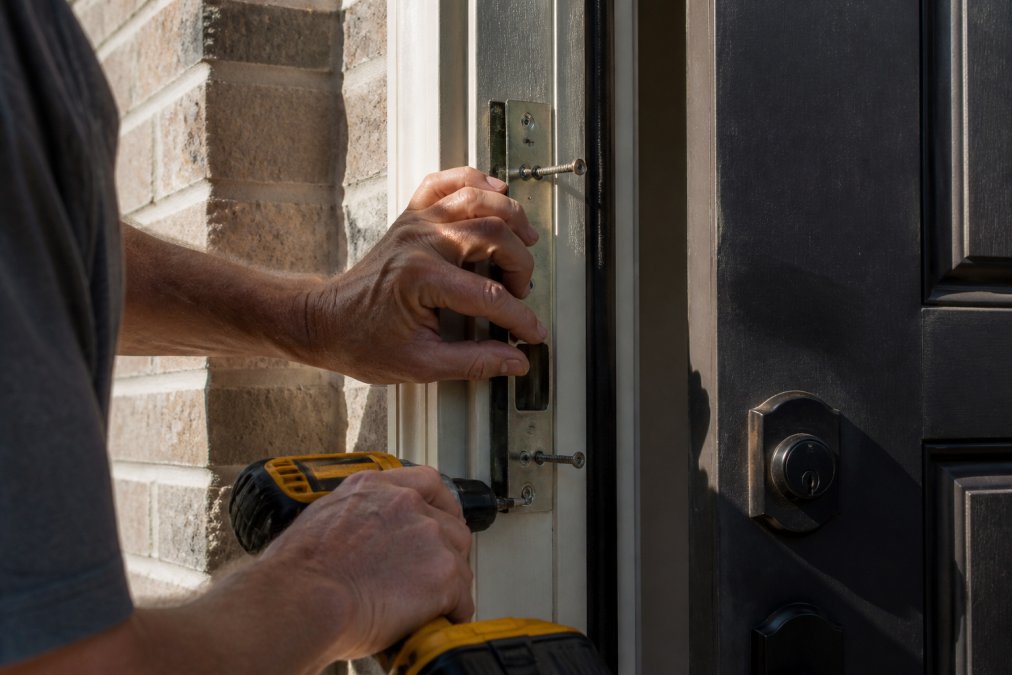
A reinforced strike plate uses longer screws, typically 3 to 3.5 inches, that penetrate deep into the door frame and reach the structural framing. This distributes impact force across a much larger area than a standard plate.
Standard strike plates use 0.75-inch screws. Reinforced versions use screws three to four times longer. A standard setup might hold against 100 pounds of force. A reinforced setup can resist several hundred pounds before the frame begins to fail.
Jamb reinforcement prevents the frame from splitting by installing steel reinforcement plates along the jamb behind the strike plate. These galvanized steel plates are bolted or screwed through the frame into the structural framing, distributing force across a wider area.
Hinge and Hardware Protection
Hinge shields cover the hinge pins on the outside of the door, making them inaccessible. For interior hinges, longer hinge screws that reach the structural framing provide tamper-proof protection.
Some systems use a "security bar" or door reinforcement bar, a metal rod that spans from the floor to the top of the door frame, creating a physical barrier against prying or kicking. These bars are typically installed on the interior and can be engaged or disengaged as needed.
Hardware quality matters. Heavy-duty locksets with reinforced strike plates, tamper-proof screws, and long-reach bolts are essential. Premium hardware is designed to resist both direct force and prying attempts.
Best Door Reinforcement Kits: Comparing Your Options
Door reinforcement kits come in several varieties, each designed for different door types and vulnerabilities.
Single-door kits protect standard exterior doors. Door Armor's Single Door Security Kit includes a reinforced strike plate with long screws, jamb reinforcement plates, hinge shields, and installation hardware. It installs in under 30 minutes and comes with a $500 Lifetime Guarantee against kick-ins.

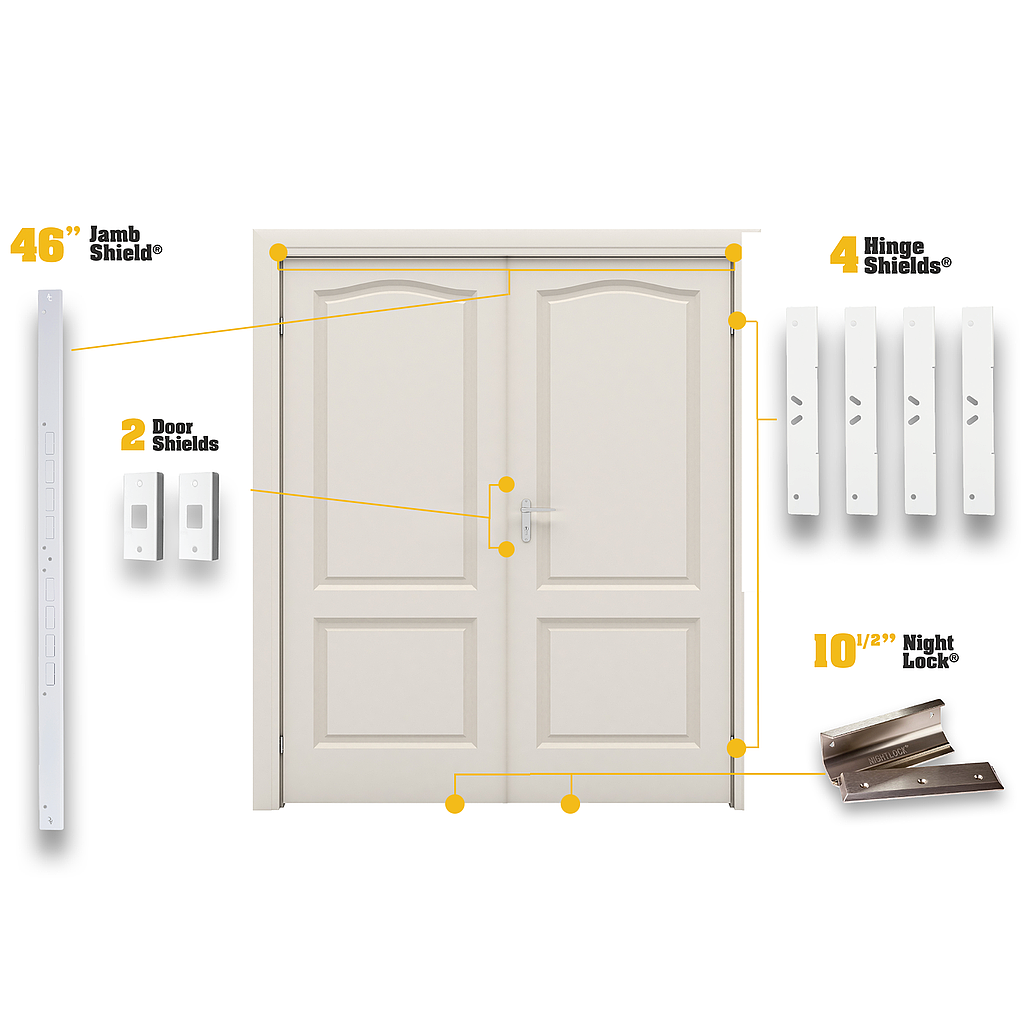
Double-door kits address the unique vulnerability of French doors and patio doors where there's no center jamb. Door Armor's Double Door Security Kit includes a night lock door barricade specifically for this purpose.
Sliding-door solutions prevent intruders from lifting the door off its track. The Armor Latch Sliding Door Deadbolt uses a heavy-duty locking mechanism to prevent this common attack vector.
Side-light door kits are specialized because side-light doors lack a traditional jamb structure. Door Armor's Side Light Door Security Kit uses sidelight jamb shields and hinge shields that create rigidity where the frame is weakest.
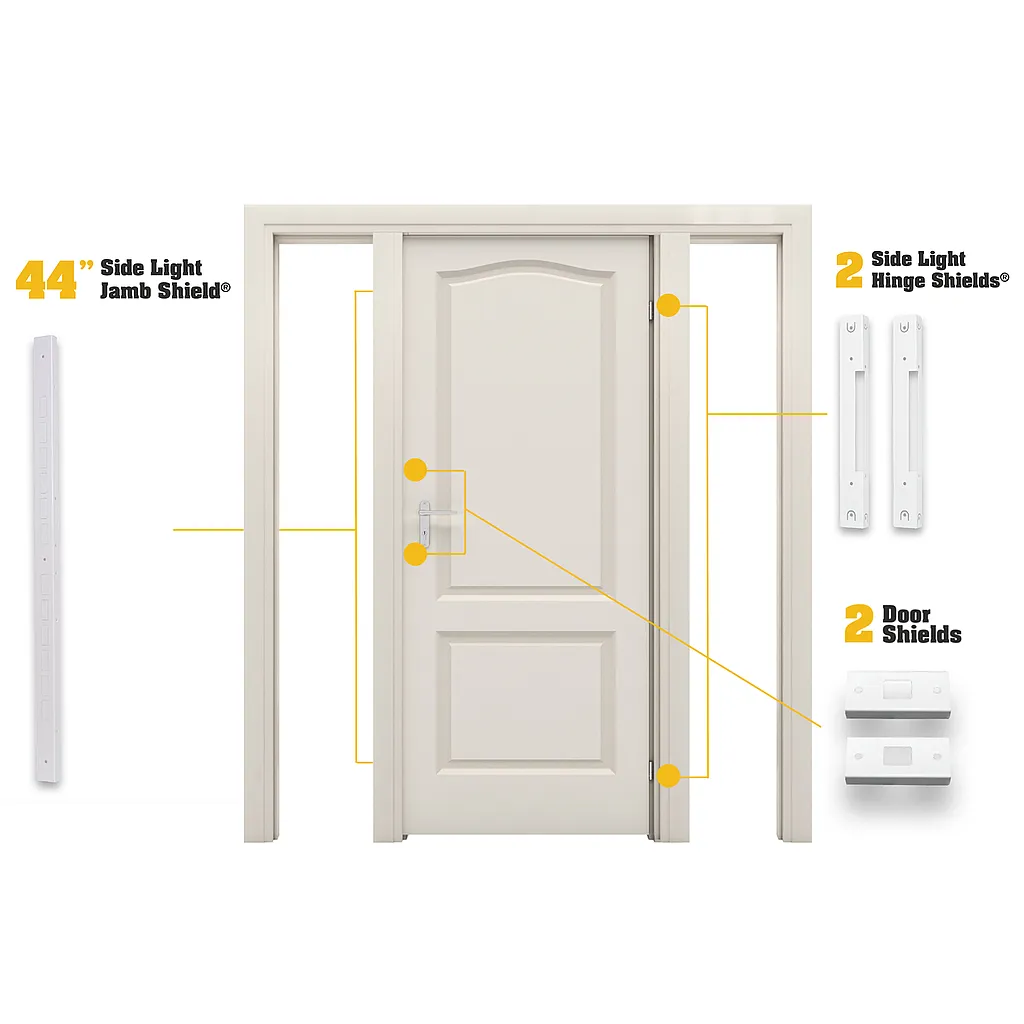
The key difference between kits is material quality and engineering. Galvanized steel resists corrosion and maintains strength over decades. Door Armor's patented system uses galvanized steel throughout and is police-tested to ensure it performs under real-world attack conditions.
Door Kick-In Protection: What Actually Works Against Forced Entry
A standard door with no reinforcement typically fails in one or two kicks. A door with a reinforced strike plate and standard jamb might resist three or four kicks. A fully reinforced door with jamb shields, hinge protection, and long-reach hardware can resist dozens of kicks.
The goal of door reinforcement isn't to make the door impossible to breach. It's to buy time. Every second of resistance gives you time to call for help or move to a safe room. Most intruders abandon the attempt if it takes more than 30 seconds. A reinforced door turns a 3-second breach into a 30-second or longer struggle.
Forced-entry resistance depends on three factors: strike plate strength, jamb integrity, and hinge security. If any one fails, the door fails. That's why comprehensive kits address all three simultaneously.
Police departments recommend door reinforcement because it's one of the few home security measures that works passively. It doesn't require power, doesn't fail if you forget to activate it, and doesn't degrade over time if installed correctly.
Cost vs. Benefit: Is the Investment Worth Your Peace of Mind
A basic reinforced strike plate costs between $20 and $50. A complete single-door reinforcement kit typically costs between $79 and $150. Door Armor's Single Door Security Kit is priced at $79 and includes strike plate reinforcement, jamb shields, hinge protection, and all installation hardware.
For comparison, a professional locksmith charging $150 to $300 to install a high-security deadbolt provides only lock protection, not frame protection. A new solid-core or steel door costs $500 to $2,000 plus installation. Door reinforcement is one of the most cost-effective security upgrades available.
If you live in an area with high break-in rates, have experienced a previous break-in, own a vacation property, or have valuable items at risk, the investment is straightforward. Even in low-crime areas, door reinforcement provides insurance against the possibility of a break-in attempt.
Installation Difficulty and DIY Requirements
Most door reinforcement kits are designed for DIY installation. Door Armor's kits install in under 30 minutes without special tools. You need a drill, screwdriver, and basic measuring skills. If you're uncomfortable with DIY installation, a locksmith or handyman can install most kits in 30 to 60 minutes for a service fee of $75 to $150.
Some door types complicate installation. Doors with non-standard frame dimensions, exterior trim interference, or unusual hinge configurations may require customization. Side-light doors and double doors often benefit from professional installation.
Insurance Premium Impact and Home Value
Some insurance companies offer discounts for homes with reinforced entry doors. The real value is in avoided costs. A single break-in attempt can result in $500 to $2,000 in property damage, not counting stolen items or psychological impact. Door reinforcement prevents or significantly reduces this risk.
Special Considerations: Rentals, Aesthetics, and Fire Safety
Rental properties present a challenge because permanent modifications require landlord approval. Door Armor's systems use screws rather than adhesive, making them removable without permanent damage. Check your lease before installing any security hardware.
Aesthetics matter if you're concerned about your home's appearance. Reinforced strike plates and jamb shields are typically installed on the interior side of the door frame, making them invisible from outside. Door Armor's design uses finishes that match standard door hardware, so they blend with existing hardware rather than standing out.
Fire safety and egress are critical considerations. Door reinforcement should never prevent emergency exit. Interior reinforcement bars should be removable or quick-release. Exterior doors must remain functional for emergency evacuation. Most quality reinforcement kits are designed with fire safety in mind, but verify this before purchasing.
Material compatibility affects installation. Older homes with original wooden frames may have softer wood that doesn't hold screws as securely. Metal frames require different hardware. Vinyl or composite frames have different requirements than wood. Door Armor kits are engineered for standard residential frames, but verify compatibility with your specific door type before purchasing.
Door reinforcement is worth the investment if you're concerned about forced entry, live in a higher-risk area, or have experienced a break-in. The cost is low, the installation is straightforward, and the protection is passive and permanent. Door Armor's patented system combines police-tested engineering with discreet design and a $500 Lifetime Guarantee, making it one of the most practical security upgrades available. Get started with Door Armor and transform your doors into genuine barriers against forced entry, giving you and your family the protection and peace of mind you deserve.
Frequently Asked Questions
Q: Do door bars and reinforcement hardware actually work against forced entry?
A: Yes. Door reinforcement hardware addresses the structural weaknesses that make kick-ins possible. The strike plate, jamb, and hinges are the failure points in 80% of forced entries. Reinforcing these areas with galvanized steel hardware and long screws that reach the door frame's solid wood prevents the door from splitting or the latch from tearing through the jamb. The effectiveness depends on quality materials and proper installation, but tested systems stop forced entry reliably.
Q: How much does it cost to reinforce a door against forced entry?
A: Door reinforcement kits range from $40 to $150 depending on door type. A single exterior door security kit costs around $79, while double-door kits run $149, and sliding glass door deadbolts cost $40. These are one-time purchases with no ongoing costs or power requirements. Compare this to door replacement ($800-$2,500 per door) or property damage repair after a break-in, and reinforcement delivers significant value for the investment.
Q: Can I install door reinforcement myself, or do I need a professional?
A: Door reinforcement is designed for DIY installation and takes about 30 minutes with basic tools: a drill, screwdriver, and tape measure. The hardware screws directly into existing door frames without modifications. No carpentry experience is required. If you're uncomfortable with basic drilling, a handyperson can install it for $50-$150 in labor. Most homeowners complete the installation without issues, and installation support is available if you have questions during the process.
Q: Will door reinforcement work on rental properties or can I take it with me when I move?
A: Door reinforcement hardware is semi-permanent. It screws into the door frame and requires small pilot holes, making it removable but leaving minor marks. For rental properties, you can install it and remove it when you leave, filling the holes with wood filler and paint. This makes it ideal for vacation properties or rental units where you need security without permanent changes. Check your lease first, but most landlords allow this type of upgrade since it doesn't damage the door itself.
This article was written using GrandRanker
Frequently Asked Questions
Q: Do door bars and reinforcement hardware actually work against forced entry?
A: Yes. Door reinforcement hardware addresses the structural weaknesses that make kick-ins possible. The strike plate, jamb, and hinges are the failure points in 80% of forced entries. Reinforcing these areas with galvanized steel hardware and long screws that reach the door frame's solid wood prevents the door from splitting or the latch from tearing through the jamb. The effectiveness depends on quality materials and proper installation, but tested systems stop forced entry reliably.
Q: How much does it cost to reinforce a door against forced entry?
A: Door reinforcement kits range from $40 to $150 depending on door type. A single exterior door security kit costs around $79, while double-door kits run $149, and sliding glass door deadbolts cost $40. These are one-time purchases with no ongoing costs or power requirements. Compare this to door replacement ($800–$2,500 per door) or property damage repair after a break-in, and reinforcement delivers significant value for the investment.
Q: Can I install door reinforcement myself, or do I need a professional?
A: Door reinforcement is designed for DIY installation and takes about 30 minutes with basic tools: a drill, screwdriver, and tape measure. The hardware screws directly into existing door frames without modifications. No carpentry experience is required. If you're uncomfortable with basic drilling, a handyperson can install it for $50–$150 in labor. Most homeowners complete the installation without issues, and installation support is available if you have questions during the process.
Q: Will door reinforcement work on rental properties or can I take it with me when I move?
A: Door reinforcement hardware is semi-permanent. It screws into the door frame and requires small pilot holes, making it removable but leaving minor marks. For rental properties, you can install it and remove it when you leave, filling the holes with wood filler and paint. This makes it ideal for vacation properties or rental units where you need security without permanent changes. Check your lease first, but most landlords allow this type of upgrade since it doesn't damage the door itself.