 how-to
How to Secure Back Door: 7 Steps to Stop Forced Entry
Table of Contents
- Why Your Back Door Is a Break-In Target
- Install a Heavy-Duty Deadbolt on Your Back Door
- Reinforce Your Strike Plate and Door Frame
- How to Prevent Door Kick-Ins with Long Wood Screws
- Protect Glass Doors with Security Film and Bars
- Choose a Door Reinforcement Kit for Maximum Protection
- Security Audit Checklist for Your Back Door
- Rental-Friendly Options and Emergency Egress
Last Updated: August 24, 2026
Why Your Back Door Is a Break-In Target
Your back door is a break-in target because it's hidden from street view, giving intruders privacy to work without neighbors noticing. Standard door frames, weak strike plates, and basic locks fail under pressure, a single kick can snap the door open.
Walk around your home and assess your back door like an intruder would: Is it visible from the street? How sturdy is the frame? Can you see daylight around the edges when closed? These observations reveal vulnerabilities.
The good news: securing your back door doesn't require replacement. A heavy-duty deadbolt, reinforced strike plate, long wood screws, and door reinforcement hardware work together to create resistance that stops most forced-entry attempts. The extra seconds it takes to breach a properly secured door often means intruders move on to an easier target.
Install a Heavy-Duty Deadbolt on Your Back Door
A heavy-duty deadbolt is the foundation of back door security. Standard spring latches are easy to push open; a deadbolt requires a key or deliberate action to unlock.
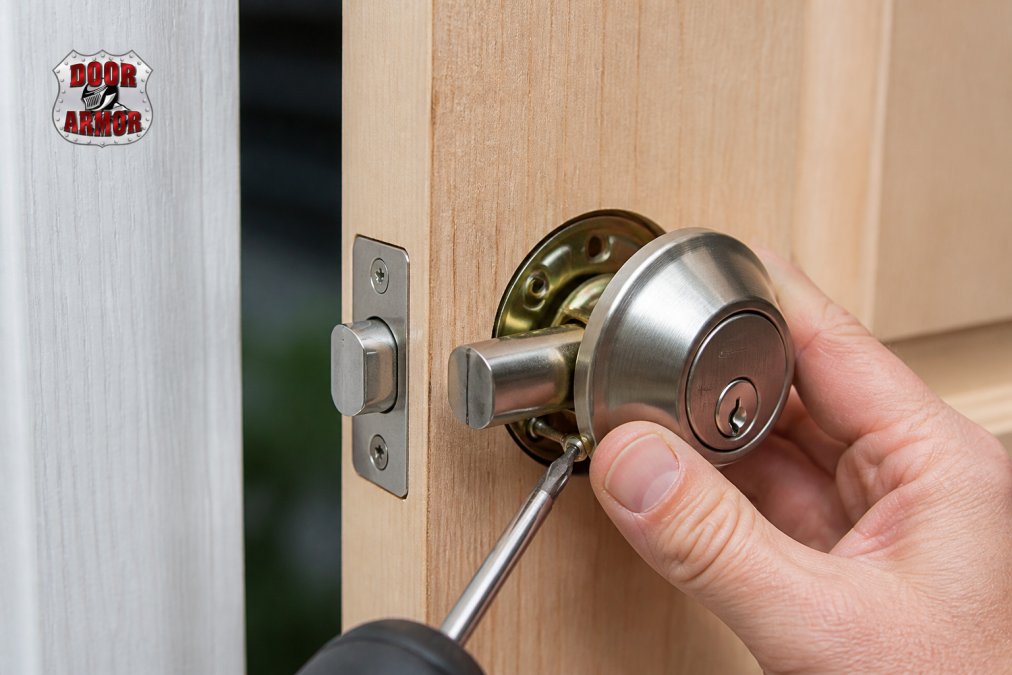
What makes a deadbolt "heavy-duty":
- Grade 2 or Grade 1 rating (commercial-grade strength)
- At least 1-inch bolt throw into the door frame
- Reinforced strike plate with long screws (at least 2.5 inches)
- Tamper-resistant design that resists prying
- Solid brass or steel construction
Installation steps:
-
Measure the backset (distance from door edge to lock hole center). Standard backsets are 2.375 or 2.75 inches.
-
Mark hole locations using the template provided with your deadbolt.
-
Drill the holes slowly with a spade bit to avoid splitting the wood.
-
Install the bolt assembly, inserting the mechanism from inside and securing the exterior cylinder.
-
Install the strike plate using the longest screws possible (at least 2.5 inches) to anchor into the door frame, not just surface trim.
-
Test operation to ensure smooth locking and unlocking with no play or wobbling.
Most homeowners complete this in 30-45 minutes. Quality heavy-duty deadbolts cost $30 to $80.
Reinforce Your Strike Plate and Door Frame
The strike plate is where most doors fail. When someone kicks the door, the bolt pushes against the strike plate. If screws are short or the frame is weak, the plate tears away and the door opens.
Why the strike plate matters:
- It's the point of contact when force is applied
- Standard strike plates use 0.75-inch screws that only grip surface trim (nist.gov)
- Reinforced strike plates use 2.5 to 3-inch screws that anchor deep into door frame studs
- Longer screws distribute force across the structural frame instead of concentrating it on surface material
How to reinforce your strike plate:
-
Remove the existing strike plate and inspect the door frame jamb where it attaches.
-
Install a heavy-duty strike plate with a larger surface area and deeper bolt pocket.
-
Use long wood screws (2.5 to 3-inch Grade 5 or better) to replace all fasteners. This is the critical step.
-
Tighten firmly with no movement in the strike plate.
-
Test with pressure to ensure the frame doesn't flex or move.
If your door frame is compromised or you have a glass door with a side light, a door reinforcement kit becomes necessary.
How to Prevent Door Kick-Ins with Long Wood Screws
Door kick-ins happen because the door frame gives way. Standard doors come with 0.75-inch screws in the strike plate and hinges that barely penetrate the frame. Long wood screws, 2.5 to 3 inches, reach deep into frame studs, distributing force across a much larger area and stopping most kick-in attempts.
Why long wood screws work:
- They penetrate through surface trim into the structural frame
- They anchor across multiple layers of wood
- They resist shearing force that short screws cannot handle
- They cost $0.50 to $1.50 each
Where to install long wood screws:
-
Strike plate holes: Replace all screws with 2.5 to 3-inch Grade 5 wood screws (at least 3, ideally 4).
-
Hinge screws: Replace at least 2 screws per hinge with 2.5-inch screws.
-
Deadbolt mounting: Ensure all fasteners are long screws anchored into the frame.
-
Door frame corners: Add screws where the jamb meets the head frame for full reinforcement.
Installation:
-
Pre-drill holes slightly smaller than the screw diameter to prevent splitting.
-
Drive screws firmly with a power drill or screwdriver.
-
Verify each screw is fully seated with no gaps.
The entire process takes 15-20 minutes and costs under $10 in materials.
Protect Glass Doors with Security Film and Bars
Glass doors and doors with side lights are the most vulnerable entry points. An intruder can break the glass, reach in, and unlock the door from inside, or force the frame itself.
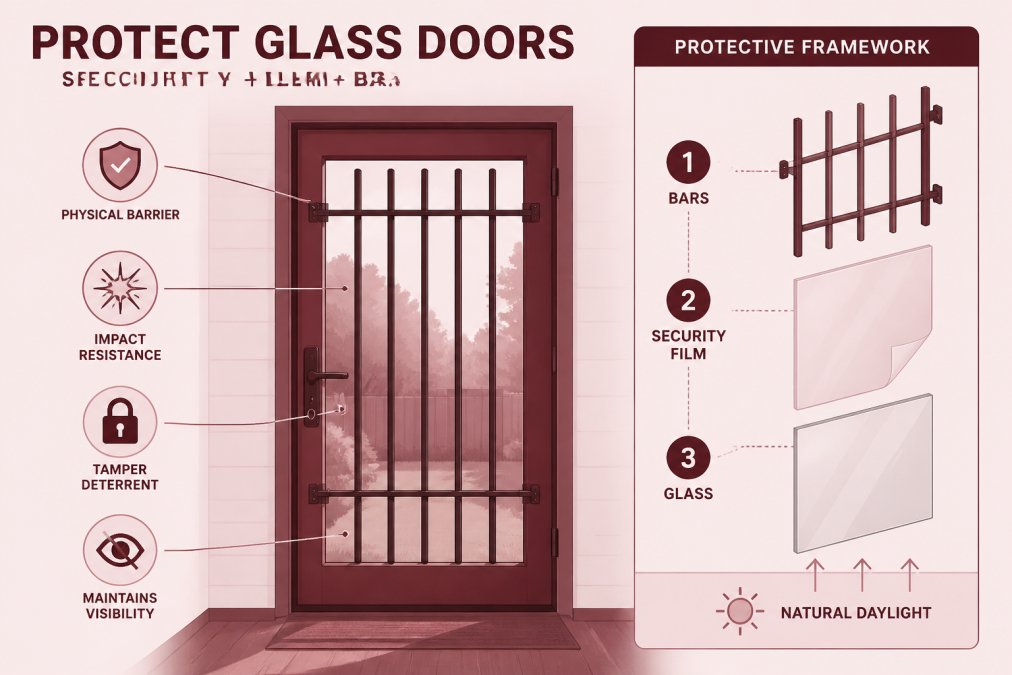
Two-layer approach to glass door security:
Security film is a transparent polyurethane coating applied to the inside of glass. When glass breaks, the film holds pieces together, preventing easy entry. The delay is often enough to trigger an alarm or allow you to respond.
Security bars or grilles are metal bars installed over the glass or across the door frame. They prevent both glass breakage and frame forcing, and their visibility deters many intruders before they attempt entry.
Installing security film:
-
Clean the glass thoroughly.
-
Measure and cut the film to size, leaving a 2-inch border on all sides.
-
Spray the glass with soapy water solution.
-
Peel back a corner of the film's backing and position it on the glass.
-
Use a squeegee to press the film onto the glass, working out air bubbles.
-
Trim excess film with a utility knife.
Security film costs $10 to $30 per door and takes 30-45 minutes to install.
Installing security bars:
-
Position the bar frame over the glass or across the door opening.
-
Mark the mounting holes on the frame.
-
Drill pilot holes and install bolts or screws (use long fasteners that reach into the structural frame).
-
Test that bars are secure and don't rattle.
Security bars cost $50 to $200 depending on size and material.
Choose a Door Reinforcement Kit for Maximum Protection
A door reinforcement kit combines multiple security components into a single system designed to stop forced entry at multiple points. Kits typically include a reinforced strike plate with long mounting screws, hinge shields, door frame reinforcement plates, high-grade deadbolt hardware, and installation hardware.
Why kits work better than individual components:
- All pieces are engineered to work together
- They address multiple failure points simultaneously
- Installation is more straightforward
- They're often cheaper than buying components separately
What to look for in a kit:
-
Strike plate quality that accepts 2.5+ inch screws with large surface area.
-
Hinge coverage with shields that cover hinge pins and prevent prying.
-
Frame reinforcement that extends the strike plate area or adds support to the door jamb.
-
Installation time under 30 minutes without special tools.
-
Guarantee signaling manufacturer confidence in the product.
Door Armor offers a Door Armor Single Door Security Kit designed for standard back doors with patented galvanized steel reinforcement that prevents both kick-ins and prying attempts. Installation takes under 30 minutes and comes with a $500 Lifetime Guarantee against kick-ins.

For doors with side lights, the Door Armor Side Light Door Security Kit addresses the unique vulnerability of frames without a solid jamb.
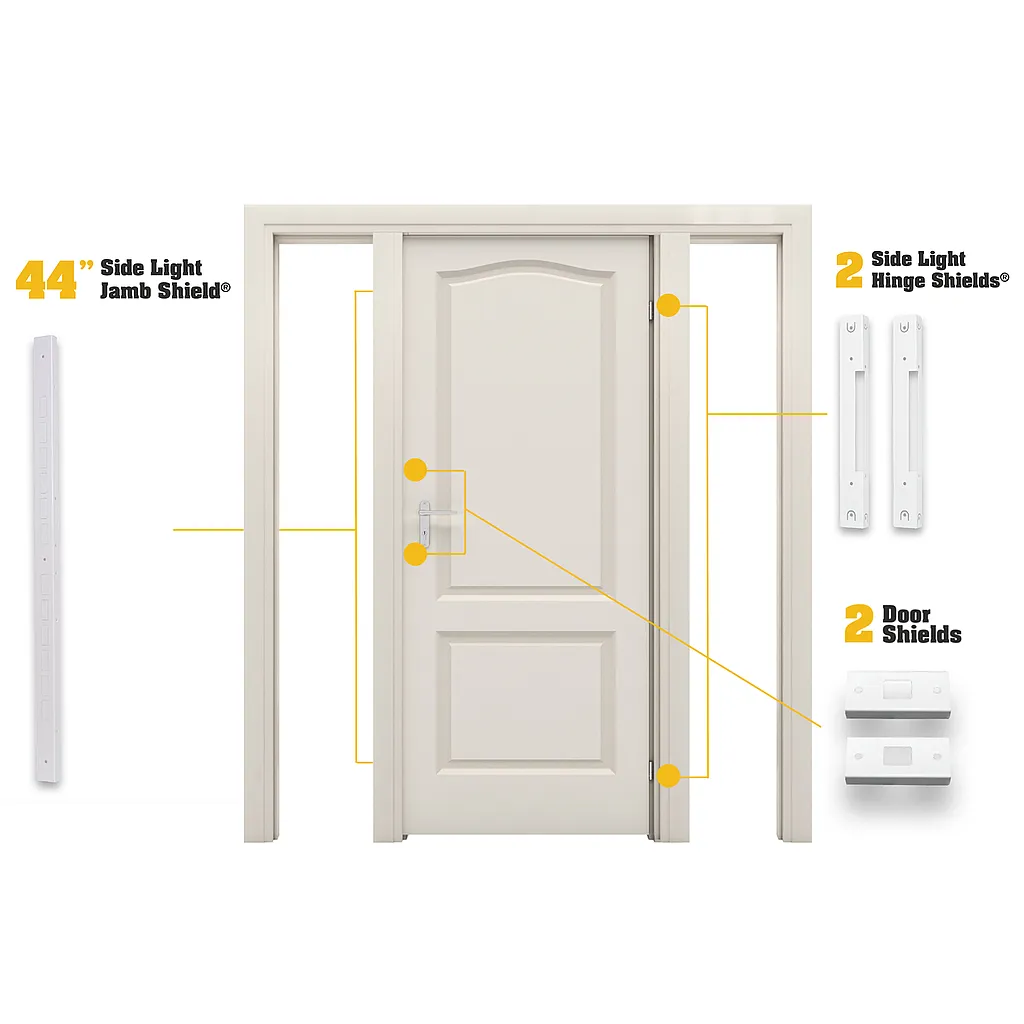
For double doors, the Door Armor Double Door Security Kit includes a night lock barricade that secures both doors simultaneously.
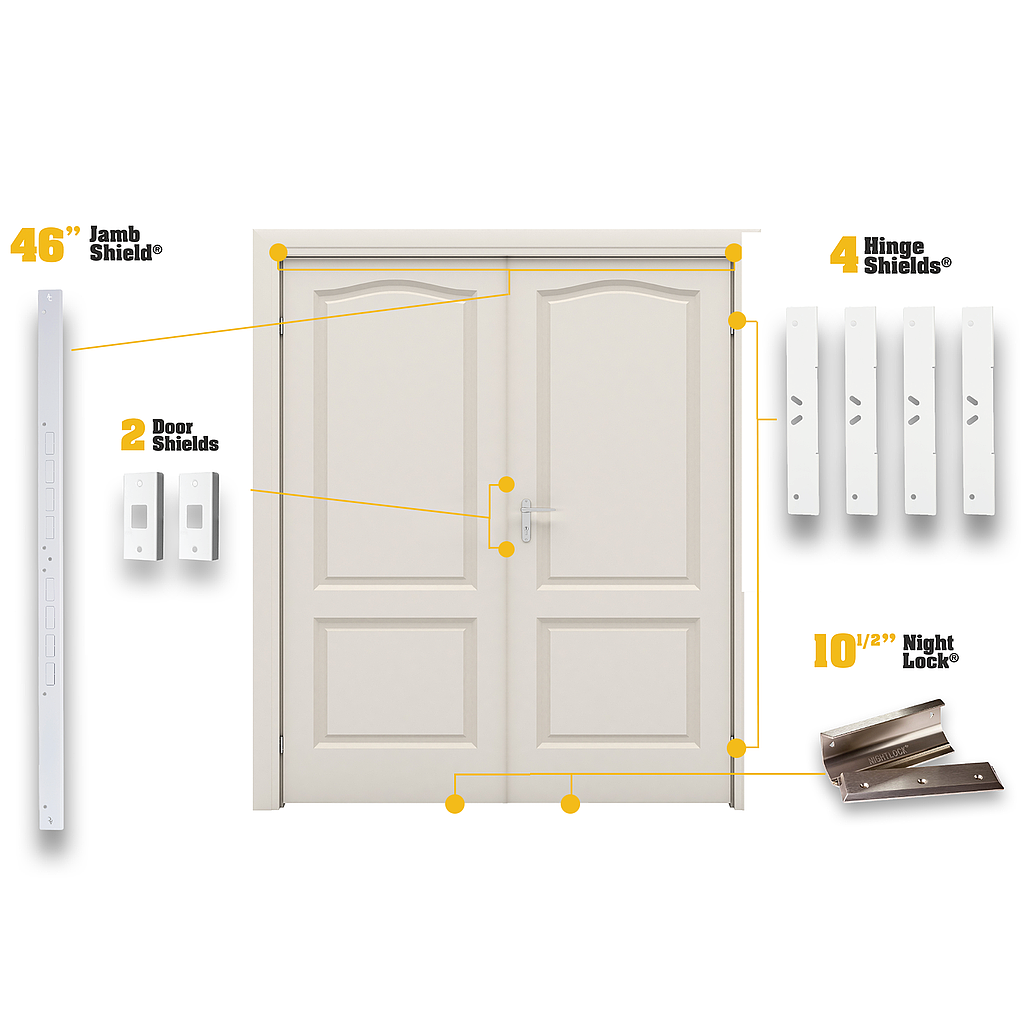
Reinforcement kits range from $40 to $150 depending on door type and components.
Security Audit Checklist for Your Back Door
A security audit is a systematic walkthrough to identify vulnerabilities. It takes 10-15 minutes and requires no special tools.
| Security Element | Current Status | Action Needed |
|---|---|---|
| Deadbolt installed | Yes / No | Install heavy-duty deadbolt if missing |
| Strike plate fasteners | Short screws / Long screws | Replace with 2.5"+ screws |
| Door frame condition | Solid / Damaged / Hollow | Reinforce or replace if compromised |
| Hinges visible from outside | Yes / No | Install hinge shields if visible |
| Glass present | Yes / No | Install security film or bars if yes |
| Door material | Solid / Hollow core / Composite | Upgrade if hollow core |
| Door frame gaps | Tight / Loose / Visible light | Seal gaps with weatherstripping |
| Lighting | Well-lit / Dark | Add motion-sensor lighting if dark |
| Visibility from street | Hidden / Partially visible / Fully visible | Consider landscaping to reduce visibility |
| Lock condition | Works smoothly / Sticks / Broken | Repair or replace if not smooth |
How to use this checklist:
-
Print or screenshot the table.
-
Walk around your back door and evaluate each element.
-
Prioritize actions based on vulnerability level:
- Critical: Missing deadbolt, damaged frame, hollow-core door
- High: Short screws in strike plate, visible hinges, glass doors without film or bars
- Medium: Poor lighting, visible from street, stuck locks
- Low: Weatherstripping, landscaping
-
Start with critical items and work down the list.
A complete security upgrade addressing all critical and high-priority items typically takes 4-6 hours and costs $100 to $300 in materials.
Rental-Friendly Options and Emergency Egress
If you rent, you can't install permanent security upgrades. But you have options that don't require drilling or permanent installation.
Temporary security solutions for renters:
Security film is removable and doesn't damage the door. Peel it off when you move.
Portable door locks wedge under the door handle or in the door frame to prevent opening. Cost: $15 to $40.
Door security bars or rods use tension or friction to stay in place without fastening. Cost: $30 to $80.
Sliding door locks place a rod or bar in the track to prevent opening. Cost: $10 to $20. The Armor Latch Sliding Door Deadbolt secures sliding glass doors without drilling.
Smart locks install over existing locks without modification if the landlord allows. Cost: $100 to $300.
Important: Emergency egress considerations
While securing your back door, maintain a safe way to exit in an emergency. Building codes require that exterior doors be openable from inside without special knowledge or tools, even when security-locked (nfpa.org).
This means:
-
Deadbolts must have interior thumb turns for unlocking without a key.
-
Security bars or grilles must be removable or openable from inside to prevent trapping you in case of fire.
-
Door reinforcement shouldn't prevent normal operation from inside.
-
Windows should have emergency exits if the back door is your only exit from a room.
The goal is security without creating a fire hazard.
Securing your back door is one of the highest-impact home security investments you can make. Most break-ins happen through doors, and most door breaks happen because the frame fails under force (fbi.gov). A heavy-duty deadbolt, reinforced strike plate, and long wood screws stop the majority of forced-entry attempts. For maximum protection, a door reinforcement kit like Door Armor provides police-tested security that installs in under 30 minutes and comes with a $500 Lifetime Guarantee. Start with the security audit checklist, prioritize critical vulnerabilities, and upgrade your back door hardware today.
Frequently Asked Questions
Q: What's the fastest way to secure a back door if I'm renting?
A: Rental-friendly solutions include portable door security bars, adhesive-based security film for glass panels, and temporary door braces that don't require drilling or permanent installation. These options can be removed without damage when you move. A portable door reinforcement kit or wedge-style security bar provides immediate protection without modifying your door or frame.
Q: How does a door reinforcement kit prevent forced entry better than just upgrading the deadbolt?
A: A door reinforcement kit addresses the entire weak point system: the lock, strike plate, door jamb, and hinges. While a deadbolt alone protects only the lock cylinder, a reinforcement kit uses galvanized steel components to distribute force across the entire door frame. This prevents kick-ins by reinforcing the strike plate with long wood screws anchored deep into the door frame, making the entire entry point much harder to breach through prying or kicking.
Q: Are glass back doors a major security risk, and what's the best protection?
A: Glass back doors are vulnerable because intruders can break the glass and reach the lock from inside. Security film makes glass harder to shatter and slower to penetrate. Security bars or rods provide the strongest protection by physically blocking entry even if glass breaks. For maximum protection, combine security film with a security bar or rod. These layers create multiple barriers that deter break-ins and buy critical time to call for help.
Q: How do I know if my back door installation is secure, or should I hire a professional?
A: Most back door security upgrades are DIY-friendly and take 30 minutes or less. After installation, test your deadbolt for smooth operation, check that strike plate screws are tight and anchored deep into the frame (not just the trim), and verify that any security bars or rods are firmly secured with no movement. If you're unsure about screw depth or frame integrity, a quick inspection by a handyperson can confirm proper installation without the cost of a full professional retrofit.
This article was written using GrandRanker
Frequently Asked Questions
Q: What's the fastest way to secure a back door if I'm renting?
A: Rental-friendly solutions include portable door security bars, adhesive-based security film for glass panels, and temporary door braces that don't require drilling or permanent installation. These options can be removed without damage when you move. A portable door reinforcement kit or wedge-style security bar provides immediate protection without modifying your door or frame.
Q: How does a door reinforcement kit prevent forced entry better than just upgrading the deadbolt?
A: A door reinforcement kit addresses the entire weak point system: the lock, strike plate, door jamb, and hinges. While a deadbolt alone protects only the lock cylinder, a reinforcement kit uses galvanized steel components to distribute force across the entire door frame. This prevents kick-ins by reinforcing the strike plate with long wood screws anchored deep into the door frame, making the entire entry point much harder to breach through prying or kicking.
Q: Are glass back doors a major security risk, and what's the best protection?
A: Glass back doors are vulnerable because intruders can break the glass and reach the lock from inside. Security film makes glass harder to shatter and slower to penetrate. Security bars or rods provide the strongest protection by physically blocking entry even if glass breaks. For maximum protection, combine security film with a security bar or rod. These layers create multiple barriers that deter break-ins and buy critical time to call for help.
Q: How do I know if my back door installation is secure, or should I hire a professional?
A: Most back door security upgrades are DIY-friendly and take 30 minutes or less. After installation, test your deadbolt for smooth operation, check that strike plate screws are tight and anchored deep into the frame (not just the trim), and verify that any security bars or rods are firmly secured with no movement. If you're unsure about screw depth or frame integrity, a quick inspection by a handyperson can confirm proper installation without the cost of a full professional retrofit.