 ultimate-guide
How to Prevent Break-Ins With Layered Security
Table of Contents
- What Layered Security Means for a Home
- How to Reinforce Front Door Against Kick-Ins
- DIY Home Security Upgrades That Make a Difference
- Physical Security vs Electronic Security: What Each One Does
- Securing Sliding Doors, Side Lights, and Double Doors
- Habits and Routines That Support Layered Security
- Conclusion
- Frequently Asked Questions
Last Updated: September 16, 2026
What Layered Security Means for a Home
Layered security is the practice of protecting a home through multiple independent defenses, so that if one fails, others still hold. For a house, that means reinforcing doors, windows, lighting, routines, and alarms as separate but connected barriers. A burglar who defeats your lock still faces your door frame, your deadbolt, your hinges, and your neighbors' sightlines.
This guide from Door Armor breaks down how to prevent break-ins with layered security, from the front door to the routines you keep after dark. The core idea is simple: intruders look for the easiest target on the street, and every layer you add makes your home a worse bet than the one next door.
Below, we'll walk through the physical weak points burglars test first, the DIY upgrades that actually matter, and how physical and electronic security work together.
How to Reinforce Front Door Against Kick-Ins
The front door is where most forced entries happen, and the lock is rarely the failure point. The frame, hinges, and strike plate give way first under a hard kick. Reinforcing those components is the highest-value upgrade you can make.
A standard deadbolt sits in a strike plate held by short screws that bite into soft trim. One solid kick splits that trim and the door swings open, lock intact.
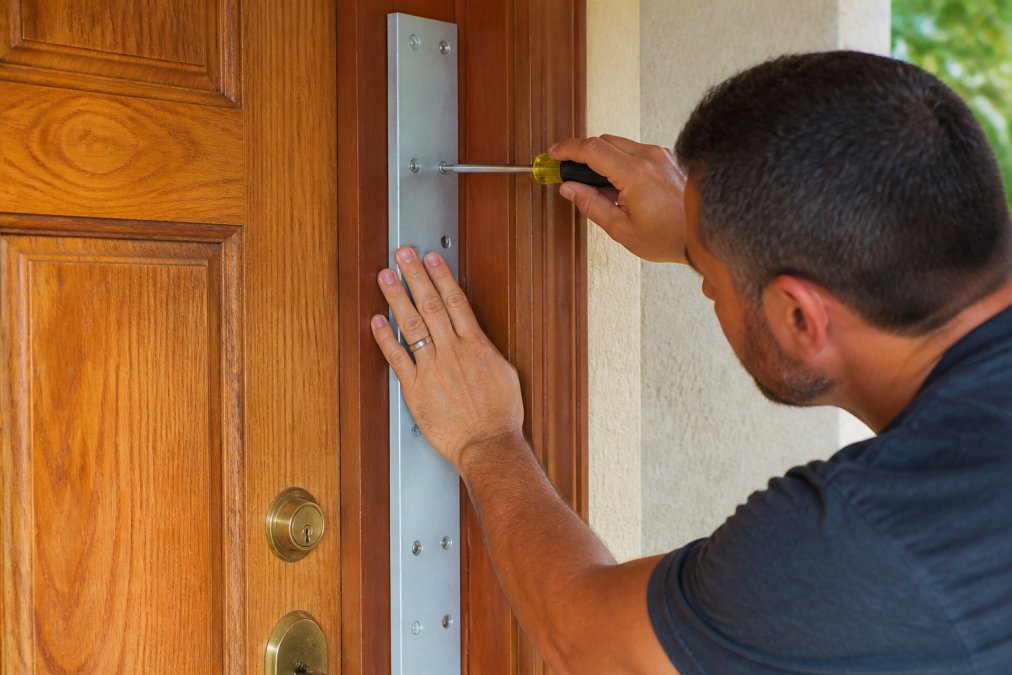
The fix is to spread the force across the whole frame with steel reinforcement. Door Armor's MAX Single Door Security Kit is a good example: a galvanized steel jamb shield, hinge shields, and a reinforced strike plate that install over your existing hardware in about 30 minutes. It carries a $500 lifetime guarantee against kick-ins, and the company has secured over 500,000 doors.
The Weak Points Burglars Target First
Burglars test a handful of spots in a specific order. Knowing that order tells you where to spend your money.
- The strike plate and jamb. The lock area absorbs the kick. If it's only anchored in trim, it fails.
- The hinges. Exposed hinges on an outward-swinging door can be popped with a pry bar.
- The door itself. A hollow-core or thin door splits before the frame does.
- The gap around the door. A wide gap lets a pry bar or shim slip in.
For most homes, the strike plate and jamb are the first things to reinforce. That's where a layered approach starts.
DIY Home Security Upgrades That Make a Difference
DIY home security upgrades are the improvements a homeowner can install without a contractor, and they deliver most of the protection for a fraction of the cost. The upgrades that matter target forced entry, visibility, and habit.
Start with the entry points, then work outward:
- Reinforce every exterior door frame with steel jamb and hinge shields.
- Add a sliding door deadbolt that stops the door from being lifted off its track.
- Replace short strike-plate screws with long structural screws that reach the stud.
- Trim shrubs and tree limbs that hide your doors from the street.
- Add motion-sensor lighting at each entry and along dark side yards.
Door Armor's Armor Latch Sliding Door Deadbolt is a straightforward example of the sliding-door fix, priced at $39.99. It locks the door to the track so it can't be pried up and out.
Most of these take an afternoon. None require power, wiring, or a subscription.
Physical Security vs Electronic Security: What Each One Does
Physical security and electronic security solve two different problems, and layering them is what makes a home hard to hit. Physical security buys time. Electronic security buys awareness.
Physical security is the hardware that resists force: reinforced frames, steel strike plates, deadbolts, hinge shields, and window locks. It doesn't call anyone. It just makes the door hold long enough that the intruder gives up or you have time to react.
Electronic security is the system that detects and alerts: alarms, cameras, door sensors, and motion lights. It tells you and the authorities that something is happening, but a camera doesn't stop a kick.
Door Armor Single Door Security Set →
| Layer | What It Does | Best For | Weakness Alone |
|---|---|---|---|
| Physical (reinforced doors, locks, deadbolts) | Resists forced entry, buys time | Stopping kick-ins and prying | No alert if you're away |
| Electronic (alarms, cameras, sensors) | Detects and alerts | Knowing something happened | Doesn't stop the entry |
| Environmental (lighting, landscaping) | Removes cover, adds visibility | Deterring a would-be burglar | Easy to defeat in daylight |
The honest take: an alarm without reinforced doors tells you about a break-in after it's over. Reinforced doors without an alarm keep the intruder out but leave you guessing. You want both, and the physical layer is the one most homeowners skip.
Securing Sliding Doors, Side Lights, and Double Doors
Sliding doors, side lights, and double doors are the entry points most homeowners leave weak, because standard locks don't fit them well. Each needs hardware built for its specific design.
A sliding glass door is the classic soft target. The latch is flimsy and the door can often be lifted off its track from outside. A sliding door deadbolt locks it in place and stops the lift.
Side lights are harder. A door with side lights doesn't have a real jamb to anchor into, so a standard reinforcement kit won't hold. Door Armor's Side Light Door Security Kit solves this with a jamb shield that screws back into the face of the jamb to create rigidity, plus hinge shields that tie the frame together. It's priced at $129.00.
Double doors have no center jamb at all, which is why they're so easy to pry. Door Armor's Double Door Security Kit, at $149.00, reinforces the top, bottom, hinges, and lock area, and includes a Night Lock barricade for the center gap.
Habits and Routines That Support Layered Security
Hardware only works if your habits don't undo it. The most common way a reinforced home still gets hit is a routine that advertises an empty house.
A few habits do most of the work:
- Lock every door and window, every time, even for a quick errand.
- Use timers on interior lights so the house looks occupied after dark.
- Keep the garage door closed and never leave the opener in a car parked outside.
- Ask a neighbor to collect mail and packages when you're away.
- Skip the social media posts about your trip until you're home.
For vacation properties and rentals that sit empty for weeks, the stakes are higher. A vacant home with no visible activity is a magnet. Timed lights, a checked mailbox, and reinforced doors on every entry are the minimum.
Conclusion
Layered security works because no single lock, alarm, or habit has to be perfect. Each layer covers the gaps in the others, and together they turn your home into the harder target on the block. The homeowners who get hit are usually the ones who reinforced nothing and relied on a deadbolt and hope.
At Door Armor, we've spent over 20 years building the physical layer that stops forced entry cold. Our patented galvanized steel kits reinforce the frame, hinges, and strike plate, install in under 30 minutes with basic tools, and carry a $500 lifetime guarantee against kick-ins. The system is police-tested, trusted by Fannie Mae, and discreet enough to match your existing hardware.
Get started with Door Armor and give your home the layer that actually stops a kick.
Frequently Asked Questions
What are the three layers of home security?
Layered security typically involves three rings: perimeter defenses like fences and lighting, exterior entry point reinforcement such as door and window locks, and interior measures like alarms or safes. Each layer slows an intruder and buys time. No single layer is foolproof, but together they create enough delay that most burglars move on. Focus first on the doors, since they are the most common entry point.
How can I reinforce my front door against kick-ins?
Kick-ins target the lock area and hinges. A steel reinforcement kit like the Door Armor Single Door Security Set ($79) adds galvanized plates around the deadbolt and hinges, distributing force across the frame. Installation takes about 30 minutes with basic tools. The kit carries a $500 lifetime guarantee against kick-ins and works with doors up to 1-3/4 inches thick. Pair it with a solid core door and a quality deadbolt for the best results.
Does a security system alone prevent break-ins?
No. An alarm or camera can alert you and record evidence, but it does not physically stop someone from kicking in a door. Most burglaries happen in under a minute, and police response times vary. Physical reinforcement, such as steel door armor or reinforced strike plates, delays entry long enough for the alarm to matter. The strongest approach combines electronic alerts with physical barriers at every entry point.
What is the most effective physical security measure for a home?
Reinforcing exterior doors is the highest-impact step because about a third of burglars enter through the front door. Steel door reinforcement kits, heavy-duty deadbolts, and strike plate upgrades stop kick-ins and prying. For sliding doors, a deadbolt like the Armor Latch ($39.99) prevents lifting the door off its track. After doors, secure windows and add motion lighting. These physical measures work day and night without power.