 how-to
How to Fix Door Frame Damage (2026 Guide)
Table of Contents
- Assess the Damage: Is It a Repair or a Replacement?
- Essential Tools and Materials for Door Frame Repair
- How to Fix a Kicked-In Door Frame Step by Step
- Repairing Moisture Damage, Rot, and Insect Issues
- Door Frame Reinforcement: Protecting Your Repair
- Door Frame Repair Cost: DIY vs. Professional
- Conclusion: Secure Your Door Frame for the Long Term
- Frequently Asked Questions
Last Updated: September 6, 2026
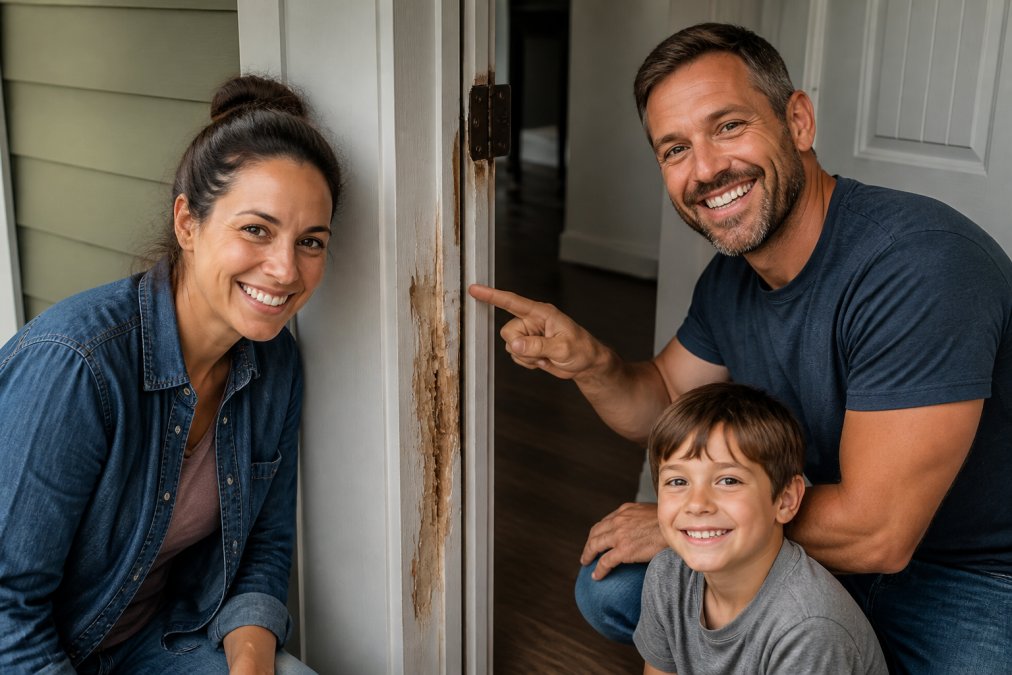
A kicked-in door frame is one of the most jarring sights a homeowner can face. The damage often looks worse than it is, but ignoring it leaves your entry point vulnerable to the next attempt. Door frame damage is the structural weakening of the wood around your door that compromises both security and weatherproofing, and fixing it properly requires assessing whether you can patch the wood or must replace the entire frame. Door Armor has over 20 years in business, and a common mistake homeowners make is applying a cosmetic patch to a frame that has lost its structural integrity. Below, we'll show you exactly how to determine the right repair path, execute it like a professional, and reinforce the result so a future kick-in attempt fails.
Assess the Damage: Is It a Repair or a Replacement?
Before buying filler or mixing epoxy, determine whether the frame is worth repairing at all. A repair is only as strong as the wood it bonds to. If the surrounding jamb is sound, patching works. If the damage extends beyond a localized zone, you are wasting hours on a frame that will fail again under load.
The 3-Question Structural Test
Run this quick assessment on any damaged frame before you commit to a repair:
- Does the frame hold a screw? Drive a 2-inch drywall screw into the jamb 2 inches above and below the damaged area. If the screw strips or pulls out with moderate hand pressure, the wood is too soft or too compromised for a lasting patch.
- Is the damage localized? Measure the damaged zone. If it spans more than 6 inches along the jamb or extends into the hinge-side frame, the structural load path is broken. A patch cannot restore strength across that span.
- Is the frame square? Close the door and check the gap between the door edge and the jamb. If the gap is uneven by more than 1/8 inch from top to bottom, the frame has shifted. That means the damage is not just cosmetic, the frame geometry is compromised, and a repair will not realign it.
If you fail any of these three checks, plan for a full jamb replacement. If you pass all three, a dutchman patch or epoxy fill can restore the frame to serviceable condition.
When to Skip the Repair Entirely
Some conditions make repair a false economy:
- Hollow-core frames with crush damage. The internal cardboard or foam core collapses on impact even when the outer veneer looks intact. Tapping the frame produces a dull, hollow sound. No filler can rebuild that internal structure. Replace the frame.
- Frames with active rot or termite damage extending more than 12 inches. Rot travels along the grain. If you can push a screwdriver into the wood more than 1/4 inch beyond the visible damage, the infestation or moisture damage is deeper than the patch will reach.
- Frames that have been repaired before. A previous epoxy or filler patch that has cracked or pulled away indicates the original repair did not bond to sound wood. A second patch on top of a failed patch will fail the same way.
The Replacement Threshold: A Practical Rule
Most professional carpenters use a simple rule: if more than one-third of the jamb's length is damaged, or if the damage extends through the full thickness of the jamb at the strike plate or hinge locations, replace the frame. Those two points carry the door's weight and absorb the force of a kick. A patch at either location is a temporary fix at best.
Material Reality Check
Solid wood frames (oak, pine, fir, poplar) accept epoxy and dutchman patches well because the filler bonds to exposed wood grain. Engineered frames, common in homes built after 1990, are often finger-jointed or made from medium-density fiberboard (MDF). MDF swells and crumbles when wet, and epoxy does not bond reliably to its compressed fibers. If you have an MDF frame with moisture damage, replacement is the only durable option.
The Security Angle Most Guides Miss
A repaired frame is still a wood frame. Standard 2x4 or 2x6 jamb stock fails at roughly 300 to 400 foot-pounds of force at the strike plate, well within the range of a determined kick. If you are repairing damage from a forced entry, ask yourself whether you want to restore the frame to its original vulnerability or upgrade it while you have the tools out. Many homeowners choose to reinforce the strike plate area with a steel plate or heavy-duty security screws as part of the repair, which we cover in the reinforcement section below.
Essential Tools and Materials for Door Frame Repair
Gather everything before you start. A proper repair requires wood filler or epoxy filler, wood glue, a chisel, a putty knife, a sanding block with multiple grits of sandpaper, wood hardener for soft or rotted areas, primer, and paint or wood stain to match your finish. You'll also need a drill, screws, and clamps for securing patches.
For minor cracks and splits, wood glue and clamps often suffice. For missing chunks or deep gouges, epoxy filler is the better choice because it bonds aggressively to the surrounding wood and can be shaped once cured. For cosmetic imperfections, standard wood putty works, but it lacks the strength of epoxy for load-bearing repairs.
| Damage Type | Best Repair Material | Curing Time | Best For |
|---|---|---|---|
| Hairline crack | Wood glue + clamp | 1-2 hours | Minor cosmetic splits |
| Deep gouge or missing chunk | Epoxy filler | 24 hours | Structural patching |
| Surface scratch or small dent | Wood putty | 2-4 hours | Cosmetic touch-ups |
| Soft or rotted wood | Wood hardener + epoxy | 24-48 hours | Moisture damage repair |
How to Fix a Kicked-In Door Frame Step by Step
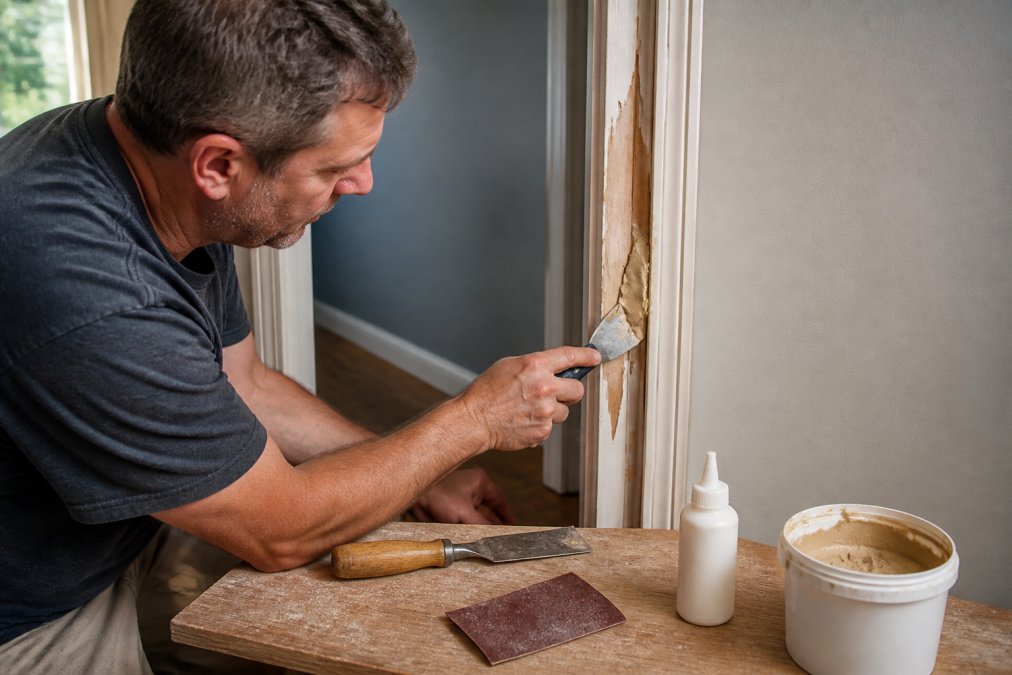
Fixing a kicked-in door frame follows a straightforward sequence: remove damaged material, patch the void, sand flat, and refinish. The process takes a few hours for a typical repair, with most of that time spent waiting for fillers to cure.
Step 1: Remove Damaged Wood and Trim
Use a chisel to cut away splintered and loose wood until you reach solid material. Remove the door casing or trim if it's damaged, since you'll need clean access to the jamb. Cut out any cracked sections back to sound wood, and vacuum the debris from the cavity.
Step 2: Patch the Frame with Wood Filler or Epoxy
For deep damage, mix epoxy filler and press it firmly into the void, overfilling slightly. For shallow damage, apply wood filler with a putty knife in thin layers, allowing each to cure before adding more. If the damage extends through the frame, consider cutting a dutchman patch from solid wood and gluing it in place with wood glue before filling.
Step 3: Sand, Level, and Prep the Surface
Once the filler cures completely, sand the patch flush with the surrounding frame. Start with a coarse grit like 80, then move to 120 and finish with 220 for a smooth surface. Use a sanding block to keep the surface level. Wipe away dust before priming.
Step 4: Paint or Stain to Match Your Finish
Apply a quality primer to the repaired area to seal the filler, then paint or stain to match the rest of the frame. For stained frames, matching the wood grain is difficult, so consider refinishing the entire visible frame surface for a uniform look.
Repairing Moisture Damage, Rot, and Insect Issues
Moisture damage and wood rot require a different approach than impact damage. Rot indicates ongoing water exposure, and if you patch it without addressing the source, the rot will return. Door frame damage from moisture typically appears as soft, spongy wood, dark discoloration, or a musty odor.
Remove all rotted wood with a chisel until you reach firm material. Apply a wood hardener to consolidate the remaining soft fibers, then fill the cavity with epoxy filler. Before you close up the repair, identify and fix the moisture source, whether that's a failing weather seal, a leaky roof, or poor drainage around the door threshold. Insect damage, particularly from termites or carpenter ants, requires the same removal process, but you must also treat the infestation before repairing, or the insects will simply eat through your new patch.
Door Frame Reinforcement: Protecting Your Repair
A repaired frame is only as strong as its weakest point, and for most entry doors, that point is the strike plate area. Standard wood frames fail at the jamb where the deadbolt meets the strike plate, because that's where a kick focuses its force. Anyone who has repaired a kicked-in door frame knows the damage concentrates in this exact spot.
Rather than repeating the repair cycle, reinforce the frame after you fix it. Door frame reinforcement systems use galvanized steel plates that mount behind your existing hardware, distributing the force of a kick across the entire frame instead of concentrating it at the strike plate. Door Armor recommends installing a reinforcement kit as the final step of any repair, since a steel-reinforced frame is dramatically more resistant to the kick-in method that caused the original damage.
Door Frame Repair Cost: DIY vs. Professional
Door frame repair costs vary more by the extent of the damage than by whether you hire out the work. Here is what you can expect to pay, based on current material prices at national home improvement retailers and typical contractor rates.
DIY Material Costs
For a single damaged jamb section, your material list is short:
| Item | Typical Cost | Notes |
|---|---|---|
| Wood filler (interior, 8 oz) | $6-$12 | Good for hairline cracks and small gouges |
| Epoxy filler (two-part, 12 oz) | $15-$25 | Required for structural patches |
| Wood hardener (8 oz) | $10-$15 | Needed if rot or soft wood is present |
| Wood glue (8 oz) | $5-$10 | For dutchman patches and split repairs |
| Sandpaper assortment | $8-$15 | 80, 120, and 220 grit |
| Primer and paint or stain | $15-$40 | Depends on matching your existing finish |
| Dutchman patch wood (scrap) | $0-$10 | Use offcuts from the same species if possible |
| Total DIY cost | $60-$125 | Excludes tools you may already own |
If you need to buy a chisel, putty knife, sanding block, or clamps, there will be additional costs. Most homeowners already own these.
Professional Repair Costs
Hiring a carpenter for a door frame repair involves labor, which dominates the bill. Typical rates:
- Minor filler repair (one visit, under 2 hours): $150-$300. This covers filling a crack or small gouge, sanding, and touch-up paint.
- Dutchman patch (2-3 hours): $300-$500. The carpenter cuts out the damaged section, glues in a new piece of wood, and refinishes.
- Full jamb replacement (4-6 hours): $600-$1,200. This includes removing the old jamb, installing a new one, rehanging the door, and repainting. The wide range reflects regional labor rates and whether the door itself needs adjustment.
- Emergency or weekend service: Add 50-100% to the above. Most carpenters charge a premium for after-hours work.
The Hidden Cost of a Cheap Repair
The cheapest option is not always the most economical. A $60 DIY filler repair on a frame that has lost structural integrity will fail on the next forced entry attempt. The second repair, or the replacement, will cost more than doing it right the first time. Most practitioners recommend this rule: if the frame fails the structural test from the assessment section above, skip the filler and budget for a professional jamb replacement.
Insurance and Tax Considerations
If the door frame damage resulted from a burglary or attempted break-in, your homeowners insurance policy may cover the repair. Most standard HO-3 policies cover damage from theft and vandalism, including the door frame. Check your deductible first, if it is $1,000 and the repair costs $300, filing a claim is not worth the premium increase that often follows. If the damage is from rot or termites, insurance will not cover it, as those are classified as maintenance issues.
The Cost of Not Reinforcing
A standard wood jamb repaired to factory condition will fail again under the same kick-in method. The average cost of a second repair, including new damage to the door, interior trim, and possibly the drywall around the frame, can be substantial. Adding a steel reinforcement plate or security strike plate during the initial repair costs a small amount in materials and adds a short amount of labor. That small investment is the difference between fixing the damage once and fixing it repeatedly.
Conclusion: Secure Your Door Frame for the Long Term
Fixing door frame damage is a skill every homeowner should have, but the deeper lesson is that a repaired frame is still the weakest link in your home's security. A standard wood jamb, no matter how carefully patched, will fail again under the same forced entry method. Door Armor's patented galvanized steel reinforcement system installs in under 30 minutes, carries a $500 Lifetime Guarantee against kick-ins, and has secured more than 500,000 doors over two decades of police-recommended protection. Get started with Door Armor and make your door frame repair the last one you'll ever need.
Frequently Asked Questions
Can a damaged door frame be repaired, or does it need replacing?
Most door frame damage can be repaired. Minor cracks, dents, and split wood are easily fixed with wood glue, filler, and clamps. Even damage from a kicked-in door is often repairable if the frame's structural integrity is intact. You only need to replace the frame when there is extensive wood rot, severe insect damage, or the wood has shattered beyond the point where patching and reinforcement can restore its strength. Assess the damage first to decide if a simple patch or a full replacement is the right call.
How much does it cost to fix a damaged door frame?
Door frame repair cost varies significantly based on the damage extent and whether you DIY. A small DIY repair with wood filler and paint might cost a small amount in materials. Hiring a professional to repair a kicked-in frame typically costs more, and a full replacement is the most expensive option. For a precise estimate, get quotes from local contractors. Investing in door frame reinforcement after a repair is a cost-effective way to prevent repeat damage and avoid future repair bills.
Can you use wood filler to fix a door frame after a break-in?
Yes, wood filler is an essential material for fixing a door frame after a break-in. For minor cracks and dents, a quality wood filler or epoxy filler works well. For deeper splits or missing chunks from a kick-in, use wood glue to reattach pieces and clamp them, then fill remaining gaps with filler. After sanding and painting, the repair can be nearly invisible. Remember that while filler restores the look, it does not restore structural strength. Adding door frame reinforcement is critical to protect against future forced entry.
When should you replace a door frame instead of repairing it?
Replace the door frame when damage compromises its structural integrity beyond a simple patch. This includes large sections of wood rot, significant termite damage, or a split frame that has lost its ability to hold screws for the hinges and strike plate. If the damage is extensive, patching it can be more work than replacing the jamb. After a severe kick-in, assess whether the frame is still square and solid. If not, replacement is the safer route to ensure your door closes properly and can be secured effectively.
Frequently Asked Questions
Can a damaged door frame be repaired, or does it need replacing?
Most door frame damage can be repaired. Minor cracks, dents, and split wood are easily fixed with wood glue, filler, and clamps. Even damage from a kicked-in door is often repairable if the frame's structural integrity is intact. You only need to replace the frame when there is extensive wood rot, severe insect damage, or the wood has shattered beyond the point where patching and reinforcement can restore its strength. Assess the damage first to decide if a simple patch or a full replacement is the right call.
How much does it cost to fix a damaged door frame?
Door frame repair cost varies significantly based on the damage extent and whether you DIY. A small DIY repair with wood filler and paint might cost a small amount in materials. Hiring a professional to repair a kicked-in frame typically costs more, and a full replacement is the most expensive option. For a precise estimate, get quotes from local contractors. Investing in door frame reinforcement after a repair is a cost-effective way to prevent repeat damage and avoid future repair bills.
Can you use wood filler to fix a door frame after a break-in?
Yes, wood filler is an essential material for fixing a door frame after a break-in. For minor cracks and dents, a quality wood filler or epoxy filler works well. For deeper splits or missing chunks from a kick-in, use wood glue to reattach pieces and clamp them, then fill remaining gaps with filler. After sanding and painting, the repair can be nearly invisible. Remember that while filler restores the look, it does not restore structural strength. Adding door frame reinforcement is critical to protect against future forced entry.
When should you replace a door frame instead of repairing it?
Replace the door frame when damage compromises its structural integrity beyond a simple patch. This includes large sections of wood rot, significant termite damage, or a split frame that has lost its ability to hold screws for the hinges and strike plate. If the damage is extensive, patching it can be more work than replacing the jamb. After a severe kick-in, assess whether the frame is still square and solid. If not, replacement is the safer route to ensure your door closes properly and can be secured effectively.