 ultimate-guide
Hidden Door Security for Old Homes: A Complete Guide
Table of Contents
- Why Hidden Door Security Matters for Historic Homes
- Types of Hidden Door Mechanisms and Security Hardware
- How to Burglar-Proof Historic Doors Without Compromising Aesthetics
- Reinforcing Antique Door Frames for Maximum Protection
- Discreet Door Security Hardware That Matches Historic Charm
- DIY Hidden Door Installation and Fire Safety Compliance
- Budget-Friendly Retrofitting Solutions for Vacant Properties
- Common Installation Mistakes and How to Avoid Them
Last Updated: August 27, 2026
Why Hidden Door Security Matters for Historic Homes
Historic homes are architectural treasures, and security vulnerabilities. Original doors and frames were built for charm, not forced-entry resistance. A determined intruder can breach these entry points in seconds. Hidden door security reinforces weak points using hardware that blends with vintage aesthetics, buying critical time to call for help or reach safety.
The challenge: you can't install steel security doors without destroying architectural integrity. Modern solutions often clash with period-appropriate hardware. According to the National Burglary Prevention Council, forced entry through doors accounts for the majority of residential break-ins. Most burglars target the easiest entry point, typically the main or back door where frame integrity has degraded over decades.
Types of Hidden Door Mechanisms and Security Hardware
Magnetic Latches and Electronic Strikes
Magnetic latches are silent and nearly invisible when installed correctly. They use a magnet on the door frame to hold the door closed, releasing smoothly when pushed or pulled. For historic homes, this is ideal because there's no visible latch mechanism.
Electronic strikes are electromagnetic locks that engage when powered and release via keypad, key fob, or remote. They provide access control without visible hardware changes. The trade-off: both require power and battery backup. If your historic home lacks modern wiring, surface-mounted conduit can look jarring, plan installation carefully to hide it behind trim.
Pivot Hinges and Security Bolts
Pivot hinges support the full weight of a door from top and bottom, making them stronger and harder to pry open than traditional hinges. They're subtle and often hidden when the door is closed.
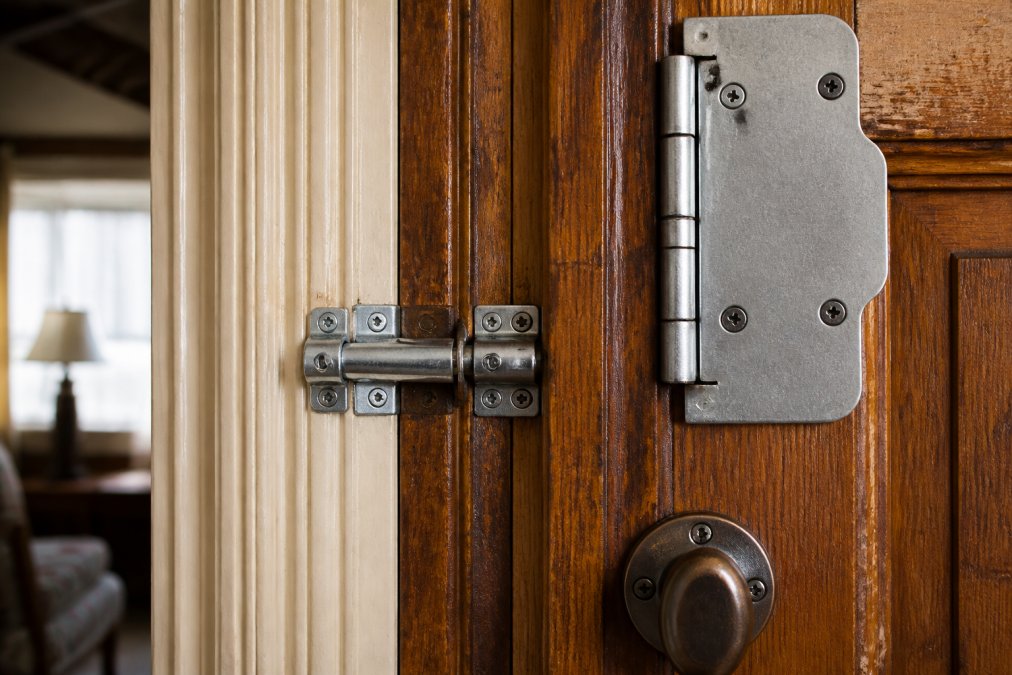
Security bolts are reinforcement rods that extend from the door frame into the door itself, creating a rigid connection that resists kicking and prying. Unlike deadbolts, they work 24/7 without batteries or maintenance. Door Armor's patented galvanized steel security system combines security bolts with hinge shields and frame reinforcement to stop forced entry at multiple points.
How to Burglar-Proof Historic Doors Without Compromising Aesthetics
Start with a site assessment. Identify every exterior entry point and note the door thickness, frame material, hinge count, and existing hardware finish. Match new hardware to the aesthetic palette without standing out.
Next, identify vulnerabilities: Is the frame splintered? Are hinges exposed? Does the lock sit in a recessed area? Each requires a different solution.
The burglar-proofing approach uses layered reinforcement:
- Frame reinforcement: Galvanized steel plates or security bolts that extend from frame into door
- Hinge protection: Shields or reinforced hinges that prevent removal
- Lock hardening: Reinforcement around the lock cylinder and strike plate
- Door hardening: Solid core or metal-reinforced doors if replacement is necessary
Most modifications are hidden behind the door itself. Exterior changes are minimal, perhaps a slightly thicker strike plate or protective ring around the lock cylinder, both available in matching finishes.
Reinforcing Antique Door Frames for Maximum Protection
Door Frame Integrity and Structural Reinforcement
Antique door frames are typically soft wood like pine or fir. Over 80+ years, moisture damage and settling weaken the frame (peer-reviewed research). When someone kicks the door, force concentrates on the strike plate and surrounding wood. If that wood is compromised, the strike plate rips out.
Structural reinforcement means installing galvanized steel backing plates or security bolts that extend deep into the frame, distributing force across a larger area and reaching solid framing behind the door opening. This is where understanding your existing structure matters, you need to know what's behind the frame before drilling.
Door Armor's approach uses galvanized steel components that bolt through the existing frame into studs, creating a rigid connection that distributes kick force across the entire frame.
Mortise Locks and Vintage Hardware Restoration
Mortise locks are the gold standard for historic homes. These mechanical locks are built into the door itself and are common on doors built before 1950. They're inherently more secure than modern keyed knobs because the lock body is embedded in the door structure.
Before installing new security hardware, restore the existing mortise lock. If beyond repair, replacement mortise locks are available in period-appropriate styles and maintain aesthetic integrity while providing modern security.
Vintage hardware restoration also applies to hinges. Rather than replacing original butt hinges, consider reinforcing them with hinge shields, metal plates that cover the hinge and extend protection, available in finishes matching original hardware.
Discreet Door Security Hardware That Matches Historic Charm
Install obvious security hardware and your historic home looks like a fortress. The solution is hardware designed to blend in.
Discreet security hardware comes in several forms. First, finish matching: most security hardware is available in satin nickel, oil-rubbed bronze, antique brass, and polished chrome. Match your existing door hardware finish and new security components disappear visually.
Second, scale and proportion: period-appropriate hardware is often smaller and more refined than modern security hardware. Choose hardware designed to fit your home's aesthetic era.
Third, strategic placement: most security reinforcement happens on the interior side of the door or within the frame, areas visitors don't see. Exterior modifications are kept minimal. Door Armor's approach focuses on maximum protection with minimum visibility, using components designed to work within existing door frames and hardware.
DIY Hidden Door Installation and Fire Safety Compliance
Egress Requirements and Building Code Compliance
Before installing security reinforcement, understand fire safety codes. Egress, the ability to exit quickly in case of fire, is non-negotiable. The International Building Code (IBC) requires that egress doors open easily from the inside without special knowledge or tools (iccsafe.org).
This means:
- Doors must open with a single motion
- Emergency exits cannot be blocked or obstructed
- Sliding doors and emergency exits need quick-release mechanisms
If securing bedroom doors, garage exits, or any emergency escape route, include a quick-release mechanism, typically a deadbolt on the interior side that can be unlocked without a key. Check your local building codes before installation.
Step-by-Step Installation for Concealed Storage and Safe Rooms
Step 1: Plan the opening (1-2 hours)
Identify an interior wall. Measure carefully, most hidden doors are 32-36 inches wide and 80-82 inches tall to match standard door height.
Step 2: Build or purchase the door frame (2-4 hours)
Build from 2x4 lumber or purchase a pre-made kit. The frame must be level and square.
Step 3: Install pivot hinges (1-2 hours)
Pivot hinges support full door weight from top and bottom. Install the top pivot in the frame header and bottom pivot in the floor, perfectly aligned vertically.
Step 4: Hang the door (1 hour)
Carefully lift the door into the frame and align with pivot hinges. Ensure consistent 1/8-inch gaps on all sides.
Step 5: Install magnetic latch or electronic strike (30 minutes)
Mount the catch on the frame and magnet on the door. Test the connection.
Step 6: Install concealment (2-4 hours)
Cover the door with bookshelf, artwork, mirror, or paneling. Attach to the door itself so it moves with the door.
Step 7: Test and adjust (30 minutes)
Operate the door 10-20 times. Check smooth operation and proper latch engagement.
Total installation time: 8-14 hours, typically completed over a weekend.
Budget-Friendly Retrofitting Solutions for Vacant Properties
Vacant properties are targets. If you own a vacation home, rental property, or inherited home that sits empty, security retrofitting is essential.
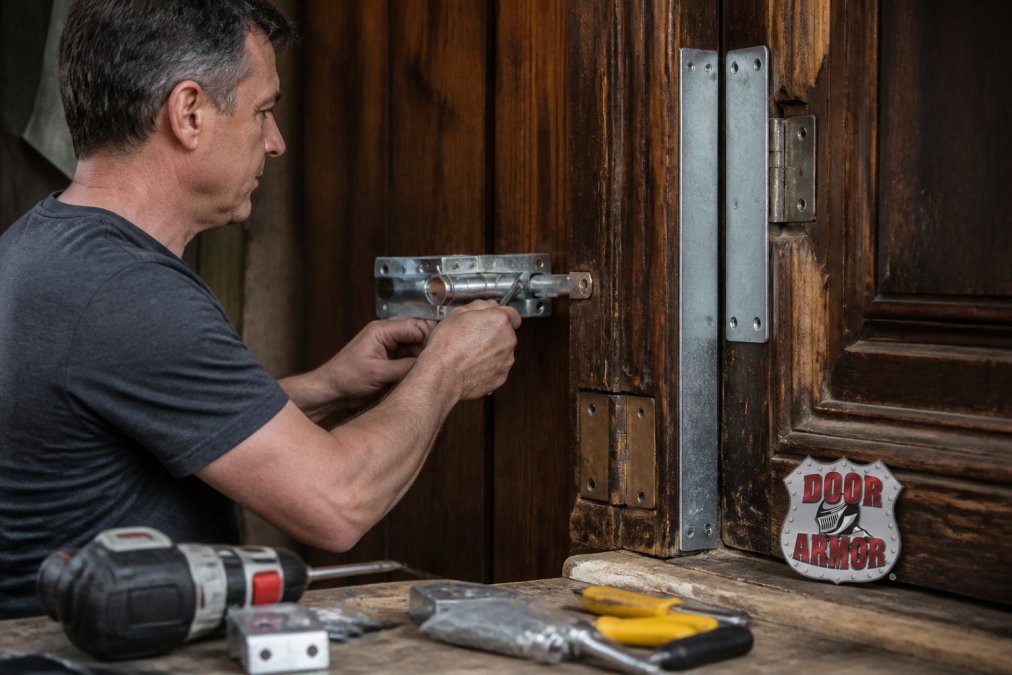
Start with the main entry door. A single security reinforcement kit (https://www.doorarmor.com/shop/door-security-solutions-exterior-doors-2/door-armor-single-door-security-kit-4977?attribute_values=1%2C18%2C20%2C21) can be installed in under 30 minutes. Next, address the back door using the same approach.

For sliding glass doors, install a security bar or wedge. For windows, consider security film or bars.
Total budget for retrofitting a vacant property: $300-600 for basic protection on main entry points.
:::tip Vacant properties benefit from visible security measures. A reinforced door with visible hardware, security bars on windows, and outdoor lighting are deterrents. Burglars look for easy targets.
Common Installation Mistakes and How to Avoid Them
Mistake 1: Installing on the wrong side of the frame
Security hardware must be installed on the side that receives force. Check your door swing direction before starting.
Mistake 2: Not anchoring into solid framing
Bolts must anchor into structural studs, not just the door frame trim. Use a stud finder and drill through the frame into studs behind it.
Mistake 3: Misaligning hinges or pivots
Take time to get alignment right. Use a level and shims if needed.
Mistake 4: Forgetting about fire safety
Don't install security hardware that prevents emergency exit. Include a manual override or quick-release mechanism on egress routes.
Mistake 5: Using the wrong fasteners
Use galvanized or stainless steel fasteners rated for your material. For wood frames, use wood screws. For plaster or brick, use appropriate anchors.
Mistake 6: Not testing before relying on the system
After installation, operate the door 20-30 times. Test electronic strikes with backup power to ensure manual override works.
Historic homes deserve protection that respects their character. Hidden door security reinforces the weak points burglars target, using hardware designed to blend with period aesthetics. The combination of frame reinforcement, hinge protection, and discreet hardware creates genuine security without compromising architectural integrity.
Door Armor specializes in this approach. Their patented galvanized steel security system works with existing doors and hardware, providing police-tested protection that installs in under 30 minutes. Whether protecting a primary residence, securing a vacant rental property, or hardening a historic home against forced entry, reinforce at multiple points, match the existing aesthetic, and buy the critical time needed to protect your family and property. Door Armor's security solutions have helped over 500,000 homeowners strengthen their entry points without visible fortress-like modifications. Get started with Door Armor and add genuine security to your home today.
Frequently Asked Questions
Q: How do I know hidden door security systems actually work against real break-ins?
A: Door Armor's galvanized steel reinforcement system has stopped thousands of forced entry attempts and is recommended by law enforcement. The system addresses the three primary weak points attackers target: the lock area, hinges, and door frame. With a $500 Lifetime Guarantee against kick-ins and 20+ years in business with 500,000+ doors secured, the protection is proven in real-world scenarios. Police testing confirms that reinforced doors significantly extend the time required for forced entry, giving you critical minutes to call for help.
Q: Can I install discreet door security hardware on my antique doors without damaging them?
A: Yes. Modern discreet door security hardware is specifically designed to work with vintage doors and original trim. Galvanized steel components can be finished to match existing hardware in satin nickel or other period-appropriate finishes. Reinforcing antique door frames doesn't require removing original mortise locks or hardware; instead, security systems work alongside them. Most installations use non-invasive mounting that respects the door's structural integrity and historic character while adding modern protection.
Q: Do I need hidden door security if I already have a steel security door on my front entrance?
A: Steel doors protect only the entrance you've upgraded. Most break-ins target secondary entry points like back doors and sliding glass doors, which remain vulnerable even with a fortified front entrance. Hidden door security systems harden all your entry points. For vacation properties or rental units left unoccupied, comprehensive perimeter security across all doors is more effective than hardening just one entrance. A single weak point can compromise your entire home's defense.
Q: What's the difference between Door Armor and basic hardware store door reinforcement kits?
A: Door Armor's patented galvanized steel system addresses all three attack vectors: lock prying, hinge failure, and frame separation. Basic kits typically address only one or two of these. Door Armor's engineering includes hinge shields, jamb reinforcement, and door frame bracing specifically tested against forced entry. The $500 Lifetime Guarantee, police recommendation, and 20+ year track record distinguish it from generic solutions. Installation takes 30 minutes with no special tools, and the discreet design matches existing hardware rather than looking like fortress-grade security.
This article was written using GrandRanker
Frequently Asked Questions
Q: How do I know hidden door security systems actually work against real break-ins?
A: Door Armor's galvanized steel reinforcement system has stopped thousands of forced entry attempts and is recommended by law enforcement. The system addresses the three primary weak points attackers target: the lock area, hinges, and door frame. With a $500 Lifetime Guarantee against kick-ins and 20+ years in business with 500,000+ doors secured, the protection is proven in real-world scenarios. Police testing confirms that reinforced doors significantly extend the time required for forced entry, giving you critical minutes to call for help.
Q: Can I install discreet door security hardware on my antique doors without damaging them?
A: Yes. Modern discreet door security hardware is specifically designed to work with vintage doors and original trim. Galvanized steel components can be finished to match existing hardware in satin nickel or other period-appropriate finishes. Reinforcing antique door frames doesn't require removing original mortise locks or hardware; instead, security systems work alongside them. Most installations use non-invasive mounting that respects the door's structural integrity and historic character while adding modern protection.
Q: Do I need hidden door security if I already have a steel security door on my front entrance?
A: Steel doors protect only the entrance you've upgraded. Most break-ins target secondary entry points like back doors and sliding glass doors, which remain vulnerable even with a fortified front entrance. Hidden door security systems harden all your entry points. For vacation properties or rental units left unoccupied, comprehensive perimeter security across all doors is more effective than hardening just one entrance. A single weak point can compromise your entire home's defense.
Q: What's the difference between Door Armor and basic hardware store door reinforcement kits?
A: Door Armor's patented galvanized steel system addresses all three attack vectors: lock prying, hinge failure, and frame separation. Basic kits typically address only one or two of these. Door Armor's engineering includes hinge shields, jamb reinforcement, and door frame bracing specifically tested against forced entry. The $500 Lifetime Guarantee, police recommendation, and 20+ year track record distinguish it from generic solutions. Installation takes 30 minutes with no special tools, and the discreet design matches existing hardware rather than looking like fortress-grade security.