 how-to
Choosing the Right Strike Plate for Door Security
Table of Contents
- Why the Strike Plate Is Your Door's Weakest Point
- Strike Plate Materials: Steel vs. Brass vs. Zinc Alloy
- How to Identify Your Door's Latch and Strike Plate Type
- 3-Inch Strike Plate Screws: The Cheapest Security Upgrade
- How to Prevent Door Kick-Ins with a Reinforced Strike Plate
- High-Security Strike Plate Installation: Step by Step
- Special Door Types: Out-Swinging Doors, Smart Locks, and Fire-Rated Frames
- Conclusion: Match the Plate to the Threat
- Frequently Asked Questions
Last Updated: September 30, 2026
Why the Strike Plate Is Your Door's Weakest Point
The strike plate is the small metal plate on your door frame that catches the latch and deadbolt, and the weakest point of most entry doors. An intruder can split the wood around a standard strike plate in seconds with one kick.
Strike Plate Materials: Steel vs. Brass vs. Zinc Alloy
The best strike plate material for security is hardened steel, which resists bending and breaking under kick force. Brass and zinc alloy look nice but deform under pressure.
Here is how the three common materials compare:
| Material | Strength | Best For | Weakness |
|---|---|---|---|
| Hardened steel | Highest | Exterior doors, security upgrades | Can rust if uncoated |
| Brass | Medium | Interior doors, vintage homes | Bends under heavy force |
| Zinc alloy | Low to medium | Decorative use, light doors | Cracks at stress points |
How Material Affects Kick-In Resistance
Kick-in resistance comes down to plate strength and screw length. A steel plate with short screws will still fail; a brass plate with long screws might hold longer. The plate and fasteners work as a team, upgrade one without the other and you leave a gap an intruder can exploit.
How to Identify Your Door's Latch and Strike Plate Type
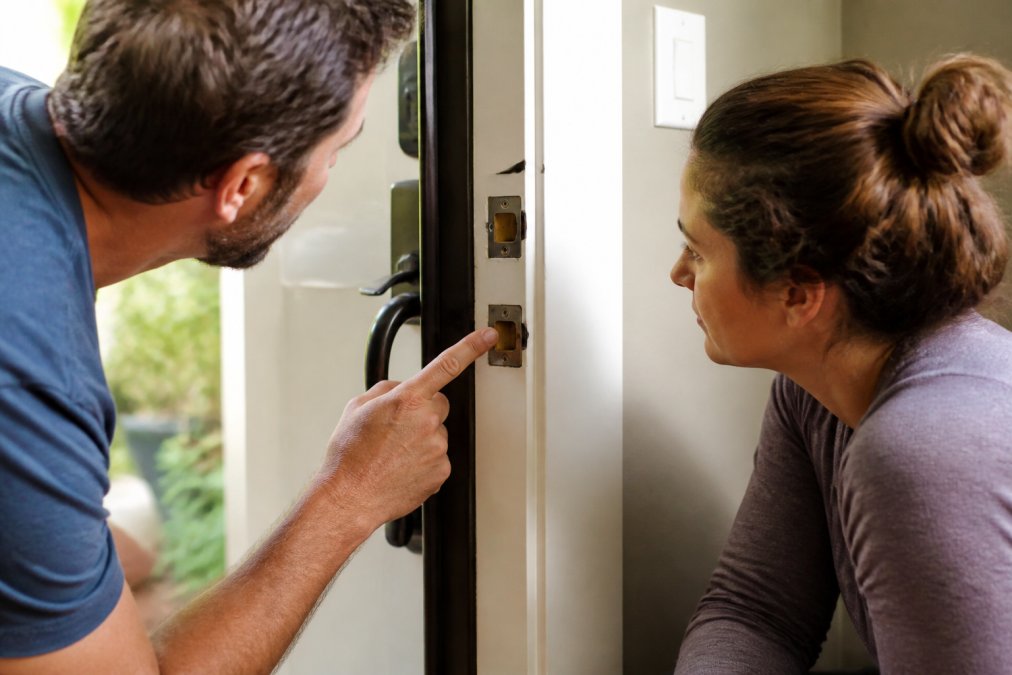
Before you buy anything, identify what you already have. Most residential doors use one of three setups, and getting this wrong means a plate that will not fit or a latch that will not catch. Open the door and look at the edge of the frame: the metal plate with a hole or slot is your strike plate. The hardware on the door's edge tells you which plate you need.
A Visual Identification Path
Work through these checks in order.
- Count the openings in the frame plate. One opening means a latch-only plate. Two openings (one round, one rectangular) means a combined latch-and-deadbolt plate. Two separate plates set apart vertically means a dedicated deadbolt plate above a latch plate.
- Look at the shape of each opening. A round hole fits a deadbolt. A rectangular slot fits a spring latch. A plate with both serves both.
- Note how the plate sits in the frame. Recessed into a deep pocket means mortise. Flat on the surface means flush mount. A raised box or lip wrapping the latch means security box.
- Measure the plate. Record height, width, and screw-hole spacing. Dimensions vary by fractions of an inch, and a mismatch means a return trip.
- Measure the latch throw. With the door open, extend the latch and deadbolt and measure how far they protrude. Most residential deadbolts throw about 1 inch; many spring latches about 1/2 inch. Your new plate's openings must accept that throw.
Mortise, Flush Mount, and Security Box Styles
- Mortise strike plate: Recessed into the frame with a deep pocket. Common on older homes and commercial doors. Replacement requires matching pocket depth, not just face dimensions.
- Flush mount strike plate: Sits flat against the frame surface. The most common style on modern residential doors, easiest to swap, but easiest to defeat if thin and held by short screws.
- Security box strike plate: A box-shaped plate that wraps around the latch bolt, preventing it from being pried back. The strongest option for exterior doors, but it requires a deeper mortise.
Matching the Plate to Your Latch Type
| Latch type | Typical opening | Plate style to look for |
|---|---|---|
| Spring latch only | Rectangular slot | Flush mount or security box |
| Deadbolt only | Round hole | Dedicated deadbolt plate |
| Latch plus deadbolt | Slot plus round hole | Combined plate or two separate plates |
| Mortise lock body | Long rectangular face | Mortise plate matched to the lock body |
If your door has a mortise lock body, common in older homes, the strike plate is matched to that body, and a generic plate will not align. Measure the faceplate and lock body, then look for a plate made for that body style.
3-Inch Strike Plate Screws: The Cheapest Security Upgrade
Swapping short screws for 3-inch strike plate screws is the cheapest security upgrade you can make, a few dollars and five minutes. Standard strike plates come with screws about 3/4 of an inch long, which only bite into the door casing, the thin, soft decorative trim around the frame. A 3-inch screw reaches past the trim into the stud, so kick force transfers into the house frame instead of ripping out trim.
Here is what to look for:
- Length: 3 inches minimum for exterior doors
- Material: hardened steel, not drywall screws
- Head: flat or countersunk to sit flush with the plate
- Quantity: replace every screw in the strike plate
How to Prevent Door Kick-Ins with a Reinforced Strike Plate
A reinforced strike plate is the most effective way to prevent door kick-ins. It spreads impact force across a larger area of the frame and uses longer, stronger fasteners, like a snowshoe spreading your weight so you stay on top.
High-Security Strike Plate Installation: Step by Step
Installing a high-security strike plate takes about 30 minutes with a drill, screwdriver, and pencil.
Door Armor Single Door Security Set →
What you'll need:
- Reinforced strike plate kit
- 3-inch hardened steel screws
- Cordless drill with Phillips bit
- Pencil and chisel (for mortise plates)
- Wood filler (if repairing old screw holes)
Aligning the Plate and Testing the Latch
Alignment is where most installs go wrong. Close the door slowly and watch the latch bolt, it should slide into the opening without rubbing. If it sticks, loosen the screws and shift the plate slightly, or widen the opening with a metal file or chisel. Test the deadbolt too: it should throw fully into the plate with a firm turn.
Special Door Types: Out-Swinging Doors, Smart Locks, and Fire-Rated Frames
Not every door takes a standard strike plate. Three types need special attention.
Out-Swinging Doors: The Hinge Side Is the Weak Point
On an out-swinging door, the hinges face outside, flipping the usual threat model. On an in-swinging door, the strike plate and frame take the kick; on an out-swinging door, an intruder can attack the hinge side instead, popping the pins or prying the hinge leaf from the frame. Reinforcing only the strike plate leaves the hinge side exposed, so reinforce both sides:
- Hinge side: Replace standard hinge screws with long screws that reach the stud, and add security pins or hinge shields. Non-removable pin hinges (NRPs) are a common upgrade for exterior out-swinging doors.
- Strike side: Use a reinforced plate with long screws, just as you would on an in-swinging door. The latch still needs a strong catch.
- Frame: The frame around the hinges takes the prying force. A frame reinforcement plate on the hinge side spreads that load the way a strike plate spreads kick force.
Smart Locks: Depth and Throw Matter More Than Weight
Most smart locks use a standard deadbolt throw, so they work with standard strike plates. The real issue is depth and alignment: motorized bolts rely on sliding cleanly into the opening. If it is too shallow, misaligned, or blocked by paint or debris, the motor can stall, the lock can report a jam, or the bolt can fail to seat, a security problem, not just an inconvenience.
When pairing a smart lock with a strike plate:
- Check the deadbolt throw. Confirm the plate opening is deep enough to accept the full throw without the bolt bottoming out.
- Check alignment. A motorized bolt tolerates misalignment less than a hand-turned one. Test the lock several times after installation.
- Avoid oversized openings. An opening much larger than the bolt gives an intruder more room to work. Match the opening to the bolt.
- Reinforce the frame. A smart lock on a weak frame still fails under kick force. Pair it with a reinforced plate and long screws.
Fire-Rated Frames: Check Before You Swap
Fire-rated doors are tested as a complete assembly, door, frame, hinges, and hardware together. Changing the strike plate can void that rating, because the assembly was certified with the original hardware in place.
- Do not swap hardware without checking. Contact the door or hardware manufacturer, or the building's maintenance office, first.
- Look for plates tested to the same standard as the door. A plate that carries the same fire test listing as the door assembly is the safe choice.
- Keep the rating intact. If a reinforcement plate cannot be installed without altering the rated assembly, the upgrade may not be permissible.
Conclusion: Match the Plate to the Threat
Every door fails differently. A front door takes the hardest hits, a back door often gets pried, and a side door with glass panels needs frame reinforcement, not just a better plate.
Frequently Asked Questions
How do I know what size strike plate I need?
Measure the height and width of your existing strike plate, plus the distance from the door edge to the center of the latch hole. Most residential plates are 2-1/4 inches tall, but commercial and older doors vary. Bring the old plate to the hardware store or match its screw hole spacing exactly. If the plate is too small for the mortise, you can file the opening slightly or choose a plate with an adjustable backplate.
Are all door strike plates the same?
No. Plates differ in material (steel, brass, zinc alloy), thickness, screw hole count, and shape. Standard plates use two short screws and a thin lip that a pry bar can bend. Security plates are thicker, extend further into the jamb, and accept longer fasteners. A Grade 1 or Grade 2 rating signals tested kick-in resistance. Matching the plate to your latch type and door frame matters more than brand.
What is the difference between a standard strike plate and a security strike plate?
A standard strike plate is a thin metal lip held by two short screws, usually under 1 inch. A security strike plate is thicker steel, often with a backplate or security box that wraps into the jamb, and it uses 3-inch screws that reach the wall framing. That extra depth and material is what prevents door kick-ins, because the plate and screws no longer pull free under force.
How long should the screws be for a high-security strike plate?
Use 3-inch screws for the strike plate and hinges. Standard 3/4-inch screws only grip the door jamb, which is soft wood that splits under a kick. Three-inch screws pass through the jamb and into the wall framing studs, anchoring the plate to the structure of the house. This single change can multiply kick-in resistance, and high-security strike plate installation always includes longer fasteners for this reason.