 listicle
Best Prime-Line Alternatives for Homeowners
Table of Contents
- Why Homeowners Look Beyond Prime-Line
- Door Reinforcement Kits: The Core Alternative Category
- How to Prevent Door Kick-Ins Without Professional Installation
- DIY Door Security Installation: What to Expect
- Quality vs. Cost: What You're Actually Paying For
- Best Prime-Line Alternatives by Door Type
- Installation Difficulty Ratings: Which Alternative Suits Your Skill Level
- Making Your Choice: Prime-Line Alternatives Decision Framework
- Frequently Asked Questions
Last Updated: August 31, 2026
Why Homeowners Look Beyond Prime-Line
Prime-Line products are ubiquitous, but homeowners seeking alternatives quickly discover that door security isn't one-size-fits-all. A French door with side lights requires different reinforcement than a sliding glass patio door. Rental property owners face installation constraints that homeowners don't.
Door Armor has spent over 20 years solving these specific problems with patented galvanized steel reinforcement systems designed to address the weak points intruders exploit: hinges, jambs, strike plates, and frame gaps. This guide breaks down the best Prime-Line alternatives available, organized by door type, skill level, and actual value.
Door Reinforcement Kits: The Core Alternative Category
Door reinforcement kits target the three critical vulnerabilities where forced entry happens: hinges (where doors can be pried), the strike area (where the bolt meets the frame), and the jamb (which bears the force of a kick).
The difference lies in materials and engineering. Galvanized steel resists corrosion and provides superior strength. Hinge shields that fully wrap the hinge barrel prevent pin removal. Strike plate reinforcement extends deep into structural framing rather than just the jamb surface.
Door Armor's Single Door Security Kit ($79.00) sets the entry-level standard: hinge shields, strike plate reinforcement, and jamb protection, installable in under 30 minutes. The $500 Lifetime Guarantee reflects genuine confidence in material durability.
How to Prevent Door Kick-Ins Without Professional Installation
Door kick-ins account for most residential forced entries. Force concentrates on the strike area where the bolt meets the frame; if unreinforced, the frame splinters and the door opens.
The solution is force distribution. A standard strike plate uses two short screws gripping only the jamb surface. Under force, these screws pull through soft wood and the door opens. A reinforced strike plate extends deeper into the frame, anchors into structural framing, and uses longer, thicker screws. Force distributes across a larger area and transfers to the structural frame instead of concentrating on the jamb.
Hinge reinforcement works identically. Hinge shields wrap around the hinge barrel, preventing pin removal and eliminating prying points. Jamb reinforcement transfers force to structural framing and prevents jamb splitting.
The process: install a reinforced strike plate with 3-inch screws penetrating structural framing, add hinge shields to both hinges, and reinforce the jamb area. This takes 20-30 minutes with basic tools and makes kick-in mechanically impossible.
DIY Door Security Installation: What to Expect
Installing door reinforcement hardware is a genuine DIY task requiring 30-45 minutes, a drill, a screwdriver, and careful attention to the installation guide.
Examine your hinges first, are they standard butt hinges or concealed? Hinge shields are type-specific. Next, identify your strike plate type. Remove existing hardware, then dry-fit new components to ensure proper alignment. Mark new screw holes with a pencil, drill pilot holes to prevent wood splitting, and drive screws firmly without over-tightening. Test the door, it should close smoothly with the bolt seating fully in the strike.
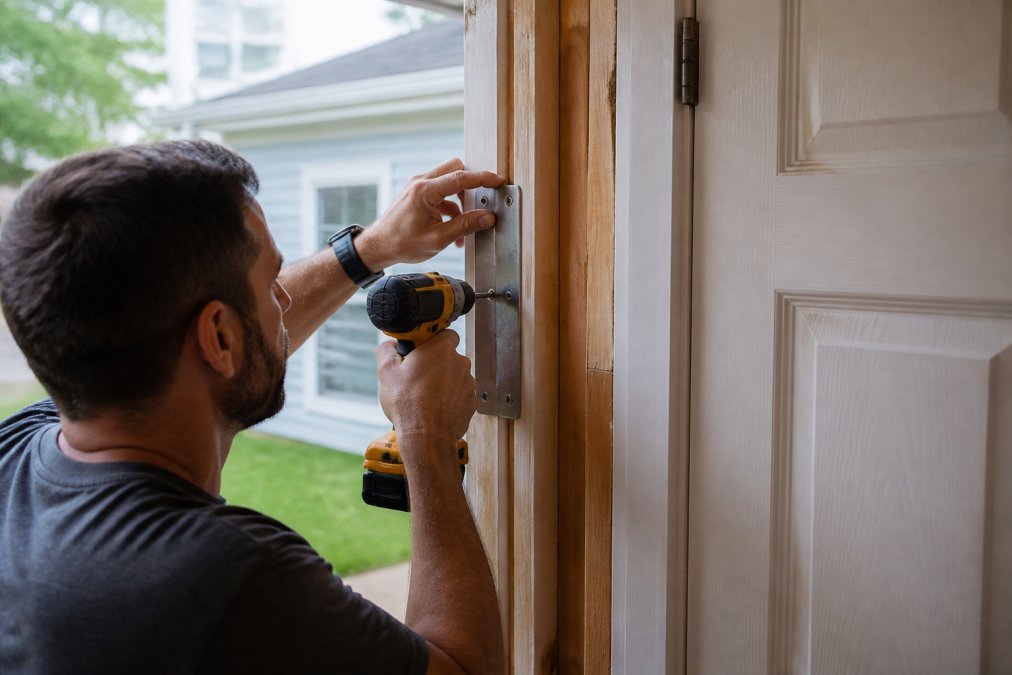
Expect potential obstacles. Damaged door frames may have soft or crumbly wood; reinforce with epoxy filler. Non-standard hinges may require different shields. These are solvable problems.
Quality vs. Cost: What You're Actually Paying For
Why spend more on Door Armor when cheaper kits exist? The answer is what happens when someone actually tries to force your door open.
Cheap kits use thin steel, short screws, and components designed to look good in packaging. Hinge shields may not fully wrap the barrel, leaving gaps for pry bars. Strike plates may use 1.25-inch screws barely penetrating the jamb. Under actual force testing, these kits fail. Screws pull through wood. Hinges flex. Doors open.
Quality kits use galvanized steel throughout, longer screws anchoring into structural framing, and components engineered to work together. Material cost difference is small, maybe $5-10 per kit. Performance difference is massive. A cheap kit delays forced entry by seconds. A quality kit makes forced entry mechanically impossible.
Door Armor's Single Door Security Kit costs $79.00; cheap alternatives cost $35-40. For an extra $40, you get galvanized steel, properly engineered hinge shields, structurally-anchored strike plates, and a $500 Lifetime Guarantee.
| Aspect | Budget Kits | Quality Alternatives | Door Armor |
|---|---|---|---|
| Material | Standard steel, thin gauge | Galvanized steel, medium gauge | Galvanized steel, heavy gauge |
| Screw Length | 1.25" (jamb only) | 2-2.5" (into framing) | 2.5-3" (deep into framing) |
| Hinge Shields | Partial wrap | Full wrap | Full wrap, engineered for hinge type |
| Strike Plate | Surface anchoring | Jamb anchoring | Structural frame anchoring |
| Lifetime Guarantee | None | Some | Yes ($500 guarantee) |
Best Prime-Line Alternatives by Door Type
Not all doors are created equal, and not all alternatives work for every door type.
Single Exterior Doors
Single exterior doors, front, back, or side entry, are the most common security concern and easiest to reinforce. They have clear jamb structure, two hinges, and standard strike plates.
For single exterior doors, you need hinge shields on both hinges, a reinforced strike plate, and jamb reinforcement. Door Armor's Single Door Security Kit ($79.00) includes all three, pre-sized for standard residential doors up to 1-3/4 inches thick. Installation takes about 30 minutes. For multiple doors, buying individual kits is economical: two doors cost $158, three doors cost $237.
Double Doors and French Doors
Double doors are mechanically different from single doors. They lack a center jamb, so standard strike plate approaches don't work. One door has a bolt striking into the frame; the other has no bolt and just closes against the first door.
Quality double door kits use different techniques. The bolt-side door gets a reinforced strike plate. The non-bolt side gets a night lock or door barricade preventing forced opening. Both doors get hinge shields.
Door Armor's Double Door Security Kit ($149.00) includes a night lock barricade specifically designed for double doors. French doors follow the same logic. Door Armor's Side Light Door Security Kit ($129.00) uses jamb shields screwing into the jamb face and hinge shields anchoring top and bottom, addressing side light structural weakness.
Sliding Glass Patio Doors
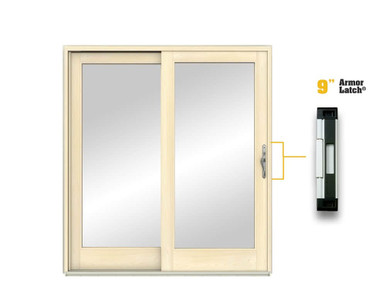
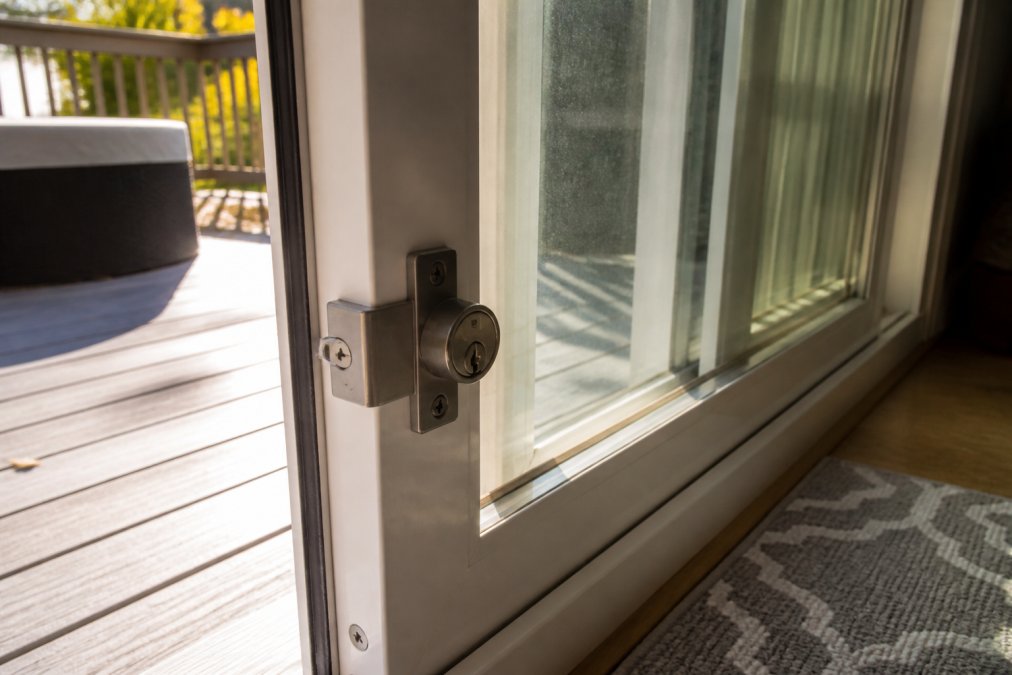
Sliding glass patio doors are vulnerable to lifting off the track. Standard locks prevent sliding but not lifting; intruders can lift the door off the track and remove it entirely.
The solution is a deadbolt preventing lifting. Door Armor's Armor Latch Sliding Door Deadbolt ($39.99) uses a heavy-duty locking mechanism preventing lifting, installed on the frame with engagement into the track. This category has few effective cheap alternatives.
Doors with Side Lights
Doors with side lights, windows beside the door, are hardest to secure. The side light is glass (breakable), and the jamb is thin and can't be reinforced like solid door frames. Standard kits don't address this.
Quality side light kits use different approaches. Jamb shields screw into the jamb face instead of relying on jamb depth. Hinge shields anchor top and bottom. Door Armor's Side Light Door Security Kit ($129.00) is engineered specifically for this problem, not a generic kit applied to non-standard doors.
Installation Difficulty Ratings: Which Alternative Suits Your Skill Level
Understanding your comfort level helps you choose the right alternative.
Easiest (no tools, no permanent changes): Sliding door deadbolts and door barricades. These install with just a screwdriver and require no drilling. Door Armor's Armor Latch Sliding Door Deadbolt ($39.99) is an example.
Easy (basic tools, minimal drilling): Single door reinforcement kits. You need a drill, screwdriver, and about 20 minutes. Door Armor's Single Door Security Kit ($79.00) falls here. The installation guide walks you through identifying structural framing.
Moderate (more drilling, more planning): Double door and side light kits. You're making more holes, positioning is more critical, and mistakes prevent proper door closure. Door Armor's Double Door ($149.00) and Side Light ($129.00) kits require more planning but remain DIY-feasible. Expect 45 minutes to an hour.
Difficult (professional recommended): Custom installations on non-standard doors, damaged doors, or compromised framing. Professional installation is better than failed DIY attempts.
Making Your Choice: Prime-Line Alternatives Decision Framework
Choose the right door security solution by answering four questions.
Question 1: What doors do you actually need to secure? Focus on vulnerable points, typically one or two doors: main entry, back door, or side entry. Match solutions to each door type rather than forcing one solution everywhere.
Question 2: What type of door is it? Single exterior door, double door, sliding glass door, or door with side lights? Each requires different approaches.
Question 3: What's your skill level and time? Uncomfortable with drills? Start with sliding door deadbolts or barricades. Have 30 minutes and basic tools? Single door kits are realistic.
Question 4: What's the actual threat? Concerned about opportunistic break-ins (most common) or determined intruders? For opportunistic attempts, even basic reinforcement deters most. For determined intruders, you need quality kits with galvanized steel and structural anchoring.
Once you've answered these questions, the choice becomes clear. Single exterior door with 30 minutes? Get the Single Door Security Kit ($79.00). Double doors? Get the Double Door Security Kit ($149.00). Sliding glass doors? Get the Armor Latch Sliding Door Deadbolt ($39.99). Doors with side lights? Get the Side Light Door Security Kit ($129.00).
All are engineered for specific door types, use galvanized steel, install in under an hour, and come with a $500 Lifetime Guarantee.
After a forced entry, the question isn't whether you had security hardware, it's whether it actually worked. Door Armor's patented reinforcement systems are designed to make forced entry mechanically impossible, giving you critical time to call for help or prepare a defense. With over 20 years of real-world testing and police department validation, Door Armor delivers protection discreetly matched to your home's existing hardware. Shop Now and secure your doors with a solution engineered for the threat, not just the appearance of security.
Frequently Asked Questions
What makes door reinforcement kits better than just upgrading my lock?
A standard lock only protects against turning the handle. Door reinforcement kits reinforce the entire entry point, hinges, jamb, and frame, where forced entry actually occurs. Most kick-ins exploit weak jambs or hinge attachment points, not the lock itself. Reinforcement hardware distributes force across a wider area, making the door structurally resistant to prying and kicking. This creates the critical time needed to call for help or prepare a response.
How do I know which Prime-Line alternative will work with my door type?
Door type determines which reinforcement system you need. Standard single doors need hinge shields and jamb reinforcement. Double doors require center-support hardware since they lack a center jamb. Sliding glass doors need track deadbolts to prevent lifting. Doors with side lights need specialized jamb shields because the side glass creates structural gaps. Measure your door thickness (typically 1.375 to 1.75 inches) and identify whether it swings, slides, or has side panels before selecting your alternative.
Can I install DIY door security hardware myself, or do I need a professional?
Most homeowners can install door security hardware in 20-45 minutes using basic tools: a drill, level, and screwdriver. The process involves marking screw holes, drilling pilot holes, and fastening steel reinforcement plates to the frame and hinges. No special skills are required. However, if your door frame is damaged, severely warped, or you're uncomfortable using power tools, hiring a professional ensures proper installation. Poor installation reduces effectiveness, so take time to follow instructions and verify alignment.
Are aftermarket door security alternatives as effective as professional security systems?
Aftermarket door reinforcement kits focus specifically on the forced-entry weak points that professional systems address, hinges, jambs, and frames. They work passively (no power required) and provide continuous protection. The difference is scope: professional systems often include monitoring, cameras, and alarms, while reinforcement kits are purely structural. For preventing kick-ins and prying, quality aftermarket hardware matches professional-grade effectiveness at a fraction of the cost, especially for homeowners who want a one-time installation without ongoing monitoring fees.
This article was written using GrandRanker
Frequently Asked Questions
What makes door reinforcement kits better than just upgrading my lock?
A standard lock only protects against turning the handle. Door reinforcement kits reinforce the entire entry point—hinges, jamb, and frame—where forced entry actually occurs. Most kick-ins exploit weak jambs or hinge attachment points, not the lock itself. Reinforcement hardware distributes force across a wider area, making the door structurally resistant to prying and kicking. This creates the critical time needed to call for help or prepare a response.
How do I know which Prime-Line alternative will work with my door type?
Door type determines which reinforcement system you need. Standard single doors need hinge shields and jamb reinforcement. Double doors require center-support hardware since they lack a center jamb. Sliding glass doors need track deadbolts to prevent lifting. Doors with side lights need specialized jamb shields because the side glass creates structural gaps. Measure your door thickness (typically 1.375 to 1.75 inches) and identify whether it swings, slides, or has side panels before selecting your alternative.
Can I install DIY door security hardware myself, or do I need a professional?
Most homeowners can install door security hardware in 20-45 minutes using basic tools: a drill, level, and screwdriver. The process involves marking screw holes, drilling pilot holes, and fastening steel reinforcement plates to the frame and hinges. No special skills are required. However, if your door frame is damaged, severely warped, or you're uncomfortable using power tools, hiring a professional ensures proper installation. Poor installation reduces effectiveness, so take time to follow instructions and verify alignment.
Are aftermarket door security alternatives as effective as professional security systems?
Aftermarket door reinforcement kits focus specifically on the forced-entry weak points that professional systems address—hinges, jambs, and frames. They work passively (no power required) and provide continuous protection. The difference is scope: professional systems often include monitoring, cameras, and alarms, while reinforcement kits are purely structural. For preventing kick-ins and prying, quality aftermarket hardware matches professional-grade effectiveness at a fraction of the cost, especially for homeowners who want a one-time installation without ongoing monitoring fees.