 blog
blog
Best Door Reinforcement Kit for Renters: 2026 Guide
Table of Contents
- Why Renters Need Door Reinforcement
- Key Components That Stop Forced Entry
- No-Drill Door Reinforcement: Installation Without Damage
- Portable Door Locks for Apartments: What Works
- How to Secure a Rental Door Without Damage
- Comparing Door Reinforcement Kits for Renters
- Lease Compliance and Landlord Communication
- Conclusion
Last Updated: August 25, 2026
Why Renters Need Door Reinforcement
Your apartment door is one of the easiest entry points a burglar will target. Most rental doors have hollow cores, weak frames, and strike plates secured with short screws that fail under pressure, usually in under six seconds of kicking or prying (nij.ojp.gov).
Renters face a unique problem: you can't permanently modify the property. Traditional security upgrades like steel doors or frame reinforcement are prohibited by lease. Yet your need for protection is just as urgent as any homeowner's.
A best door reinforcement kit for renters solves this tension by strengthening weak points, the door jamb, strike plate, and hinges, without leaving permanent damage. When installed correctly, it provides forced-entry resistance equivalent to permanent solutions, but remains completely removable when you move.
Door Armor specializes in this scenario. Their patented galvanized steel system reinforces doors in under 30 minutes with standard tools and matches existing hardware so it doesn't advertise security upgrades. The system is police-tested and comes with a $500 Lifetime Guarantee against kick-ins.
Key Components That Stop Forced Entry
A best door reinforcement kit for renters addresses the three structural weaknesses that allow doors to fail under forced entry: the strike plate, the hinge side, and the door jamb.
Strike Plate Reinforcement
The strike plate is the metal piece on the door frame that receives the bolt when you lock the door. Most rental apartments use strike plates secured with short screws (typically 1 inch) that grip only the hollow part of the frame (the CDC). A single hard kick bends the plate and the frame gives way.
A reinforced strike plate extends deeper into the frame and uses longer, thicker screws (3 to 4 inches) that reach the structural wood behind the hollow part. This distributes force across a larger area and prevents frame flexing or splitting.
Hinge Side Reinforcement
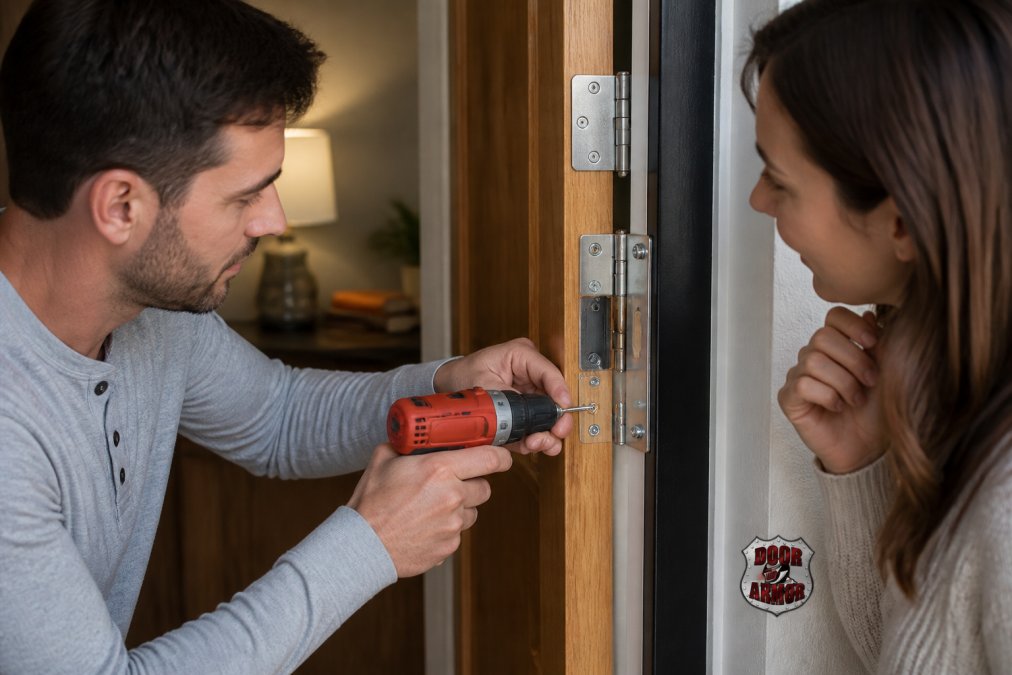
Hinges are the second weak point. Standard hinges have small mounting screws that don't penetrate deep into the frame. An attacker will kick or pry on the hinge side, where the door is held only by these shallow screws.
Hinge shields cover the hinge area and use longer screws to anchor into the structural frame. Some kits include reinforced hinges themselves, which are heavier and use larger fasteners. Either approach prevents the hinge side from failing under prying or kicking force.
Door Jamb and Frame Integrity
The door jamb is the vertical piece of frame that the strike plate attaches to. If the jamb itself is weak or damaged, even a reinforced strike plate won't help.
A complete reinforcement kit includes jamb armor or frame reinforcement plates that span the jamb and lock into the structural wood. These are typically made of steel and use multiple fastening points to prevent any movement.
No-Drill Door Reinforcement: Installation Without Damage
For renters, non-destructive installation is non-negotiable. You need a best door reinforcement kit for renters that doesn't require drilling into the door itself, cutting into the frame, or making changes that trigger lease violations.
Modern kits are designed with renters in mind. Most use existing screw holes or pilot holes that require only a drill to pre-drill the frame and guide screws into the correct position. The fasteners used are standard wood screws, not permanent anchors.
The Installation Process
A typical no-drill kit follows this sequence:
- Remove the existing strike plate and hinge covers with a screwdriver.
- Mark new screw holes using the reinforcement plate as a template.
- Pre-drill holes at marked positions using a standard drill bit.
- Install the reinforcement plate using longer screws (usually 3-4 inches).
- Reinstall or replace the strike plate and hinge covers.
The entire process takes 20-40 minutes depending on your comfort with tools. No permanent changes are made. When you move, you remove the reinforcement kit, fill the screw holes with wood filler, and leave the door in its original condition.
Door Armor's single-door kit includes all necessary hardware and fasteners with a clear installation guide and available support.
Why This Matters for Renters
Landlords care that their property returns in the same condition it left. A no-drill kit satisfies that requirement. You're not drilling into the door, not cutting the frame, and not making structural changes. You're reinforcing weak points with removable hardware.
A best door reinforcement kit for renters is an investment that travels with you when you move.
Portable Door Locks for Apartments: What Works
Beyond frame reinforcement, portable door locks add an extra layer of security without any installation.
Wedge Locks and Door Stops
A wedge lock is a metal or rubber wedge that slides under the door and prevents it from opening, even if someone has a key. Wedge locks are cheap, effective, and completely removable. They work on most door types, including sliding glass doors.
The limitation: they're only effective when you're home and awake. They don't prevent forced entry; they just make it harder to open the door quickly from outside.
Portable Door Bars
A portable door bar is a metal rod that extends across the door and locks into brackets on either side of the frame, preventing the door from opening regardless of lock status. Some models use adjustable tension to work on doors of different widths.
These are more effective than wedges because they're harder to remove from outside. Most portable bars designed for renters use adhesive mounting or tension-based brackets that don't require drilling. smart security gadgets.
A portable lock complements a best door reinforcement kit for renters but doesn't substitute for it. The kit addresses structural vulnerability; the portable lock adds behavioral security.
How to Secure a Rental Door Without Damage
Securing a rental door without damage requires a strategy that layers multiple defenses while respecting your lease and protecting your security deposit.
Step 1: Assess Your Door's Current Vulnerability
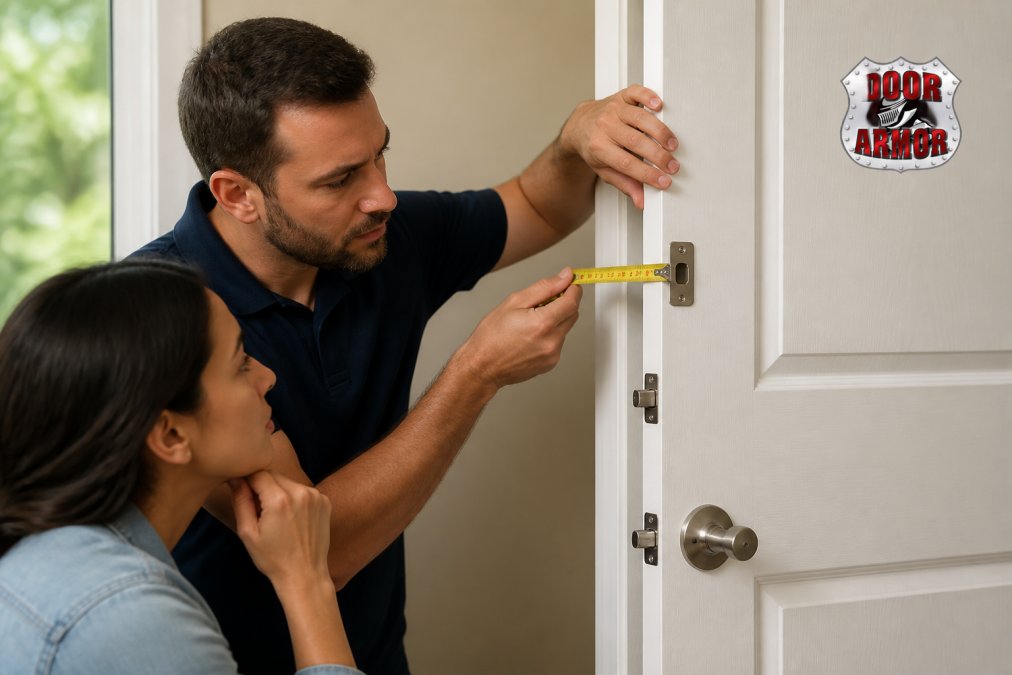
Check your existing strike plate: how many screw holes does it have, and how deep are the screws? Look at the door frame around the strike plate. Is it solid wood or hollow? Check the hinges for the same information.
This assessment tells you whether a standard kit will work or whether you need a custom solution for non-standard frames.
Step 2: Choose the Right Reinforcement Kit
A best door reinforcement kit for renters should include:
- A reinforced strike plate with at least four screw holes
- Long fasteners (3-4 inches minimum) that reach structural wood
- Hinge shields or reinforced hinges
- Clear installation instructions with measurements
- Hardware that matches your existing finish
Door Armor's Single Door Security Kit includes all these components and is designed for standard apartment doors up to 1¾ inches thick.
Step 3: Install Without Permanent Damage
Use pre-drilling and wood screws, not permanent anchors. Fill any existing holes you're not using with wood filler before you move.
If your door frame is damaged or the wood is soft, use larger diameter screws or wooden shims to distribute the load.
Step 4: Document Your Installation
Take photos of the door before and after installation. Keep the original hardware in a bag. When you move, reinstall the original hardware and remove the reinforcement kit. This documentation proves you left the property in its original condition.
Step 5: Communicate With Your Landlord (Optional but Recommended)
Some landlords appreciate the heads-up. A simple email explaining that you're installing removable security hardware often gets a positive response. You're not asking permission, you're informing them of a non-permanent improvement.
If your lease explicitly prohibits modifications, this conversation becomes necessary. Most landlords allow removable security upgrades because they reduce insurance liability and property damage risk.
Comparing Door Reinforcement Kits for Renters
When evaluating options for a best door reinforcement kit for renters, compare based on installation difficulty, hardware quality, and whether the kit is truly removable.
| Kit Type | Installation Time | Removable | Best For | Hardware Quality |
|---|---|---|---|---|
| Strike plate only | 10-15 min | Yes | Budget-conscious renters | Basic, short screws |
| Full reinforcement (strike + hinges) | 25-40 min | Yes | Most renters | Galvanized steel, long fasteners |
| Door bar + portable lock | 5-10 min | Yes | Temporary or short-term | Mechanical, no drilling |
| Professional installation | 1-2 hours | Varies | Non-standard frames | Custom, guaranteed fit |
Door Armor Single Door Security Kit ($79)
Door Armor's offering is purpose-built for renters. The kit includes a reinforced strike plate, hinge shields, and high-impact screws. Installation takes about 30 minutes with standard tools. The design is discreet and matches existing hardware finishes.
The $500 Lifetime Guarantee means if the door is kicked in after proper installation, Door Armor covers the cost of repairs or replacement hardware. This guarantee is backed by their police testing and 20+ years in business.
DIY vs. Professional Installation
Most renters can install a reinforcement kit themselves. However, if your frame is damaged, non-standard, or you're uncertain about the installation, professional installation is worth the cost to ensure the kit performs as designed.
Lease Compliance and Landlord Communication
The biggest concern for renters is whether a best door reinforcement kit for renters violates their lease. Most residential leases prohibit "permanent alterations" or "modifications that damage the property." A reinforcement kit using wood screws and pre-drilling doesn't fit this definition.
However, some leases are stricter and prohibit any modifications. Read your lease carefully for language around "alterations," "modifications," and "security devices."
The Communication Approach
If your lease is ambiguous, a simple conversation with your landlord often resolves the issue:
"I'd like to install removable door reinforcement hardware to improve security. The installation uses standard wood screws and pre-drilling, no permanent damage. I'll remove it and restore the door to original condition when I move. This reduces liability and property damage risk. Is this acceptable?"
Most landlords say yes. Some require written approval. A few say no. But the conversation itself protects you.
If Your Landlord Says No
If your landlord explicitly prohibits modifications, portable locks and wedges are usually allowed because they require no installation. Temporary adhesive-based brackets sometimes work, though they're less reliable than screw-based hardware.
Documentation for Your Protection
If you do install a kit, document it:
- Take before and after photos
- Keep receipts and installation records
- Take photos of the original hardware before removal
- Keep the original hardware in a labeled bag
- When you move, reinstall original hardware and document the restoration
This documentation protects your security deposit and proves you left the property in its original condition.
Conclusion
Renters face a security paradox: you need protection, but you can't make permanent changes. A best door reinforcement kit for renters solves this by strengthening weak points, the strike plate, hinges, and door jamb, without permanent damage.
Door Armor's approach addresses this specific challenge. Their patented galvanized steel system reinforces doors in under 30 minutes, uses standard installation methods, and remains completely removable. With a $500 Lifetime Guarantee against kick-ins and police testing backing the design, it delivers the protection you need without sacrificing your security deposit.
Get started with Door Armor and transform your rental door from a liability into a genuine barrier against forced entry. Learn more about residential security best practices
Frequently Asked Questions
Q: Can I install a door reinforcement kit in my rental apartment without violating my lease?
A: Most door reinforcement kits designed for renters use non-destructive installation methods that don't damage walls or door frames. Before installing, review your lease agreement and contact your landlord in writing. Many landlords approve reinforcement kits because they improve property security without permanent changes. Door Armor's Single Door Security Kit, for example, installs in under 30 minutes using existing screw holes, making it removable when you move. Always get written permission to protect your security deposit.
Q: What makes a door reinforcement kit effective against forced entry?
A: The most effective kits combine multiple security components: reinforced strike plates that anchor deep into the door jamb, hinge shields that protect the hinge side from prying, and high-impact screws that resist kick-in attempts. Door jamb reinforcement spreads force across a wider area, making it harder to break through. The best kits for renters use galvanized steel construction for durability and tamper-proof design that prevents removal from the outside. Look for kits tested against real forced entry attempts, not just marketing claims.
Q: How do portable door locks for apartments compare to permanent reinforcement?
A: Portable door locks offer convenience and mobility, making them ideal for renters who move frequently. However, they typically provide secondary security rather than primary forced entry protection. Door reinforcement kits address the structural vulnerabilities of your door frame and hardware, stopping kick-ins and prying attempts at the source. For maximum protection in a rental, combine both: use a reinforcement kit for permanent structural hardening and portable locks for additional entry control. This layered approach gives you comprehensive security without violating your lease.
Q: Is a door reinforcement kit worth the cost for a rental property I only use seasonally?
A: Yes, especially for vacation rentals or seasonal properties. Extended vacancies make your property a target for break-ins. A door reinforcement kit provides 24/7 passive protection without batteries or power, unlike electronic systems. The $500 Lifetime Guarantee against kick-ins means you're protected long-term against the most common forced entry method. Since installation takes under 30 minutes and requires no ongoing maintenance, the investment pays for itself through avoided property damage, theft losses, and insurance claims from break-ins.
This article was written using GrandRanker
Frequently Asked Questions
Q: Can I install a door reinforcement kit in my rental apartment without violating my lease?
A: Most door reinforcement kits designed for renters use non-destructive installation methods that don't damage walls or door frames. Before installing, review your lease agreement and contact your landlord in writing. Many landlords approve reinforcement kits because they improve property security without permanent changes. Door Armor's Single Door Security Kit, for example, installs in under 30 minutes using existing screw holes, making it removable when you move. Always get written permission to protect your security deposit.
Q: What makes a door reinforcement kit effective against forced entry?
A: The most effective kits combine multiple security components: reinforced strike plates that anchor deep into the door jamb, hinge shields that protect the hinge side from prying, and high-impact screws that resist kick-in attempts. Door jamb reinforcement spreads force across a wider area, making it harder to break through. The best kits for renters use galvanized steel construction for durability and tamper-proof design that prevents removal from the outside. Look for kits tested against real forced entry attempts, not just marketing claims.
Q: How do portable door locks for apartments compare to permanent reinforcement?
A: Portable door locks offer convenience and mobility, making them ideal for renters who move frequently. However, they typically provide secondary security rather than primary forced entry protection. Door reinforcement kits address the structural vulnerabilities of your door frame and hardware, stopping kick-ins and prying attempts at the source. For maximum protection in a rental, combine both: use a reinforcement kit for permanent structural hardening and portable locks for additional entry control. This layered approach gives you comprehensive security without violating your lease.
Q: Is a door reinforcement kit worth the cost for a rental property I only use seasonally?
A: Yes, especially for vacation rentals or seasonal properties. Extended vacancies make your property a target for break-ins. A door reinforcement kit provides 24/7 passive protection without batteries or power, unlike electronic systems. The $500 Lifetime Guarantee against kick-ins means you're protected long-term against the most common forced entry method. Since installation takes under 30 minutes and requires no ongoing maintenance, the investment pays for itself through avoided property damage, theft losses, and insurance claims from break-ins.