 ultimate-guide
Benefits of Non-Electric Door Security Solutions
Table of Contents
- Why Non-Electric Door Security Solutions Work When Power Fails
- How to Prevent Door Kick-Ins With Mechanical Reinforcement
- Mechanical vs Electronic Door Security: Which Offers Real Protection
- Best Door Reinforcement Kits for Different Entry Points
- Physical Security, Audit Trails, and Life Safety Code Compliance
- Cost Savings and Lifetime Protection Without Maintenance
- Installation and Real-World Reliability
- Frequently Asked Questions
Last Updated: September 2, 2026
Why Non-Electric Door Security Solutions Work When Power Fails
When the power goes out, electronic locks fail. Keypad systems become useless. Smart home integrations go dark. Non-electric door security solutions deliver protection that doesn't depend on electricity, batteries, or internet connectivity.
Non-electric door security relies on mechanical reinforcement to prevent forced entry. Unlike electronic systems that require constant power, mechanical solutions use heavy-duty hardware to physically strengthen the weak points where doors fail: the hinges, strike plate, and door frame. Door Armor has spent over 20 years analyzing how doors actually fail during break-ins. The pattern is consistent: intruders target the frame, not the lock. A standard deadbolt can be strong, but if the frame splinters under pressure, the lock means nothing. Mechanical reinforcement distributes force across a wider area of the frame, making it exponentially harder to breach.
NFPA Life Safety Code requirements for door hardware mandate that emergency egress routes remain functional during power loss. Mechanical door security aligns with these standards because it doesn't depend on electricity. Your doors stay secure and your family can still exit safely.
How to Prevent Door Kick-Ins With Mechanical Reinforcement
The average door kick-in takes less than ten seconds, concentrating force on the strike plate and frame where the door meets the wall. Standard door frames splinter easily under this pressure. Mechanical reinforcement spreads that force across a much larger surface area, making reinforced doors significantly more resistant to kick-ins.
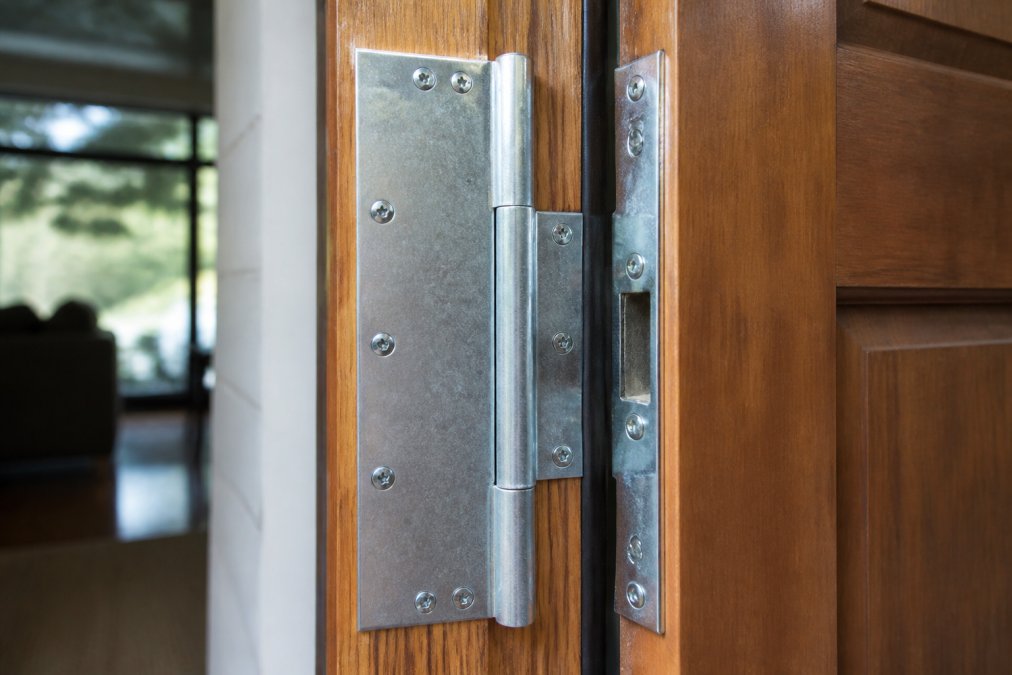
The most effective reinforcement systems use three-point protection:
- Hinge shields reinforce the top and bottom of the door where hinges attach to the frame.
- Strike plate reinforcement extends protection around the lock area, the most common target for forced entry.
- Frame reinforcement strengthens the actual door jamb, which bears the brunt of kick-in force.
Door Armor's approach uses galvanized steel hardware designed to match existing door finishes. The reinforcement is discreet and doesn't make your home look fortified. Real-world testing shows that reinforced doors withstand repeated kick-in attempts that would splinter unreinforced frames.
Mechanical vs Electronic Door Security: Which Offers Real Protection
Electronic systems excel at access control and audit trails. You can unlock doors remotely, see who entered and when, and grant temporary access without changing locks. But electronic systems depend on power, a power outage, dead battery, or network failure can compromise security when you need it most.
Mechanical door security eliminates this vulnerability. It also eliminates cybersecurity risk: there's no system to hack, no wireless protocol to intercept, no software vulnerability to exploit. For most residential properties, the best approach combines both, use quality mechanical locks with mechanical reinforcement for baseline protection, then add electronic access control if you need remote monitoring.
The cost difference is significant. A mechanical reinforcement kit costs under $100. Electronic locks start around $300 and require ongoing maintenance. For homeowners on a budget, mechanical solutions deliver the most security per dollar spent.
Best Door Reinforcement Kits for Different Entry Points
Not all doors are created equal. Effective reinforcement must match the specific door type.
Single Door Security Solutions
Single exterior doors are the most common entry point for break-ins. Door Armor's Single Door Security Set starts at $79.00 and installs in under 30 minutes with basic tools. The kit includes hinge shields that bolt through the door frame and strike plate reinforcement that extends protection around the lock. Single door kits work best for front and back entry doors with standard frames up to 1-3/4" thick.
Installation requires only a drill and basic hand tools. The kit comes with all hardware and detailed instructions.
Double Door and Sliding Glass Door Protection
Double doors and sliding glass doors present unique challenges because they lack a center jamb. Door Armor's Double Door Security Kit ($149.00) uses reinforcement designed specifically for these door types, including a night lock door barricade. Sliding glass doors are vulnerable because intruders can lift them off their tracks. The Armor Latch Sliding Door Deadbolt ($39.99) prevents this by locking the door to the frame.
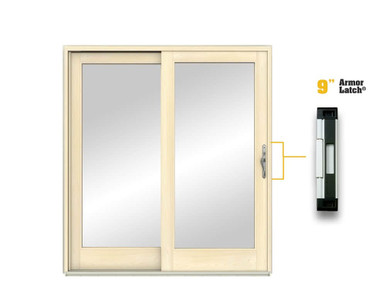
Best reinforcement solutions by door type:
| Door Type | Best Solution | Price | Key Feature |
|---|---|---|---|
| Single entry door | Door Armor Single Door Kit | $79.00 | 30-minute DIY install, hinge + strike reinforcement |
| Double doors | Door Armor Double Door Kit | $149.00 | Includes night lock barricade, top/bottom reinforcement |
| Side light doors | Door Armor Side Light Kit | $129.00 | Addresses jamb-less frame design |
| Sliding glass doors | Armor Latch Sliding Door Deadbolt | $39.99 | Prevents lift-off, works on any slider |
Most homes benefit from reinforcing the main entry door first, then addressing secondary entry points.
Physical Security, Audit Trails, and Life Safety Code Compliance
Mechanical door security is the foundation that every other security measure depends on. You can have cameras, alarms, and access control systems, but if the door itself fails, those systems are irrelevant.
Physical security professionals distinguish between forced entry and unauthorized access. Mechanical reinforcement prevents forced entry. Access control systems prevent unauthorized access. Both are necessary for comprehensive security.
Audit trails, the record of who accessed a door and when, are valuable for commercial properties and rental units. Electronic access control systems provide this information. If audit trails are important for your situation, electronic locks are necessary. But if your primary concern is preventing forced entry, mechanical reinforcement is more reliable.
Life safety codes require that emergency egress routes remain functional during power loss. Building code requirements for door hardware in emergency situations specify that doors must remain operable without power. Mechanical locks and mechanical reinforcement comply with these requirements inherently. Electronic systems require backup power or mechanical override mechanisms to comply.
Cost Savings and Lifetime Protection Without Maintenance
A mechanical reinforcement kit costs $79-$149 per door. Installation is a one-time DIY project. After installation, there is zero maintenance. No batteries to replace. No software updates. No moving parts to wear out. The hardware is galvanized steel, which resists corrosion for decades.
Electronic locks have significantly higher lifetime costs. Initial purchase price is higher ($300-$1000). Installation often requires a professional, adding $100-$300. Batteries must be replaced annually or biannually. Software updates are periodic. Over 20 years, the total cost of ownership for electronic locks is substantially higher than mechanical reinforcement.
Property repair costs after a break-in are significant. A kicked-in door requires frame replacement, which costs $500-$2000. Door Armor backs its products with a $500 Lifetime Guarantee against kick-ins. For homeowners, the math is straightforward: spend $79-$149 on reinforcement now, avoid a $500-$2000 repair later.
Installation and Real-World Reliability
Door Armor's reinforcement kits are designed for homeowners with basic tool skills and no prior experience with door security.
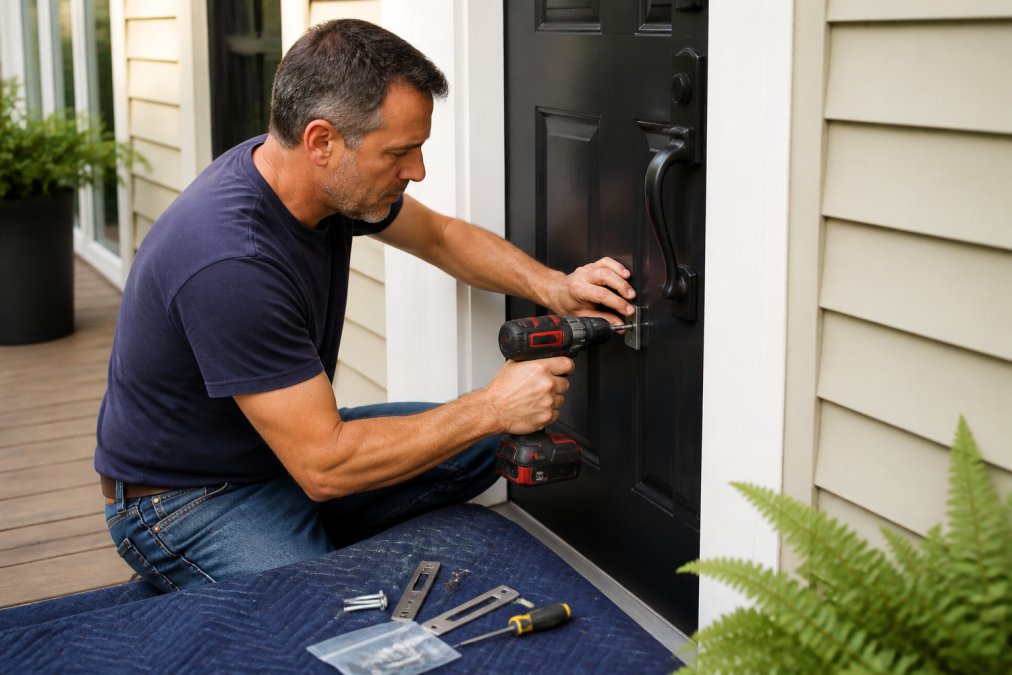
Installation process for a single door kit:
- Remove the existing strike plate and hinge screws
- Install hinge shields using the provided hardware
- Install strike plate reinforcement around the lock area
- Drill pilot holes and secure all components with provided screws
- Test the door to ensure it operates smoothly
The entire process takes 20-30 minutes. The kit includes all hardware, screws, and detailed instructions. No special tools are required beyond a drill and a screwdriver.
Real-world reliability is where mechanical reinforcement proves its value. Unlike electronic systems that can fail unexpectedly, mechanical hardware fails predictably or not at all. Testing by security professionals consistently shows that reinforced doors withstand repeated kick-in attempts that would destroy unreinforced frames. Durability testing shows that galvanized steel hardware maintains its integrity for 20+ years without maintenance.
When a break-in happens, seconds matter. Non-electric door security solutions extend that critical time window by making forced entry exponentially harder. Combined with a quality lock and good habits, mechanical reinforcement is the most reliable, affordable, and durable protection available. Door Armor's reinforcement kits deliver this protection with discreet installation and zero ongoing maintenance, giving you peace of mind that doesn't depend on power, batteries, or technology.
Frequently Asked Questions
What makes non-electric door security solutions more reliable than smart locks?
Non-electric door security solutions work 24/7 without batteries, power outages, or Wi-Fi connectivity. Mechanical reinforcement like galvanized steel hinge shields and strike plate guards physically prevent forced entry by strengthening the door frame itself. Smart locks depend on power and can fail during outages or be bypassed through cybersecurity vulnerabilities. Non-electric solutions offer passive, always-active protection that requires no maintenance, no software updates, and no subscription fees.
How do non-electric door security systems prevent kick-ins?
Mechanical door reinforcement kits strengthen the weakest points where doors fail during forced entry: the hinges, strike plate, and door frame. Hinge shields prevent hinges from being pried away, while reinforced strike plates distribute impact force across a wider area of the door frame. Galvanized steel components resist cutting and prying. This creates structural rigidity that makes it nearly impossible for an intruder to force the door open, even under repeated kicks or shoulder strikes. The physical barrier gives you critical time to call for help or secure your family.
Are mechanical door reinforcement kits cheaper than electronic smart locks?
Yes. A Door Armor Single Door Security Kit costs $79 with a $500 Lifetime Guarantee and requires no installation fees or ongoing costs. Smart locks typically range from $150 to $400 and require battery replacements, software updates, and potential subscription services for remote monitoring. Over a 10-year period, non-electric solutions cost significantly less while providing the same core protection: preventing forced entry. For homeowners with multiple doors, the savings multiply quickly.
Can I install a non-electric door security kit myself, or do I need a professional?
Non-electric door security kits are designed for DIY installation in under 30 minutes using basic hand tools. No drilling into studs, no electrical work, and no special skills required. The hardware mounts directly to your existing door frame with screws. Most homeowners can complete installation without professional help. If you're uncertain about any step, Door Armor provides installation support, and the straightforward design means mistakes are rare and easily corrected.
This article was written using GrandRanker
Frequently Asked Questions
What makes non-electric door security solutions more reliable than smart locks?
Non-electric door security solutions work 24/7 without batteries, power outages, or Wi-Fi connectivity. Mechanical reinforcement like galvanized steel hinge shields and strike plate guards physically prevent forced entry by strengthening the door frame itself. Smart locks depend on power and can fail during outages or be bypassed through cybersecurity vulnerabilities. Non-electric solutions offer passive, always-active protection that requires no maintenance, no software updates, and no subscription fees.
How do non-electric door security systems prevent kick-ins?
Mechanical door reinforcement kits strengthen the weakest points where doors fail during forced entry: the hinges, strike plate, and door frame. Hinge shields prevent hinges from being pried away, while reinforced strike plates distribute impact force across a wider area of the door frame. Galvanized steel components resist cutting and prying. This creates structural rigidity that makes it nearly impossible for an intruder to force the door open, even under repeated kicks or shoulder strikes. The physical barrier gives you critical time to call for help or secure your family.
Are mechanical door reinforcement kits cheaper than electronic smart locks?
Yes. A Door Armor Single Door Security Kit costs $79 with a $500 Lifetime Guarantee and requires no installation fees or ongoing costs. Smart locks typically range from $150 to $400 and require battery replacements, software updates, and potential subscription services for remote monitoring. Over a 10-year period, non-electric solutions cost significantly less while providing the same core protection: preventing forced entry. For homeowners with multiple doors, the savings multiply quickly.
Can I install a non-electric door security kit myself, or do I need a professional?
Non-electric door security kits are designed for DIY installation in under 30 minutes using basic hand tools. No drilling into studs, no electrical work, and no special skills required. The hardware mounts directly to your existing door frame with screws. Most homeowners can complete installation without professional help. If you're uncertain about any step, Door Armor provides installation support, and the straightforward design means mistakes are rare and easily corrected.